Under the expert supervision of The Spitalfields Trust, the house has retained its historic integrity whilst embracing sensitive modern interventions
Under the expert supervision of The Spitalfields Trust, the house has retained its historic integrity whilst embracing sensitive modern interventions
This four-bedroom house in Whitechapel’s Myrdle Street Conservation Area dates to the early 19th century, its Georgian character carefully restored by The Spitalfields Trust. Part of a development laid out in the first quarter of the 19th century, the house is rich with original features including fireplace surrounds, deep-hued floorboards and shuttered sash windows. At the rear is a well-planted walled garden, where a garden studio, designed to sit harmoniously with the house’s handsome historic profile, lies. Some of the city’s best-loved public parks are within easy reach, as are stations that provide fast services to the east and west of London.
Setting the Scene
In Roque’s Map of 1746, the land that today makes up the Myrdle Street Conservation Area was broadly given over to open fields. One trackway cut through the pastures, connecting Whitechapel and St Dunstan’s Church, a thoroughfare that later became Fieldgate Street.In 1752 the London Hospital (now the Royal London Hospital) was established; at this time, its east London position offered a partially rural location, with the estate also encompassing a number of surrounding fields. These fields became the site for residential development from the late 1780s as the hospital began to build rental housing to supplement its running costs.
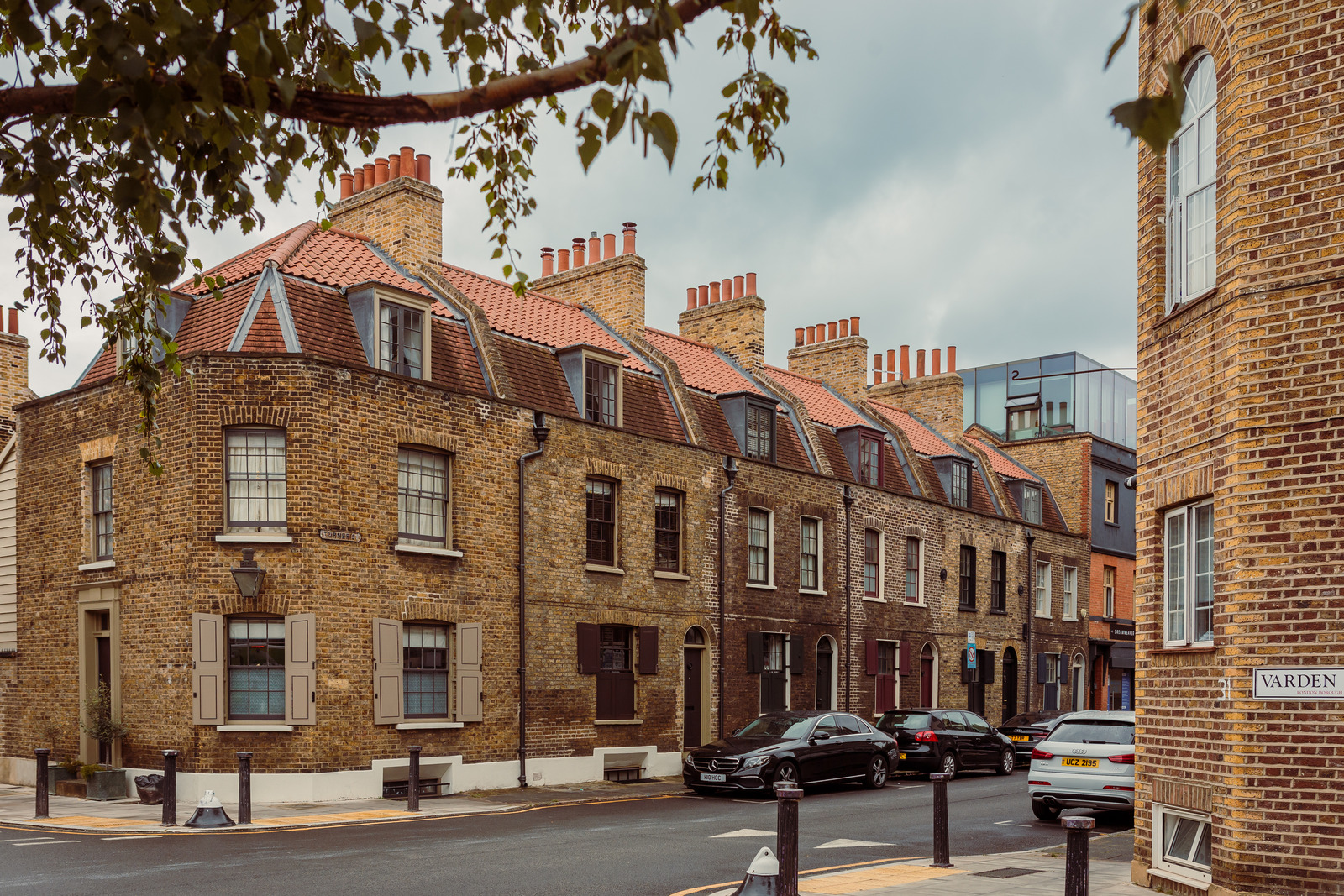
Turner Street, as well as adjacent Varden Street, were laid out between 1807 and 1812. The former was named for Charles Hampden Turner, the chairman of the House Committee of the London Hospital during its financial struggles in 1807. The houses had, more recently, fallen into decline and by 2005 had been acquired by the London Development Agency, intended to be redeveloped by the Queen Mary University. At this time, The Spitalfields Trust intervened to relocate the university scheme and oversaw restoring the vacant houses. Lead by evidence of vernacular forms in east London, they extended the Georgian terraces with clapboard-clad additions to the rear and attic storeys behind gambrel roofs. The widely acclaimed restoration was completed in 2010.
The Grand Tour
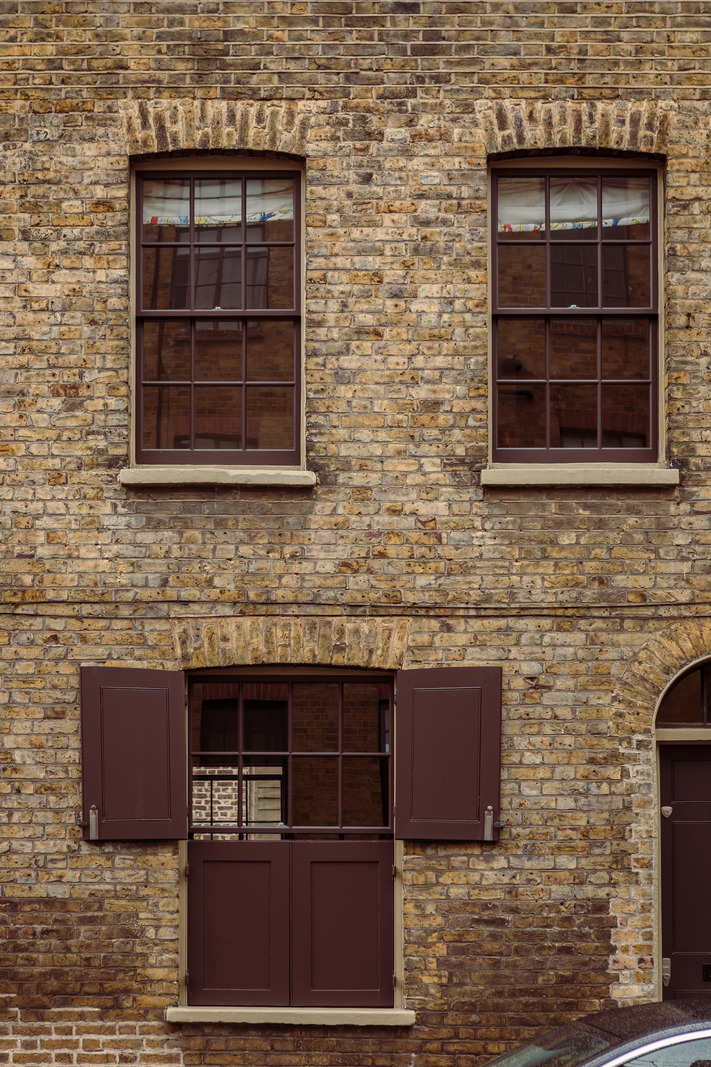
A short flight of steps rises to the panelled front door of the house, set in the façade of yellow London stock brick. The door and its surround, the glazing bars of the sash windows, and the ground-floor window shutters are all finished in a combination of muted green and deep plum.
Entry is to the hallway, decorated with wainscoting and a moulded arch. The refined character of the house’s interiors is at once apparent; walls have been finished with a warm and delicate palette that sits in gentle contrast with the original floorboards that spread throughout the ground floor.
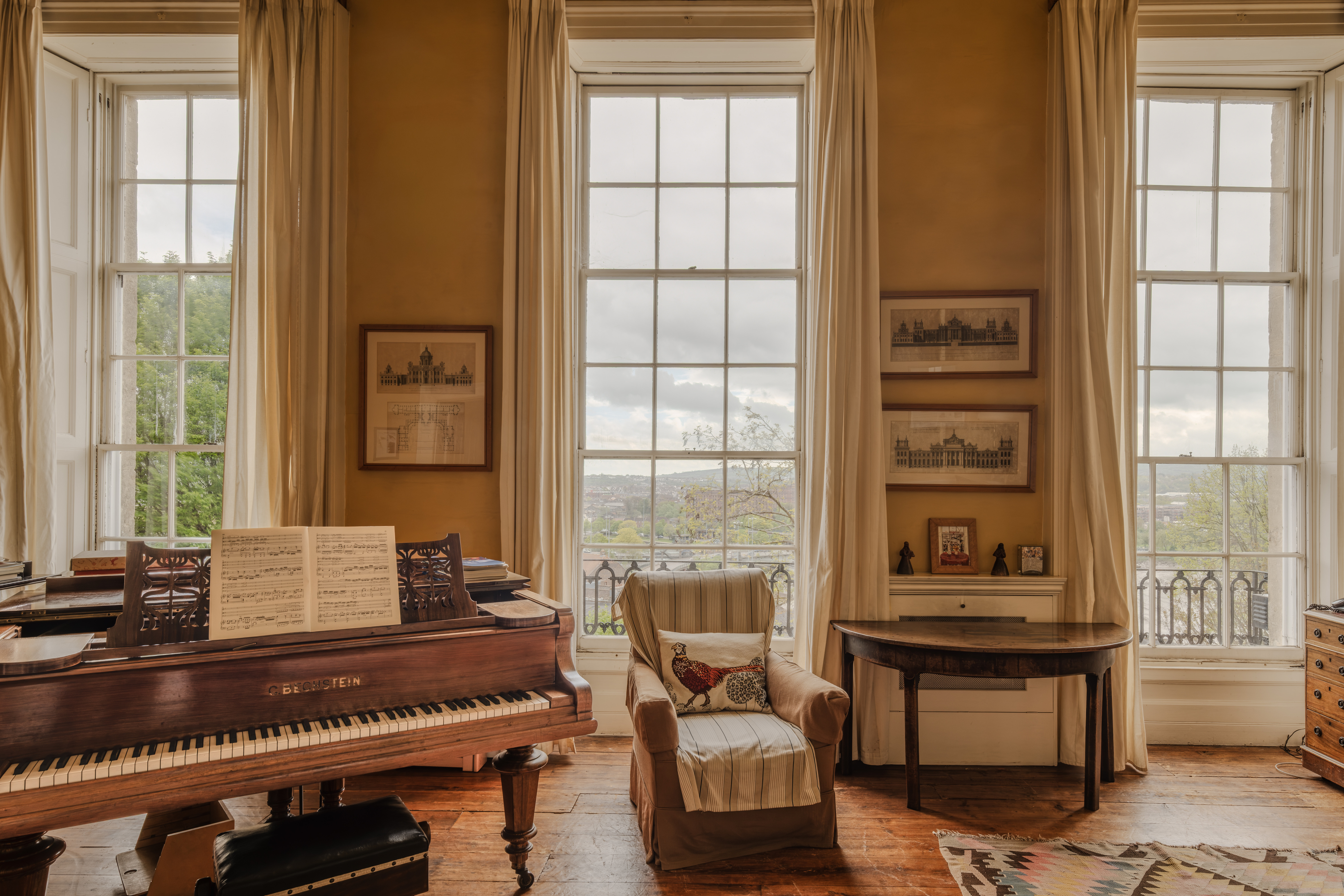
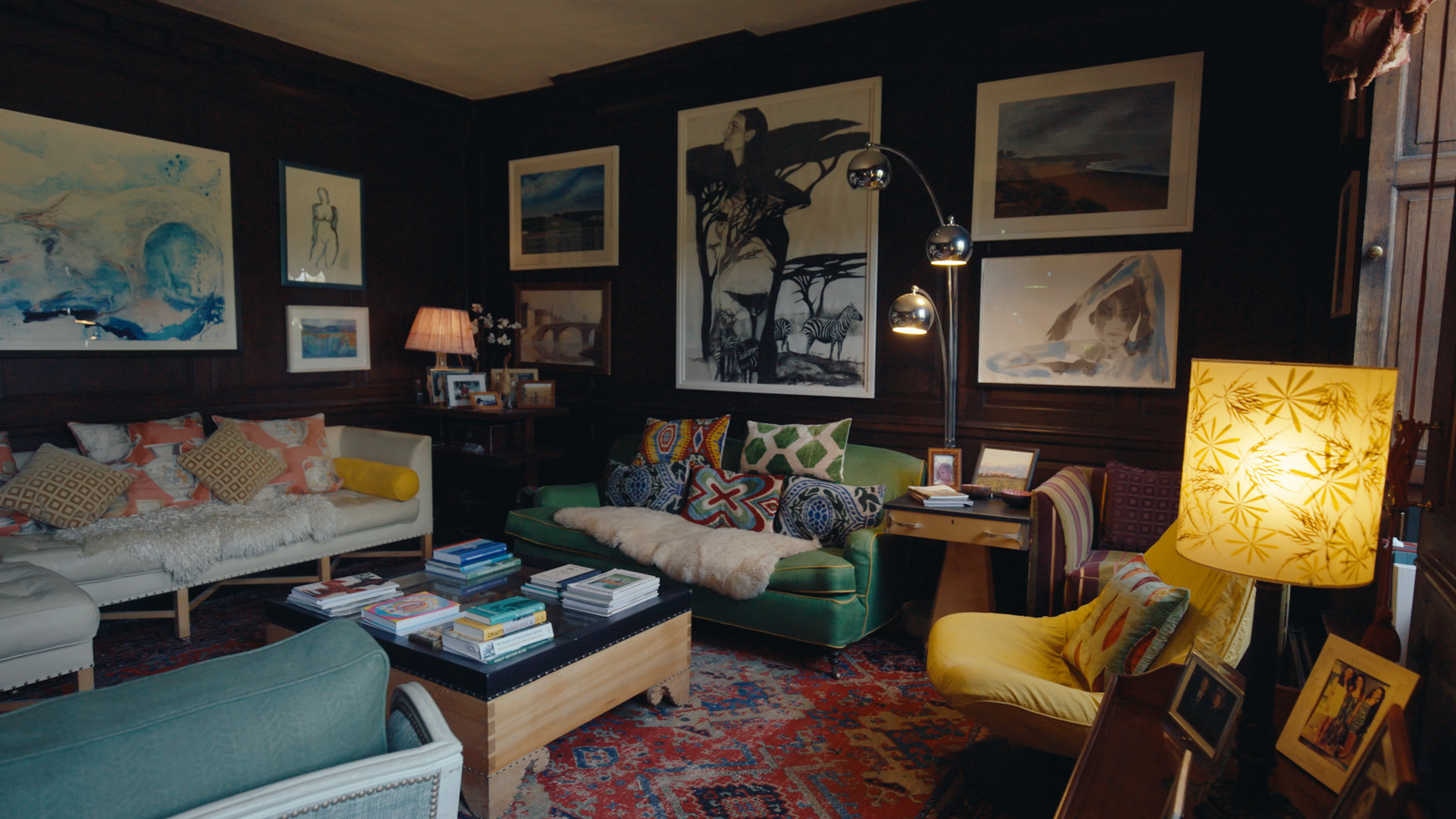
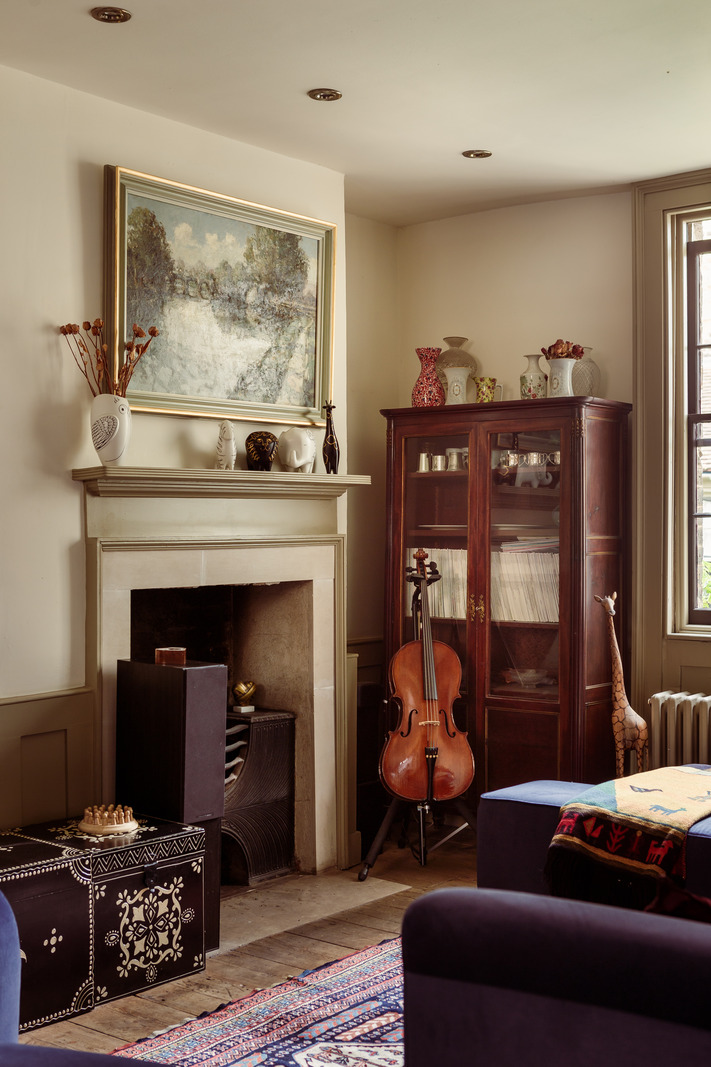
To the left of the hallway is the living room, which is beautifully lit by dual-aspect sash windows at either end. There are two Georgian fireplace surrounds here, one flanked by alcoves and the other with original built-in cabinets. The current owners have arranged a comfortable seating area on one side of the space, with a music room on the other.
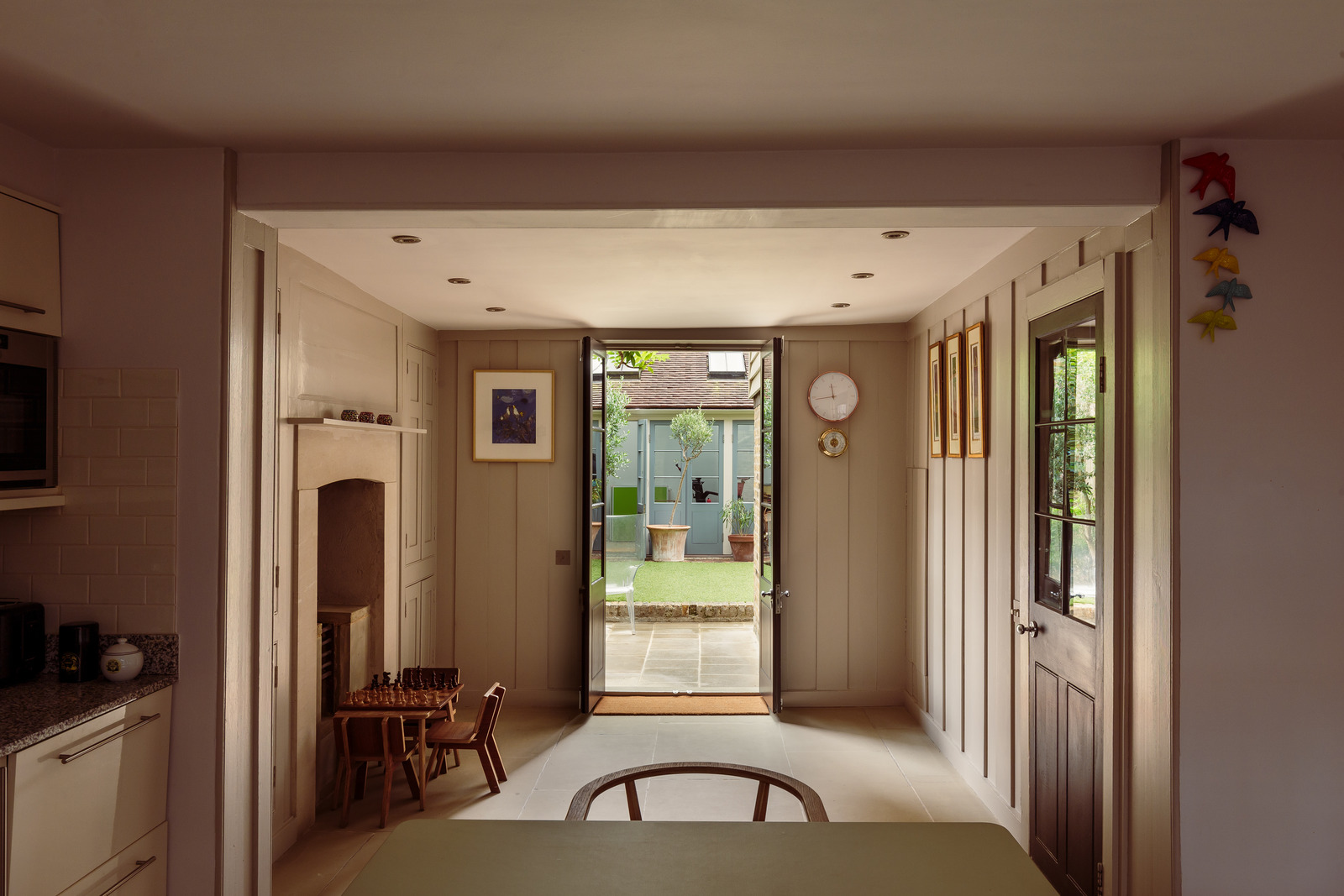
Stairs descend to the lower ground floor, where the open-plan kitchen and dining room lies. The kitchen is composed of cream cabinetry fitted with granite countertops, a deep Belfast sink, a Smeg four-ring gas hob and oven, and an Aga. Opposite is the dining area; lined with wooden panelling and grounded by flagstones, it houses a large Portland stone fireplace surround. From here, a pair of glazed French doors open to the back garden, framing views of blooming hydrangeas and wisteria. A handy WC can also be found on this floor.
Three double bedrooms and a bathroom are spread across the first and second storeys. There is also a room currently used as a nursery on the ground floor, although this would make a delightful study with views over the garden. The generous primary bedroom is on the second floor; here, a casement window frames views of Georgian streets in the immediate vicinity, stretching out towards the cityscape beyond. A smart en suite with a walk-in shower lies adjacent.
The Great Outdoors
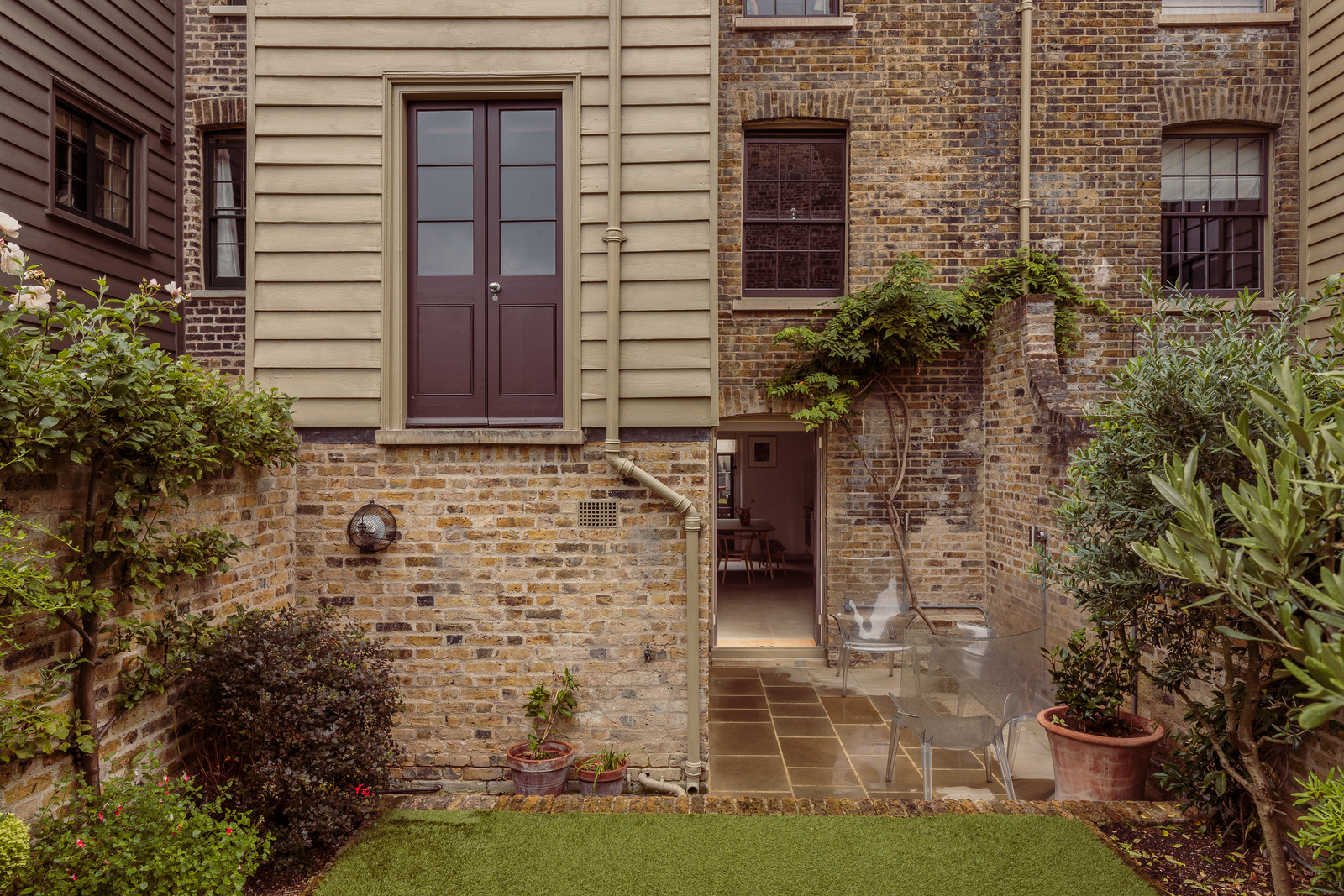
Glazed doors from the lower ground floor open to the walled rear garden. Flowering wisteria climbs the back of the house above the patio, its white blooms a wonderful counterpoint to encompassing mottled stock brick. A central lawn is surrounded by beds planted with hydrangea and perennials, as well as a mature espalier apple tree.
A bright studio stretches the width of the garden, with French doors that can be opened to create a wonderful flow between the indoor and outdoor space. The studio would make a lovely spot for hosting a summer meal, or for a home office.
Out and About
A thriving range of traditional pubs, cafés and restaurants can be found in Whitechapel and Stepney Green. Neighbourhood favourites include Tayyabs, east London institution Rinkoff’s bakery and Townsend at The Whitechapel Gallery.
Bethnal Green is slightly further afield and home to institutions like E Pellicci and The Approach Tavern, joined by a new wave of bars and restaurants, including Brawn, Redchurch Brewery and Cave Cuvée. It is also home to some of London’s most exciting contemporary gallery spaces including Chisenhale Gallery, Maureen Paley, Emalin, Herald Street and Carlos/Ishikawa. The Young V&A Museum is a short walk way, as is York Hall Leisure Centre and the independent Genesis Cinema.
Regents’ Canal, Columbia Road Flower Market, Brick Lane and Shoreditch are all within walking distance. The house is surrounded by some of London’s finest parks, including Mile End Park, Bethnal Green Gardens, Weaver’s Fields, Victoria Park, and the historic churchyard of St Dunstans. Stepney Green City Farm is also close by.
From Whitechapel station the Elizabeth Line runs direct services to central London in 10 minutes and Heathrow Airport in 30 minutes. There is also an Overground line running between Clapham Junction and Highbury and Islington. Stepney Green Underground Station (District and Hammersmith and City lines) is also minutes away. Shadwell DLR station is also a short walk away for easy access to Canary Wharf.
Council Tax Band: E
Interested? Let’s talk
Related Listings
 Related Stories