The Ground Tour
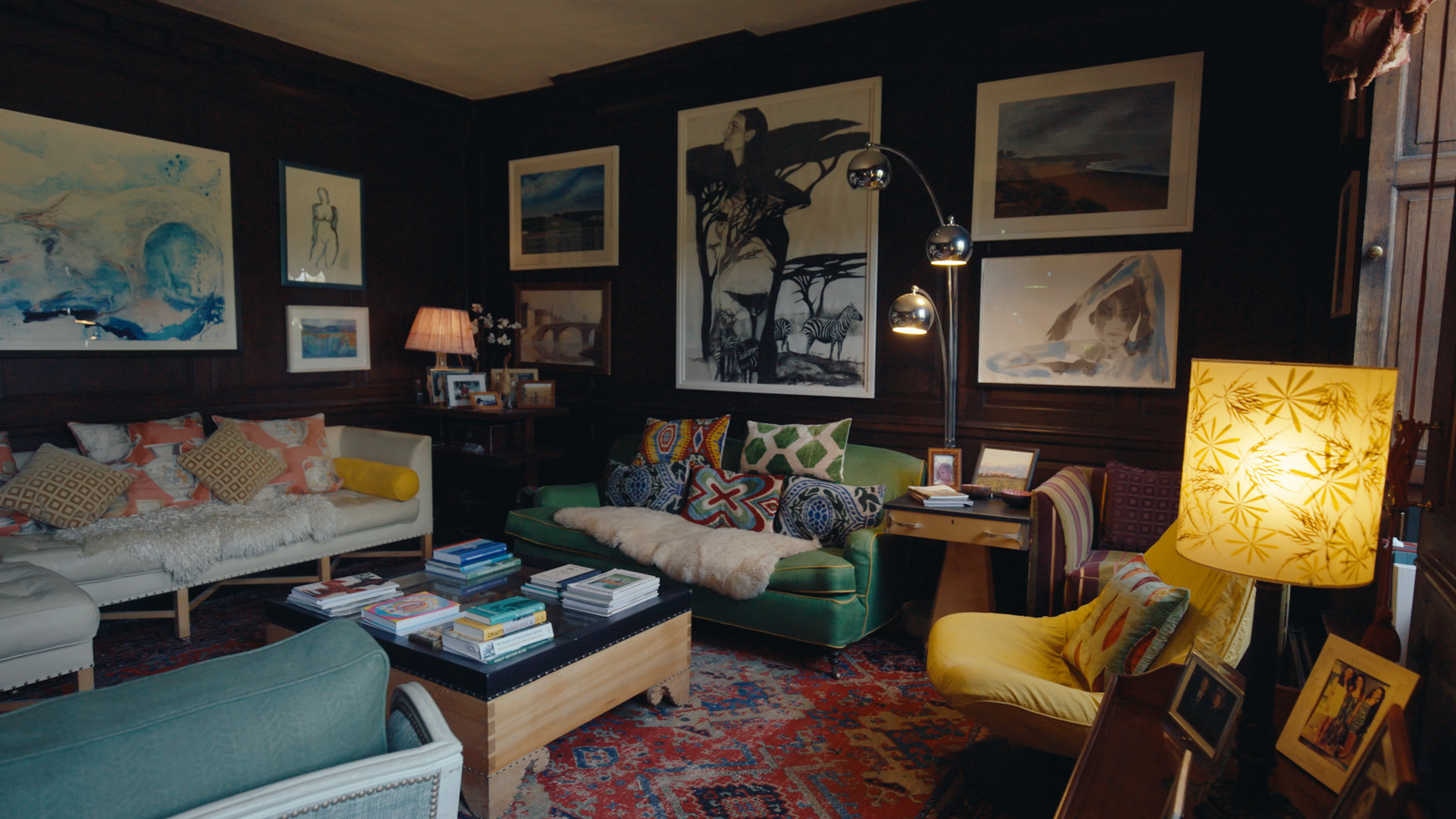
The front door opens to an entrance hall with large limestone flagstones. Through a wide archway, the ceiling opens to a triple height where a glass lantern crowns a staircase with mahogany spindles. A spacious dining room with Zoffanywallpaper sits immediately to the right of the main entrance, with original sash windows and shutters. Here, a finely carved wooden mantelpiece surrounds a fireplace.
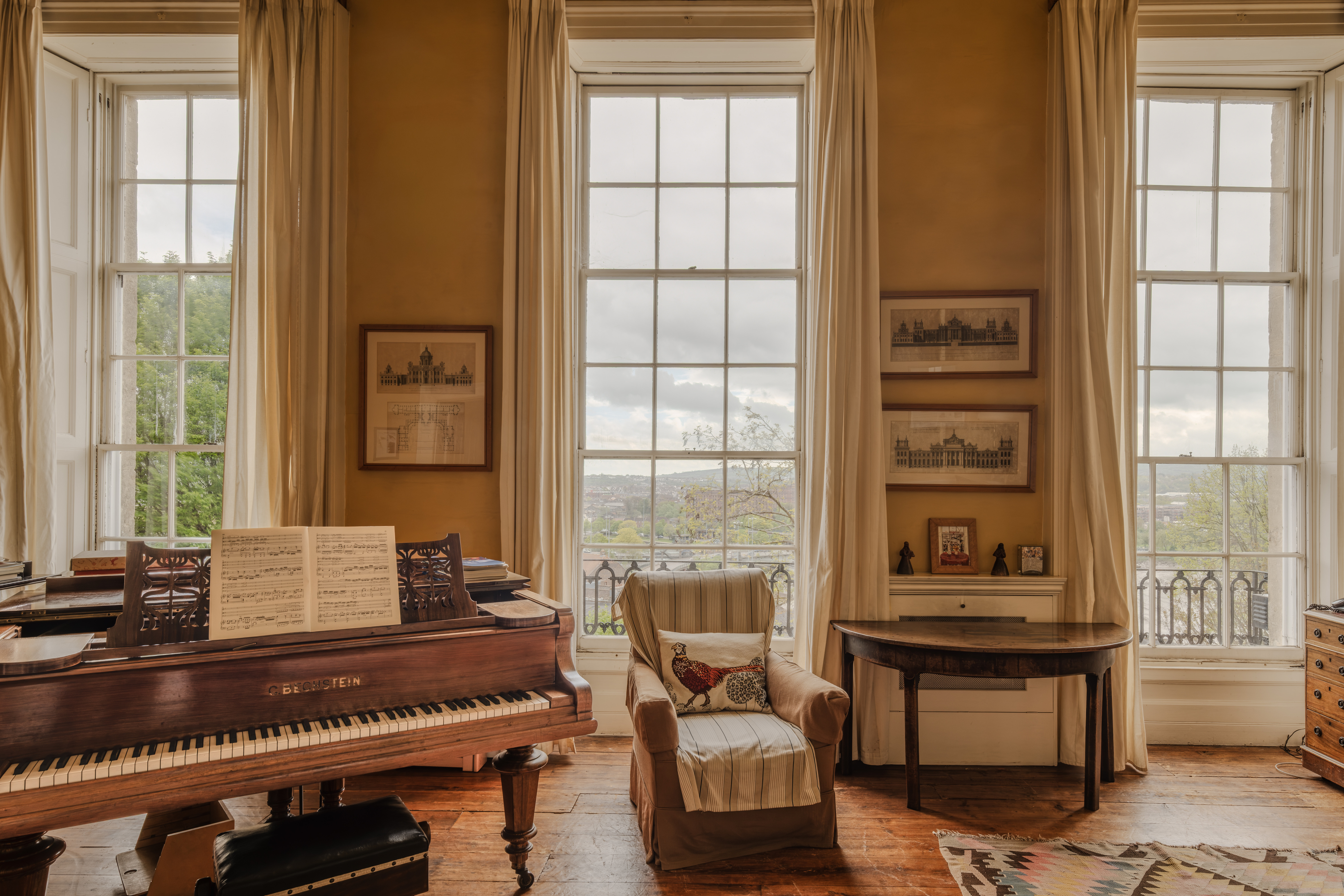
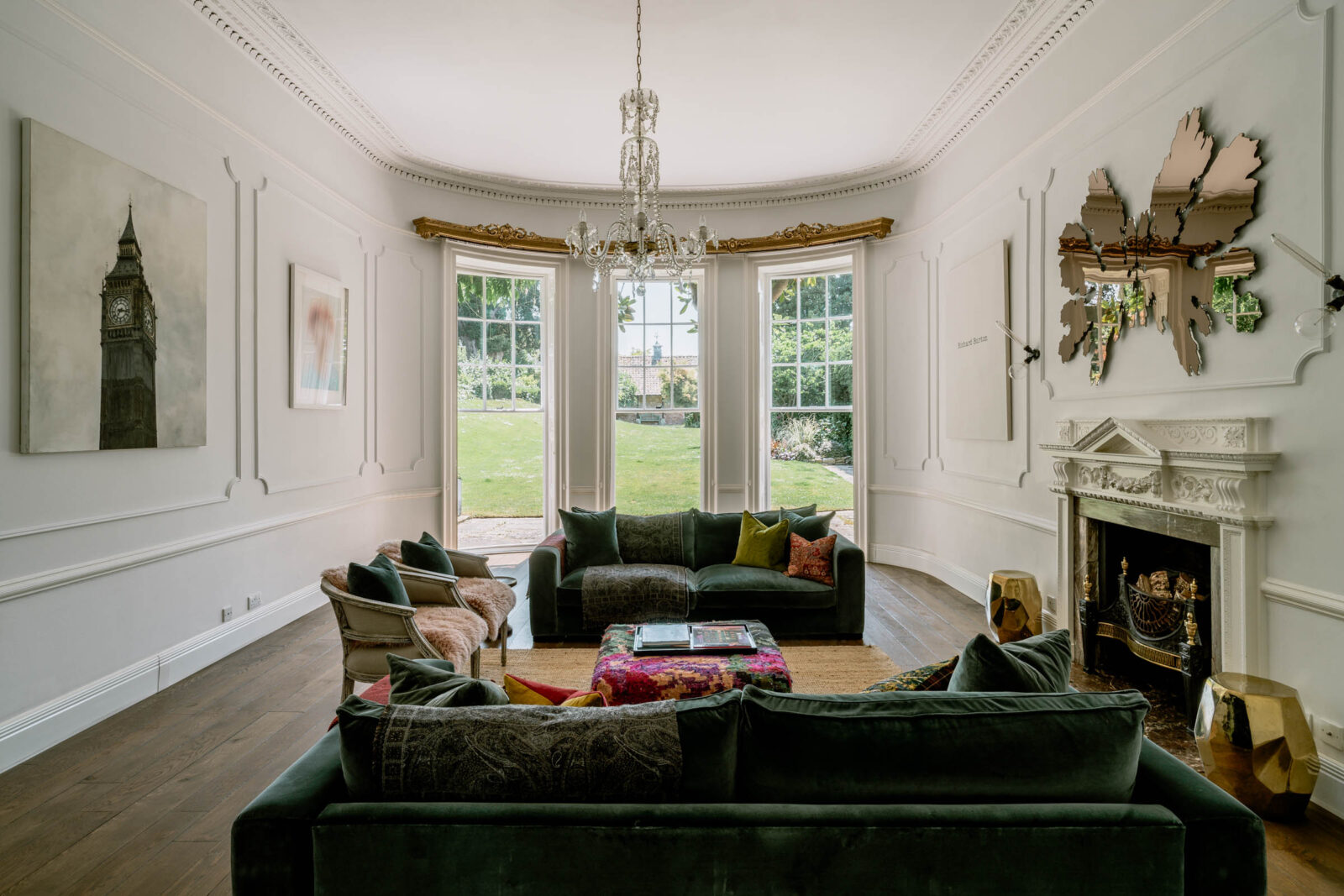
Through the entrance hall is the impressive sitting room. Here, the curved south-facing elevation is punctuated by three floor-to-ceiling 18-pane sash windows allowing light to pour in while framing exquisite views over the gardens. The room retains many fine original details, including the windows and their shutters, elaborately detailed cornicing, and moulded wall panelling. Another carved woodenmantelpiece surrounds a working fireplace with a smart raised hearth; solid oak floorboards ground the room. Modern upgrades, such as concealed radiators set into the skirting boards, preserve the room’s clean lines.
A passage leading off the entrance hall underneath the stairs leads to a cosy study/snug with French doors opening directly to the garden. Through this room is the kitchen/breakfast room, which has an exposed stone wall, tongue and groove timber panelling, and slate floor tiles. A slate mantelpiece surrounds a lovely blue Aga, complemented by blue and white Delft-style tiles behind. Light green-painted cabinetry and open shelving wrap around the room, creating plenty of storage space. A large roof light in the centre of the room illuminates the space.
Through the kitchen is a large laundry and utility room with wood countertops and shelving, as well as a WC and a useful boot room leading out to the garden. Further storage space downstairs is accessed via a door beneath the stairs leading to a large cellar with wine storage.
Above the sitting room sits the principal bedroom and spacious en suite bathroom. With incredible floor-to-ceiling windows in the curved exterior wall, the bedroom has prime vistas over the garden and a beautiful quality of light throughout the day. The room is complemented by a large built-in wardrobe and an original fireplace, while the en suite bathroom has a beautiful stained-glass window that casts a colourful dappled light across the room.
A further two bedrooms sharing a shower room are found on this floor, while two additional bedrooms and a bathroom can be found on the second floor. The glass dome above the stairs allows light to flood into each floor of the home.
The Great Outdoors
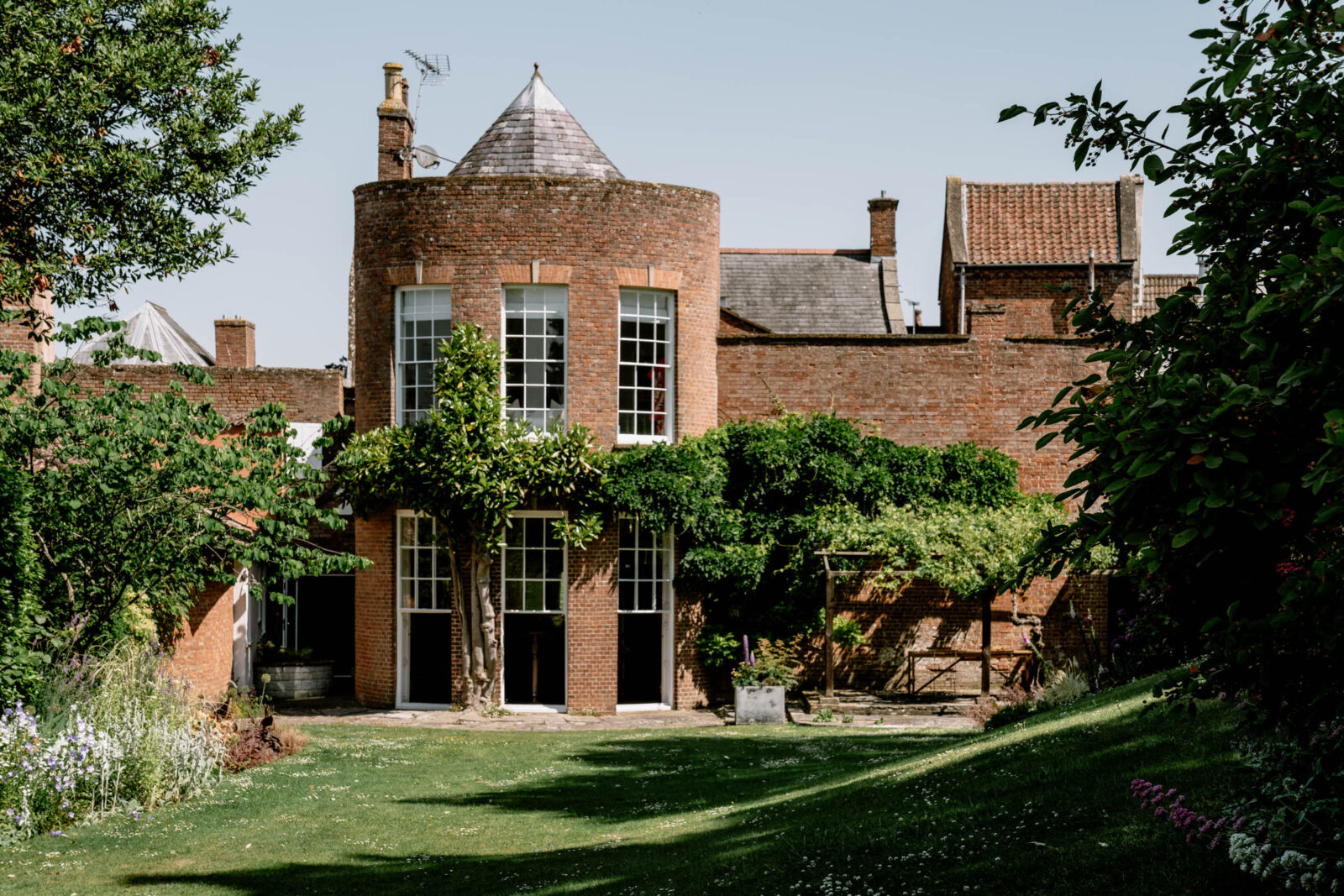
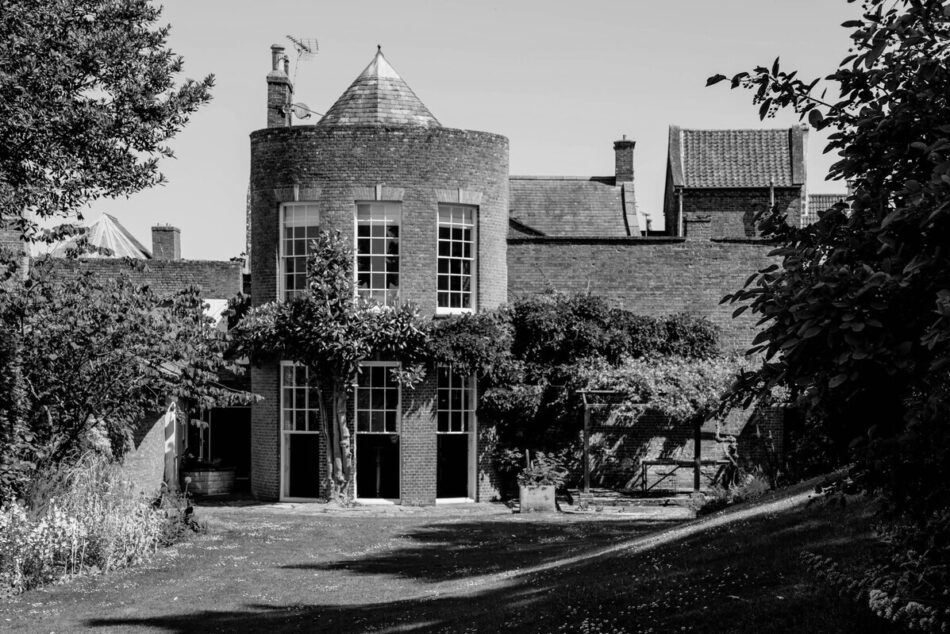
Gently rolling lawns and richly planted gardens unfold behind the house. Several doors lead directly outside, and restored windows on the rear elevation blend the divide between inside and out. Glorious, sweet-smelling white wisteria grows up the back of the house, while a wooden pergola covered in grape vine shades is a lovely paved area perfect for alfresco dining. Thoughtfully planted beds line the perimeter of the extensive, south-facing central lawn, enclosing the space and creating a private oasis to enjoy year-round. An ancient magnolia tree, mature Holm oaks, fruit-bearing fig, cherry and pleached pear trees provide further privacy.
Mature, sweet-smelling roses drape over a timber arbour leading to a raised fruit and vegetable garden where strawberries and raspberries grow in the summer months. An incredible Yew archway leads to a section of a working garden concealed behind a lilac-swathed stone wall. Here, an old pigsty has been creatively converted into a log store. Towards the rear of the garden are two outbuildings; an old brick folly, once used as a smoking pavilion, is now restored and converted for use as a potting shed/storage space.
A separate detached double garage, currently used as a studio space, and additional parking are accessible via timber gates which open onto a private drive. The garage is in keeping with the character of the home, constructed in brick with a Gothic-style timber door sourced from a disassembled village hall.
Out and About
Langport is a town filled with independent shops and cafes. Close by on Bow Street are numerous independent retailers, including the incredible Little Bakery and The Bridge Bakery and Canteen, Art Tea Zen café, and lovely riverside spot Kitchen at the Wharf. There is also a fantastic local butcher, Black Sheep Butchers, a health food store and deli, The Langport Stores, and a weekly farmers’ market. All the essentials are here: a grocery store, post office, and leisure centre are all no more than a 10-minute walk away.
Langport has plenty to offer throughout the year, from a visit to its world-renowned Kelways Plants in spring to its holiday market in winter. The house is surrounded by idyllic countryside characterised by the marshes and moors of the Somerset Levels, offering countless walks. Both the River Parrett and the Levels are all waiting to be explored by foot, bike, kayak, or river cruise, while just further afield are several Areas of Outstanding Natural Beauty, including the Blackdown Hills, Quantock Hills and Cranborne Chase. The north and south coasts are also within reach, with Chesil Beach, Lyme Regis and the rest of the Jurassic coastline about an hour’s drive away, perfect for an evening walk.
Langport’s central location means many other pretty local towns are easily accessible, with brilliant shopping and dining options and their own historical and cultural attractions. An excellent stone-baked pizza joint, The Firehouse, can be found in the village of Curry Rivel, and The Devonshire Arms, a cosy pub with rooms converted from a former hunting lodge, is less than a 10-minute drive away in Long Sutton. Langport is wonderfully located near Hauser & Wirth at Bruton, The Newt, Osip, and several Michelin-starred restaurants, including HOLM in South Petherton.
To the west, Taunton Brewhouse features film screenings, live music, comedy, and creative workshops for all ages, and to the east, Yeovil’s Octagon Theatre offers more of the same. The latter also hosts an annual Yeovil Literary Festival, attracting well-known names. The rolling chalk downland of Dorset starts just past the village of East Coker and is a historical, literary hotspot. Throughout the summer, music festivals spring up in the fields around the area, not to mention the famous Glastonbury Festival.
Historic properties like Priest’s House, dating to 1308, and Muchelney Abbey, a ruined monastery dating to the seventh century, sit just outside Langport and make perfect weekend visits. Additional heritage sites around Langport include Montacute House, Barrington Court and Tintinhull Gardens, all incredibly elegant former estates built from gorgeous local honey hamstone.
There is an excellent choice of independent schools for boys and girls of all ages, including Hazlegrove Prep School, Sherborne School, Taunton School, Kings College, Queen’s College and King’s Hall. Other well-known schools in the area include Millfield and Blundell’s, the former has a school pick-up bus stop in Langport.
The A303 is the region’s artery, making London, Devon and Cornwall all easily accessible. Taunton, Yeovil and Castle Cary stations, each around a 30-minute drive away, offer direct trains to London Paddington in two hours. Transport links are very good, with the major cities of Exeter, Bath and Bristol, and international airports in Exeter and Bristol, all reachable in around an hour. Alternatively, central London can be reached by car, via the M3, in around three hours.
Council Tax Band: F



 Related Stories