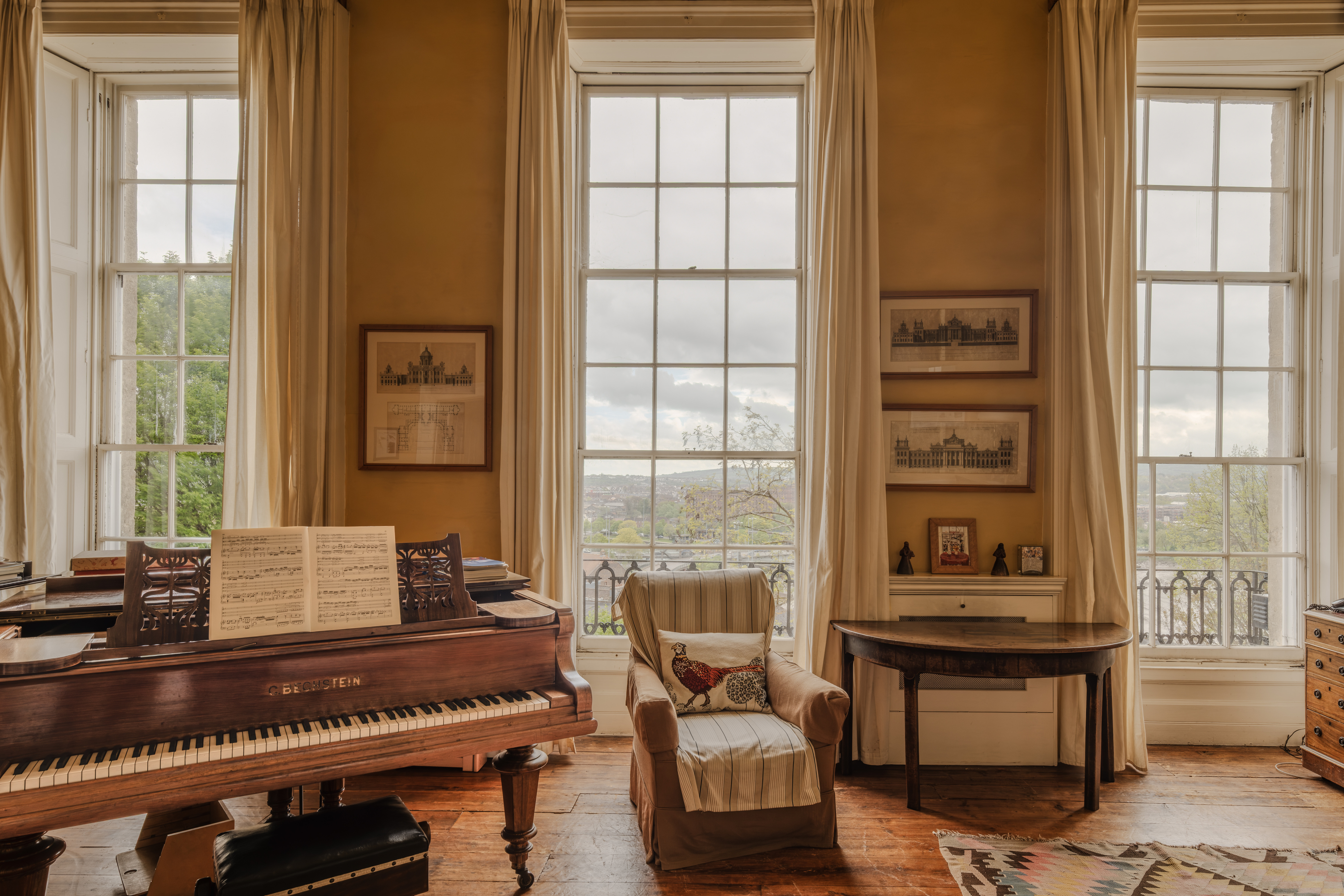
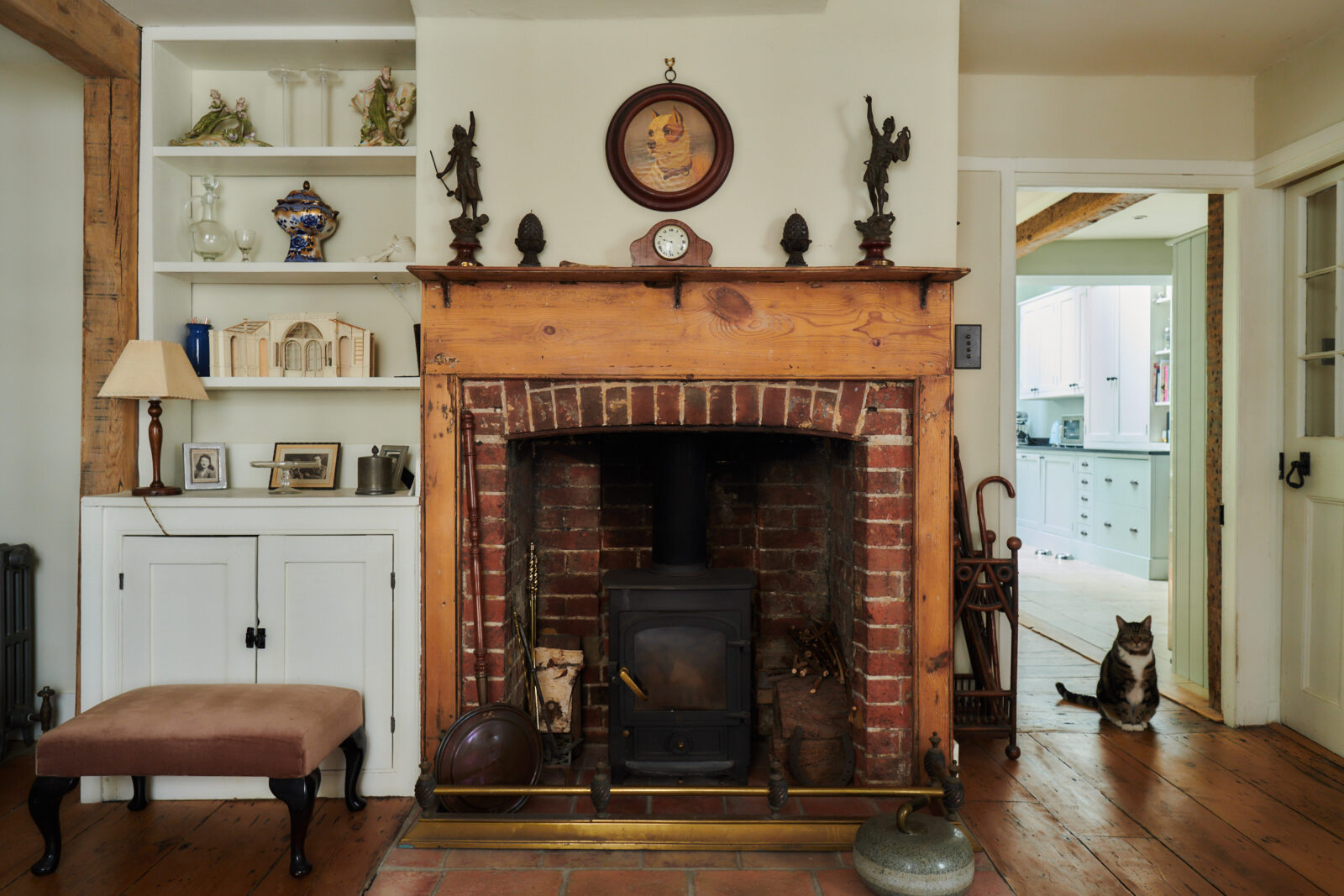
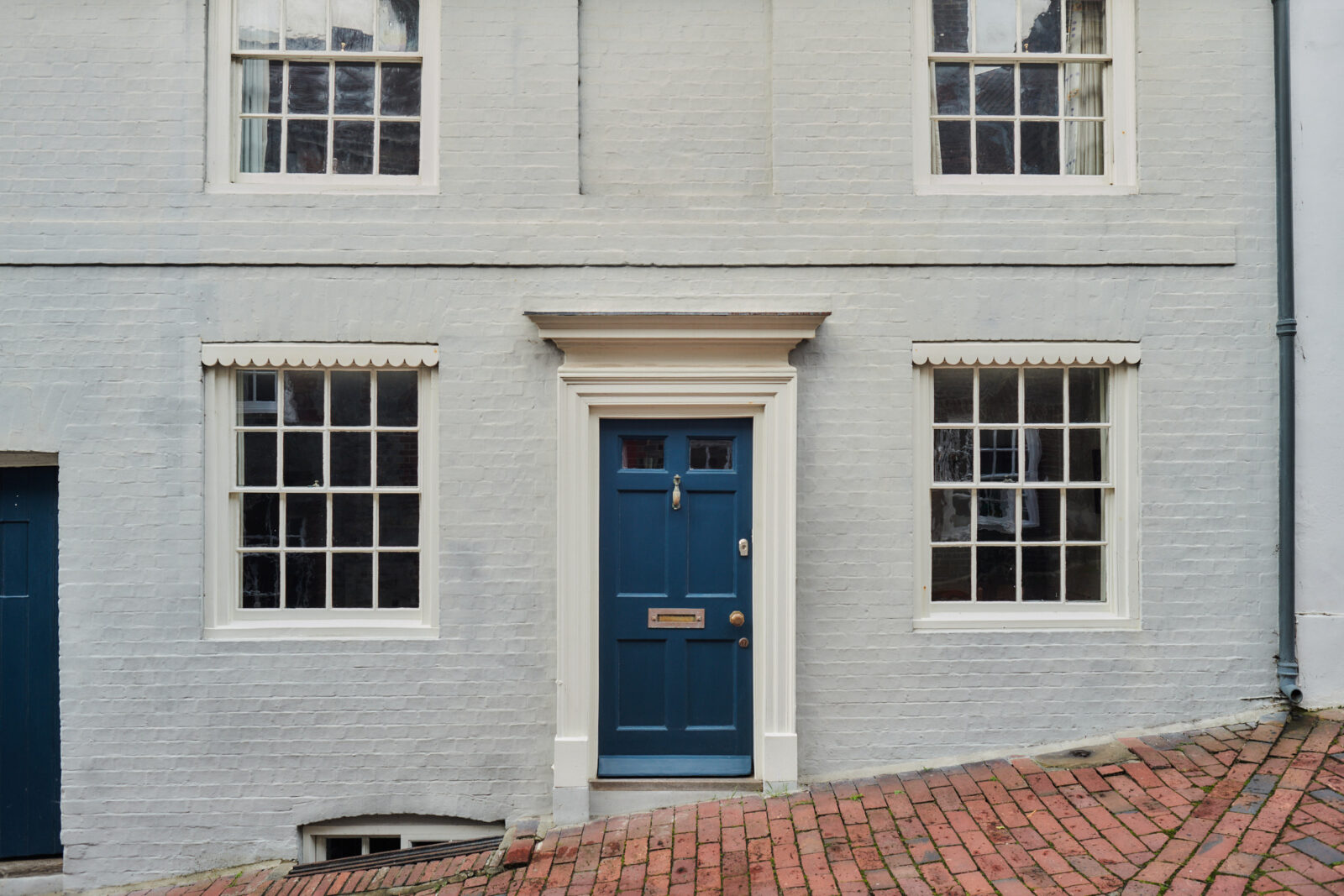
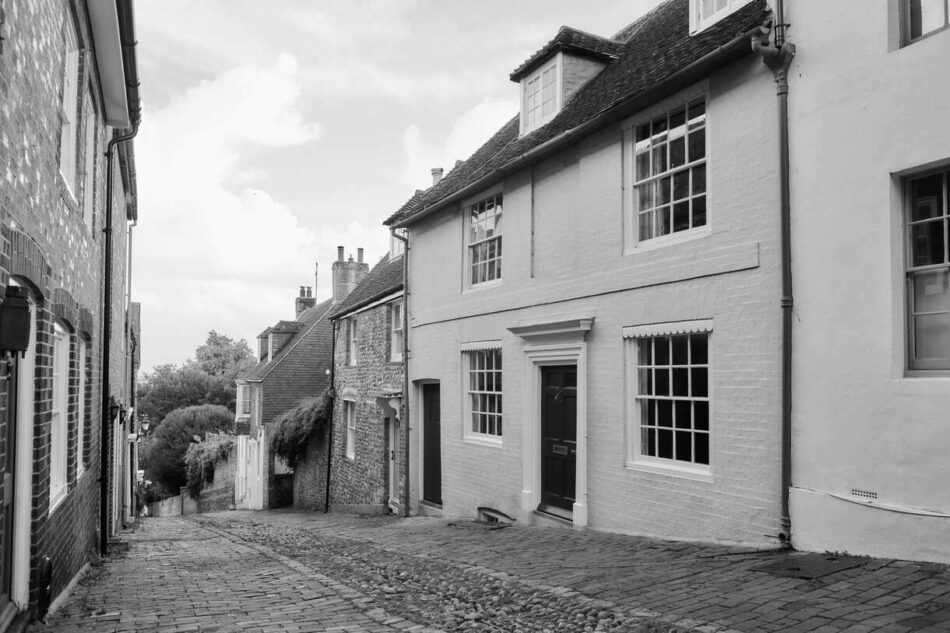
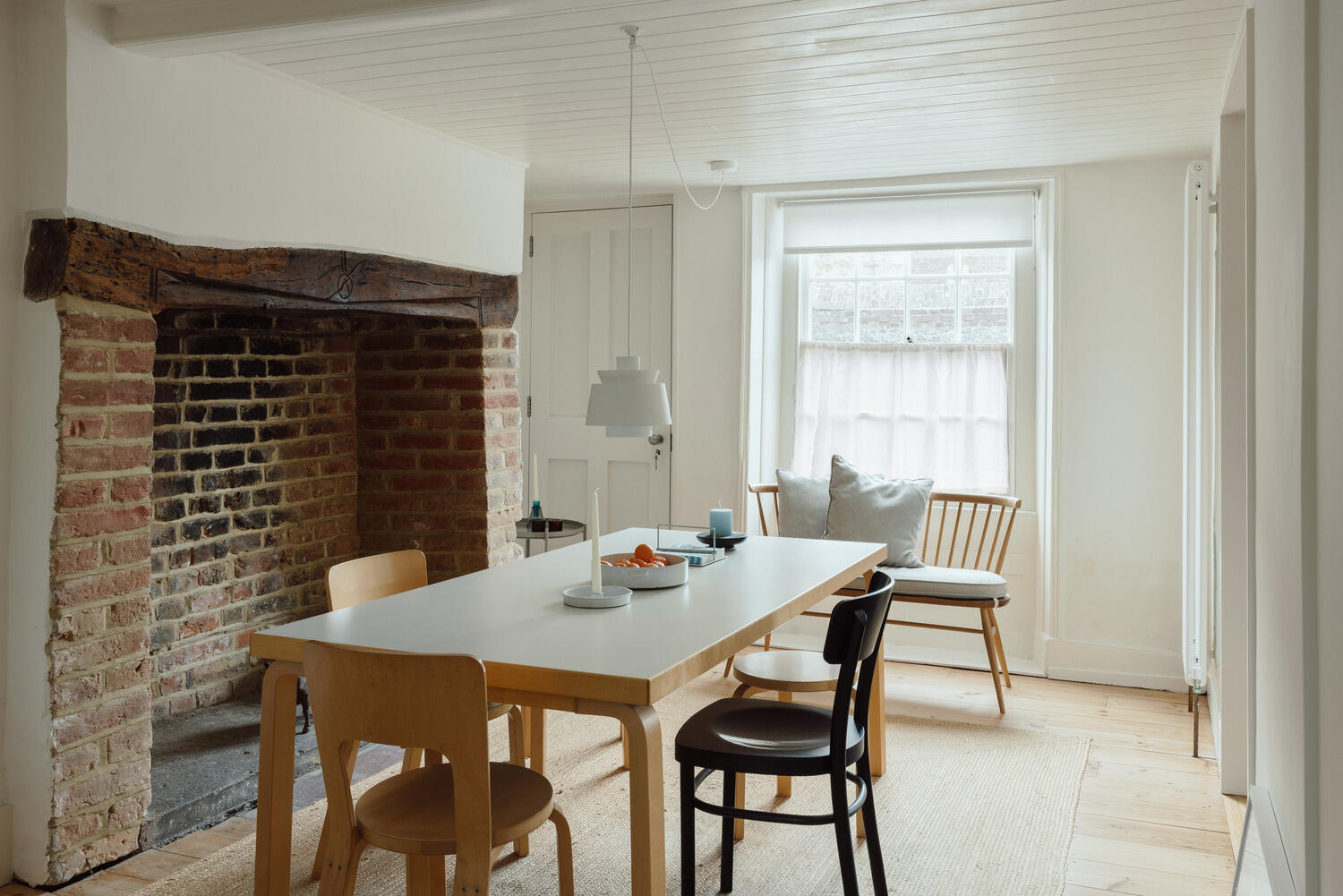
Mounted with a classical pediment, the entryway to the house leads directly into an expansive open-plan drawing room. Finished in neutral Farrow and Ball shades throughout, complemented by exposed beams, with elm floorboards and an original fireplace, this room overlooks the quiet street; early Georgian sash windows with original glass allow the room to be flooded with light. Next to the drawing room sits an open-plan dining area with cast-iron radiators and fine panelling.
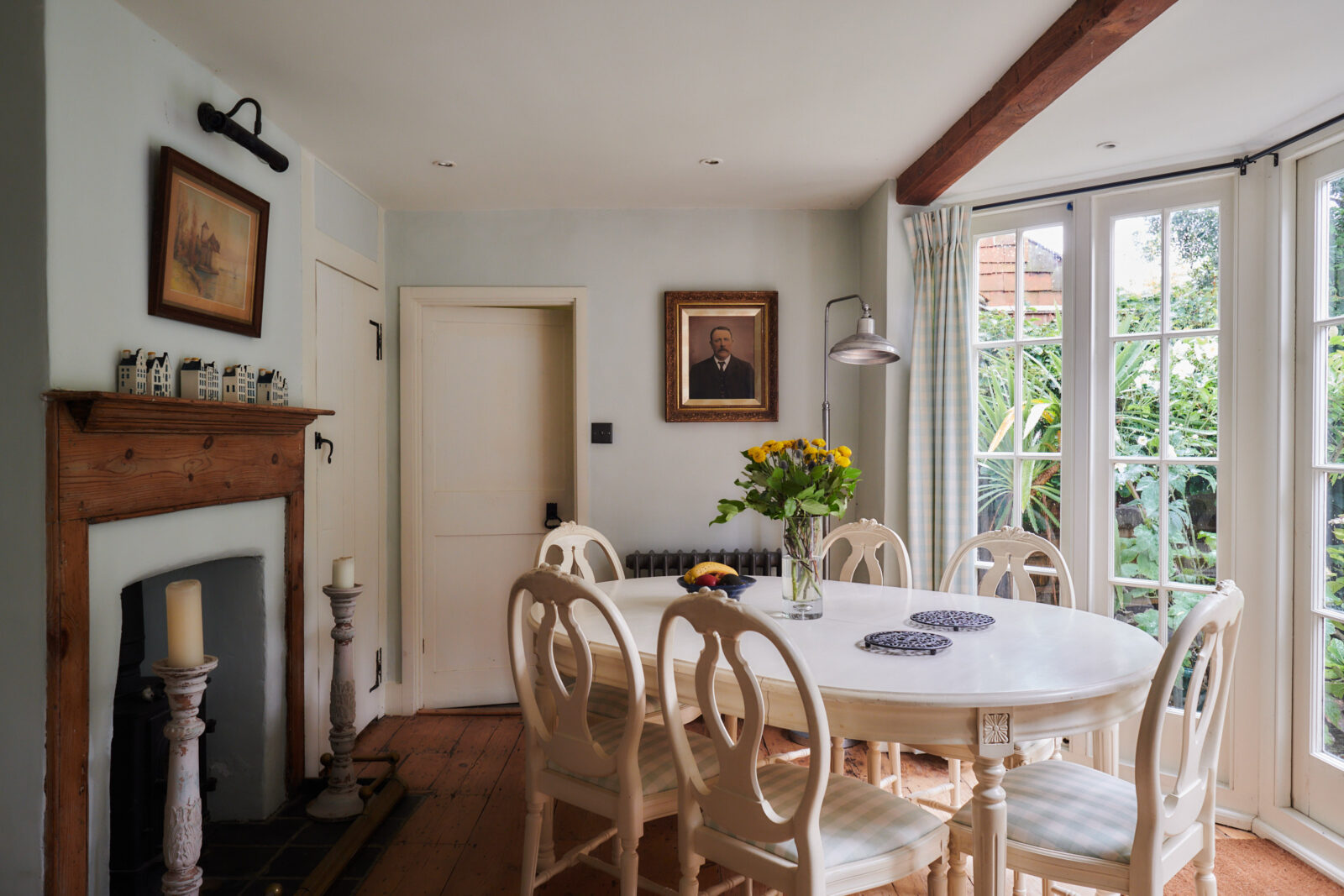
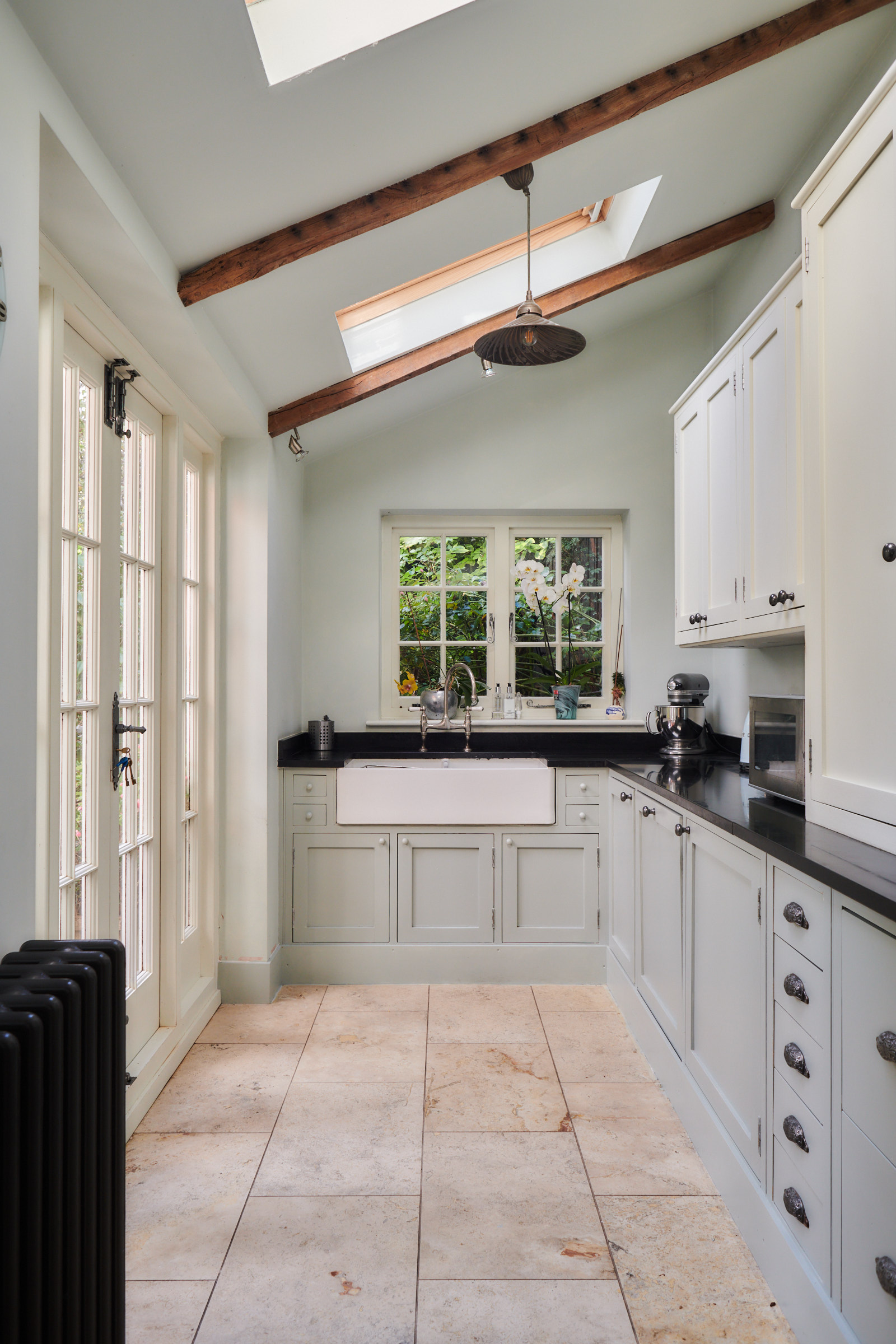
To the rear of the house is a bright and charming breakfast room overlooking the garden. This space has expanses of glazing with a large bay window opening to a patio. A wood burning stove warms the room in cooler months. Next to the breakfast room is the kitchen with hand-built cabinetry and honed black granite worksurfaces. A butler’s sink, range cooker, and exposed beams complete the room.
Also on the ground floor, there is a cloakroom with WC and hand-basin and tiling by Fired Earth.
Downstairs, on the lower-ground floor, a second sitting room is finished in neutral tones and has a window overlooking the street. This could easily be configured into a fifth bedroom.
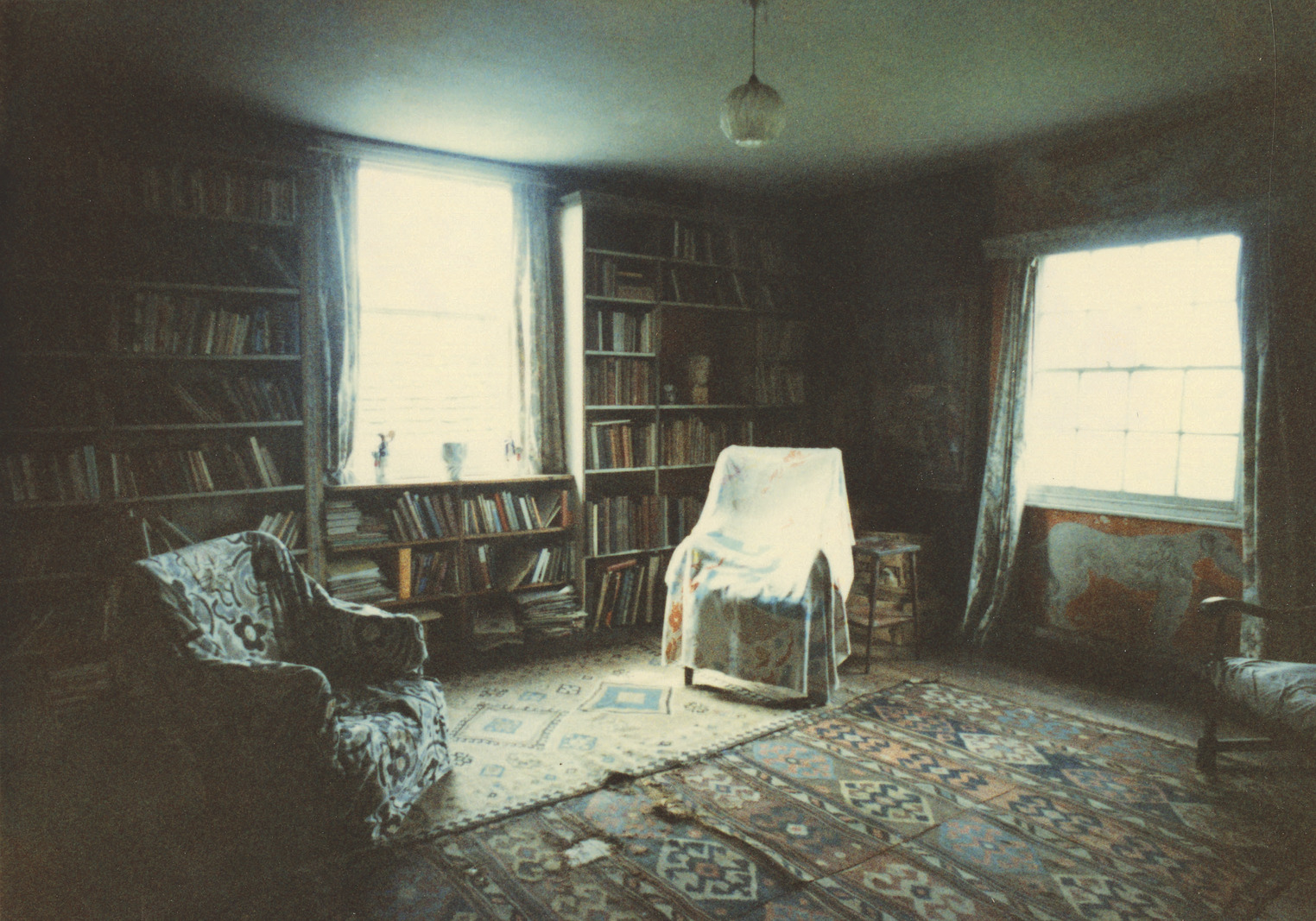
On the first floor, a large bedroom sits at the front of the house, with period fitted wardrobes and a later Victorian fireplace; another double bedroom sits adjacent. To the rear of the home is a charming fourth bedroom, which is currently used as an elegant reading room, with expansive banks of bookcases, an original fireplace and a bay window overlooking the treetops. There is also a beautiful family bathroom on this level, with an antique French bath and Lefroy Brooks sanitary ware throughout. Chequerboard tiles line the floor, and the room has been finished with exposed beams; powder blue walls echo those in the kitchen.
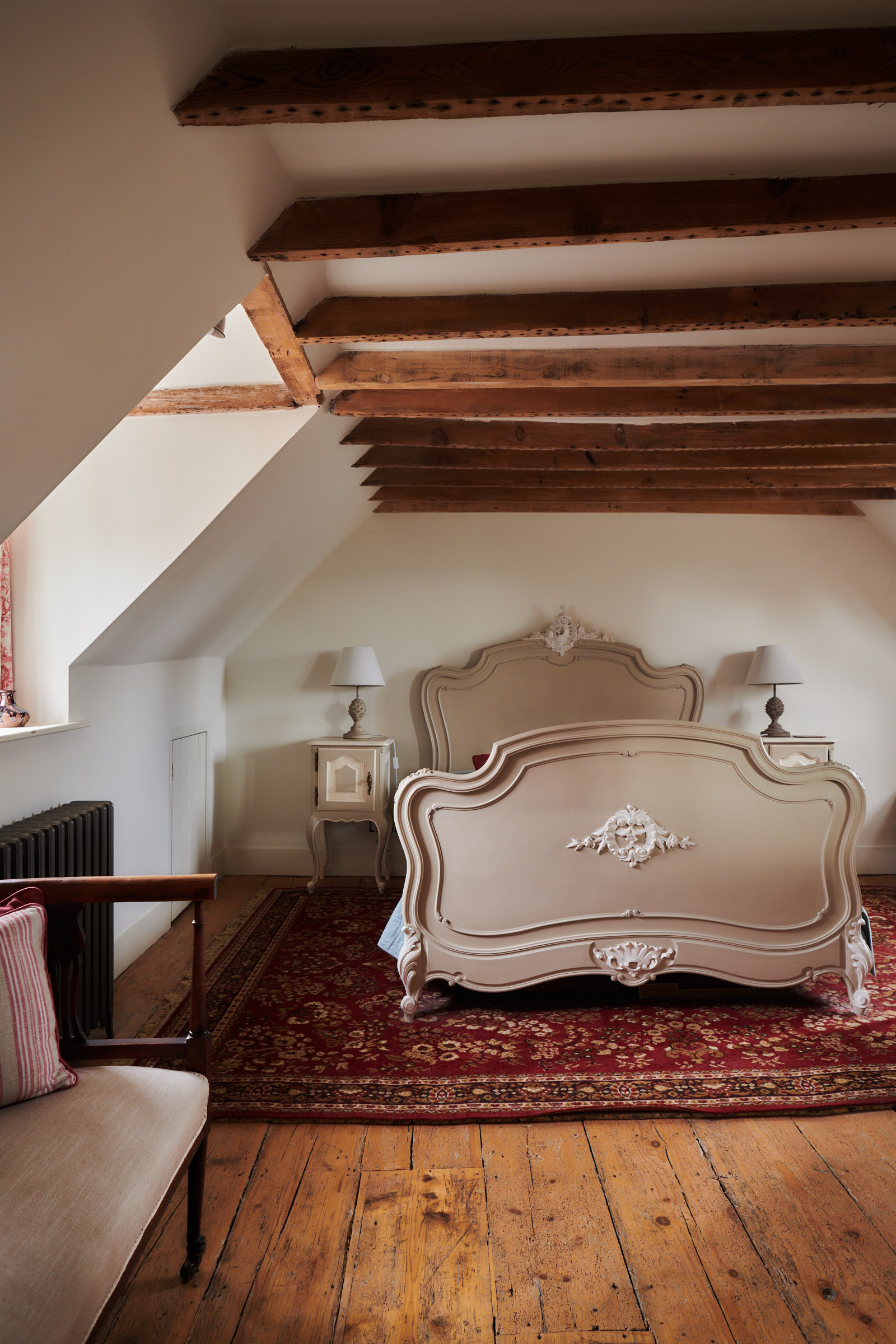
The second floor of the house is home to a spacious primary bedroom suite. The rooms have more exposed beams and dual-aspect windows over the front and rear of the house. Occupying almost the whole floor, the space has beautiful elm floorboards and useful storage areas. A bright shower room with a large walk-in shower sits next to a study area at the top of the stairs, peacefully tucked away from the rest of the house.
The Great Outdoors
A beautifully manicured, well-established garden is flanked by a quiet patio and flowering beds. Rare for the area, the garden is not overlooked and has a peaceful lawn, decked area and charming summerhouse.
Out and About
There is much to do in Lewes itself, which is home to plenty of independent shops, antiquarian bookshops and a number of antique markets. There are numerous cafes, such as Patisserie Lewes and Flint Owl Bakery, and galleries, including The Star Brewery Gallery and The Needlemakers Craft Centre. There are also many independent businesses that stock work by local craftspeople. Glyndebourne Opera House is only a few miles away, and special coaches are laid on at Lewes Station during the season. There is a new cinema and art complex, The Depot, which shows a variety of mainstream and arthouse movies. For a wider range of amenities, Brighton is also close by – only 10 minutes by train – with its countless restaurants, shops and cafes.
For adventures in nature further afield, Lewes is nestled in The South Downs National Park. There are many beautiful walks across the surrounding landscape, including The South Downs Way, which takes a spectacular coastal route over the Seven Sisters to Beachy Head, leading to the sea.
Lewes railway station has direct services to London in around 63 minutes and Clapham Junction in under an hour. There are also direct services to Gatwick Airport that take approximately 31 minutes. Lewes is on the A27, which connects with the A23 London to Brighton road.
Council Tax Band: F

 Related Stories