The complete renovation of the cottage itself was a long-term project of Christopher Gibbs, a renowned interior designer and antiques dealer, who lovingly reinstated many of the cottage’s original features and ensured its charm would be apparent for posterity. For more information, please see the History section.
The Grand Tour
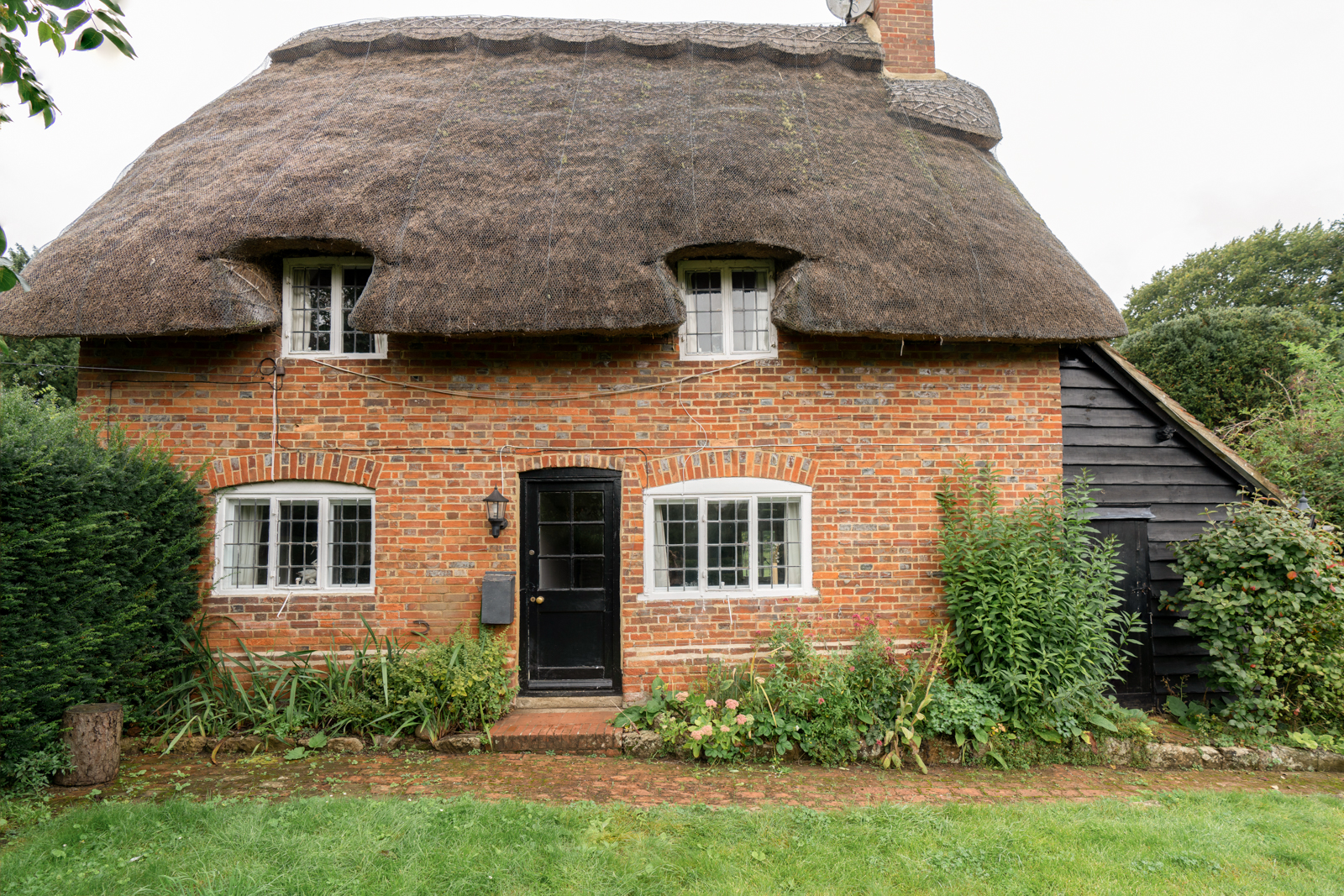
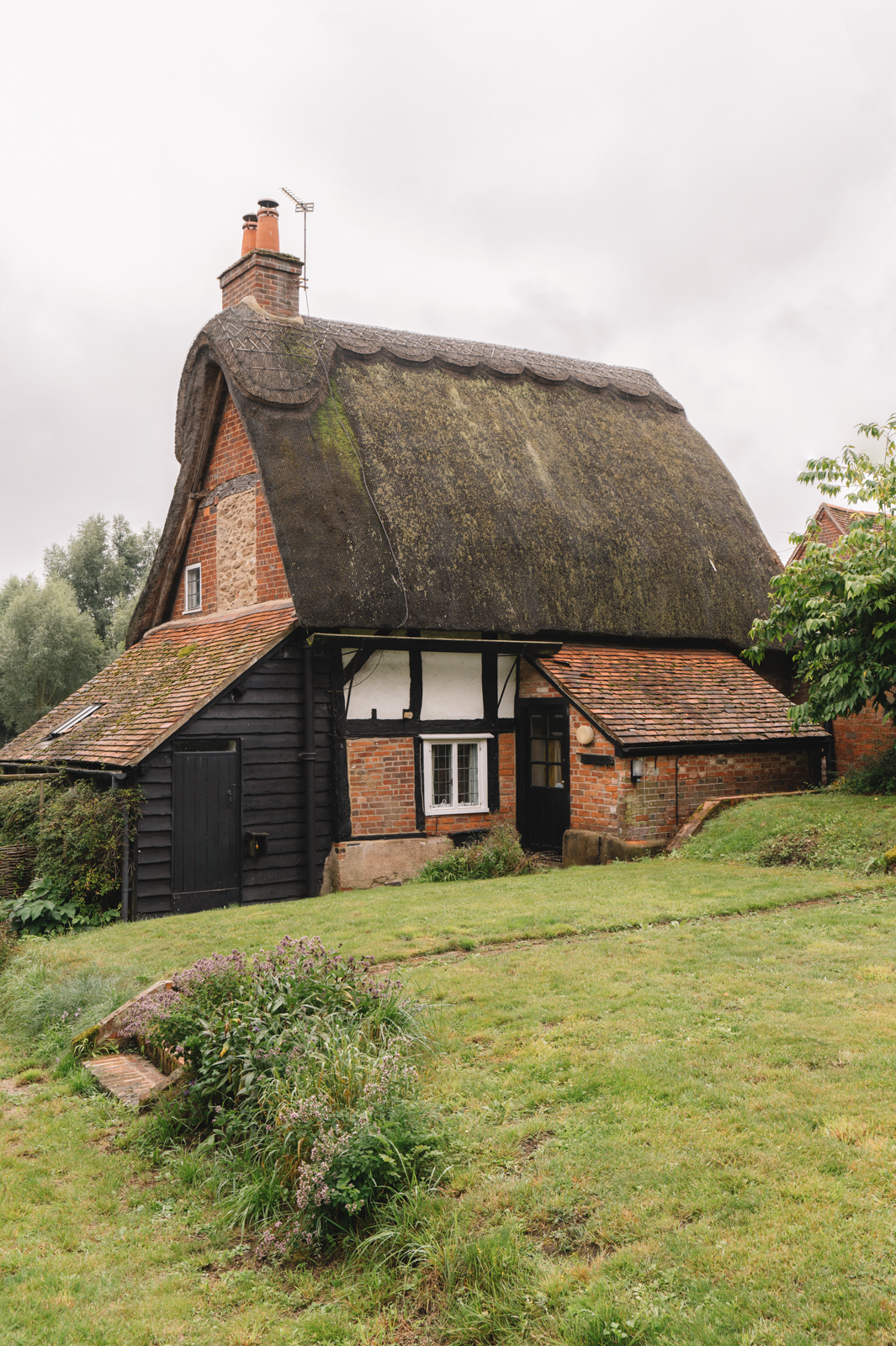
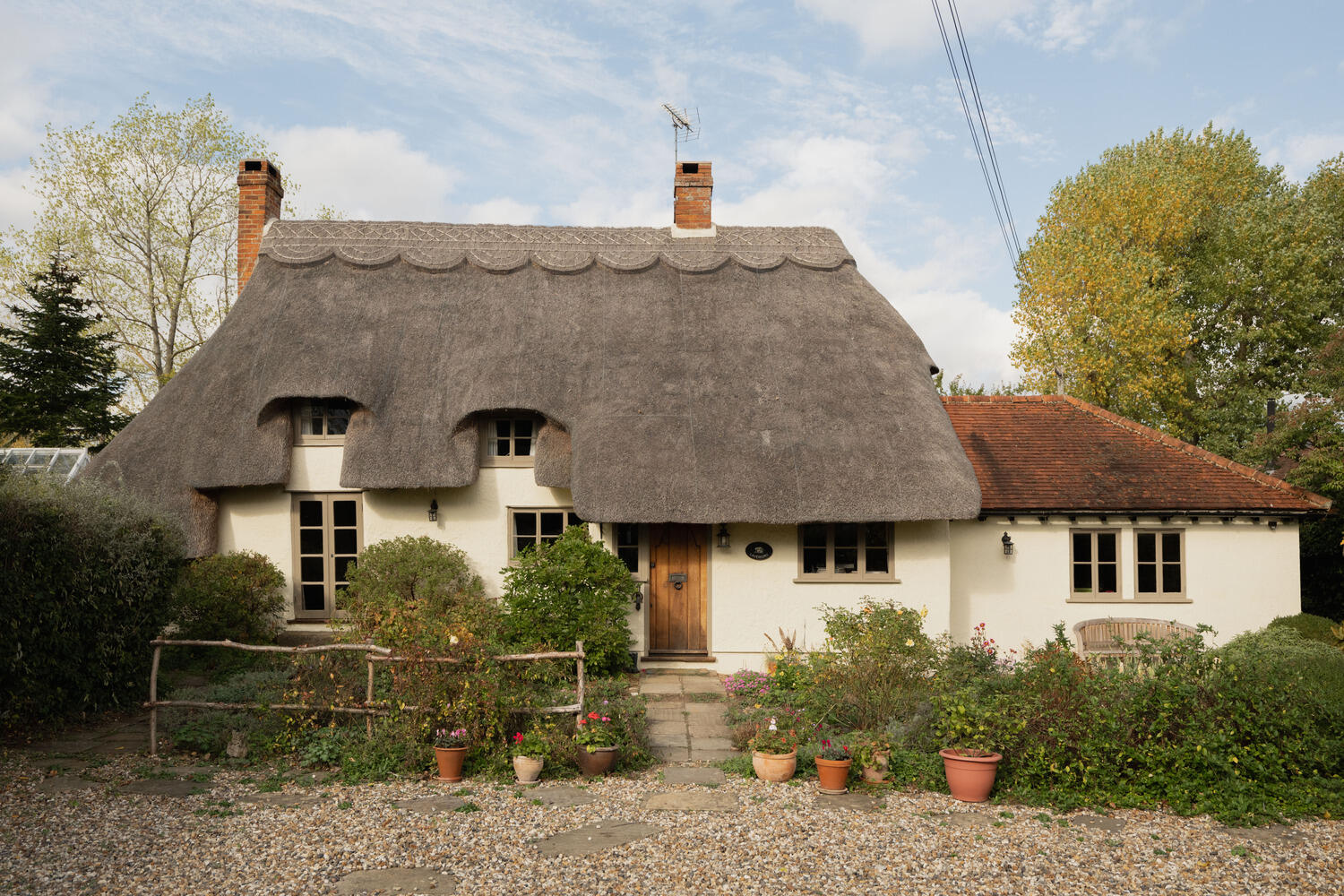
Perched on a high bank and tucked behind a manicured yew hedge, this Grade II-listed 17th-century cottage could not be better situated. Entering the front garden through a tunnel of greenery, a neat brick façade presents itself, punctuated in almost childlike symmetry with four light leaded windows in white-painted timber frames. A steeply pitched and traditionally detailed thatch roof crowns the cottage; the thatch is swept across where the first floor windows interrupt the overhanging eaves, giving the appearance of heavy eyelids.
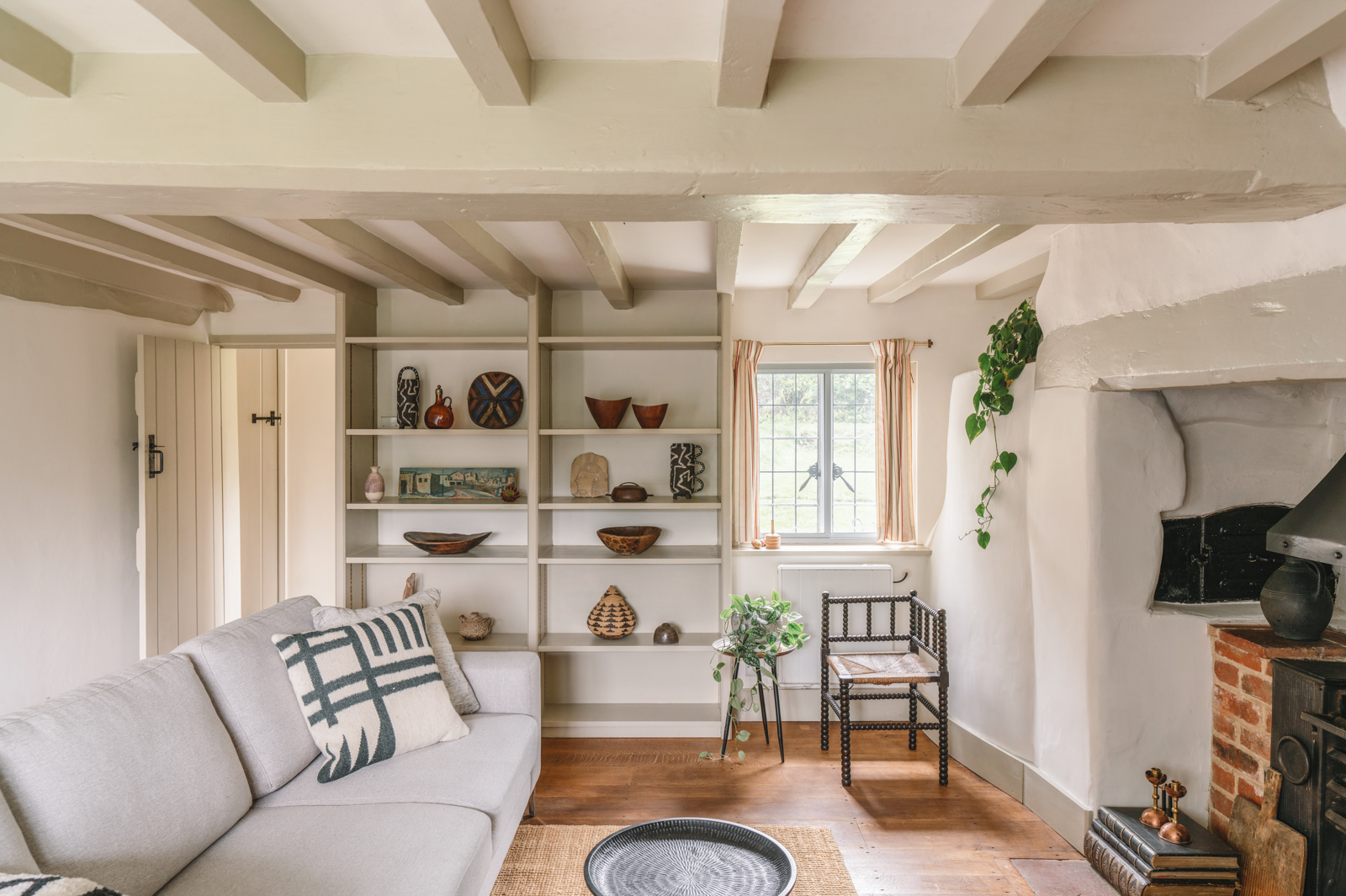
The main space is rich with original features, anchored by a large brick inglenook fireplace, including its traditional bread oven. Timber floors run throughout and the ceilings are criss-crossed with exposed joists. All original timberwork is painted a dove grey that delicately highlights the bones of the building without the framework becoming overbearing. Integrated bookshelves line the rear wall, and windows look to the front and rear gardens.
The refined colour palette continues into the kitchen, where bespoke joinery, painted the same shade as the timber structure, houses an electric hob, oven and dishwasher. A large Belfast sink is backed by a number of ornate Delft tiles, carefully collected by Christopher Gibbs.
For muddy boots and wet coats, a brick lean-to at the rear houses a well-equipped utility space and WC, finished with practical terracotta floor tiles, which frees up space in the rest of the house.
Discretely tucked behind a perennial border, the side annex is perfect for guests or a study, with a separate entrance allowing for privacy, underfloor heating and an en suite for self-sufficiency. The walls, made of whitewashed stone and timber painted storm grey, are rich in texture; the lofty vaulted ceiling creates a light, bright space.
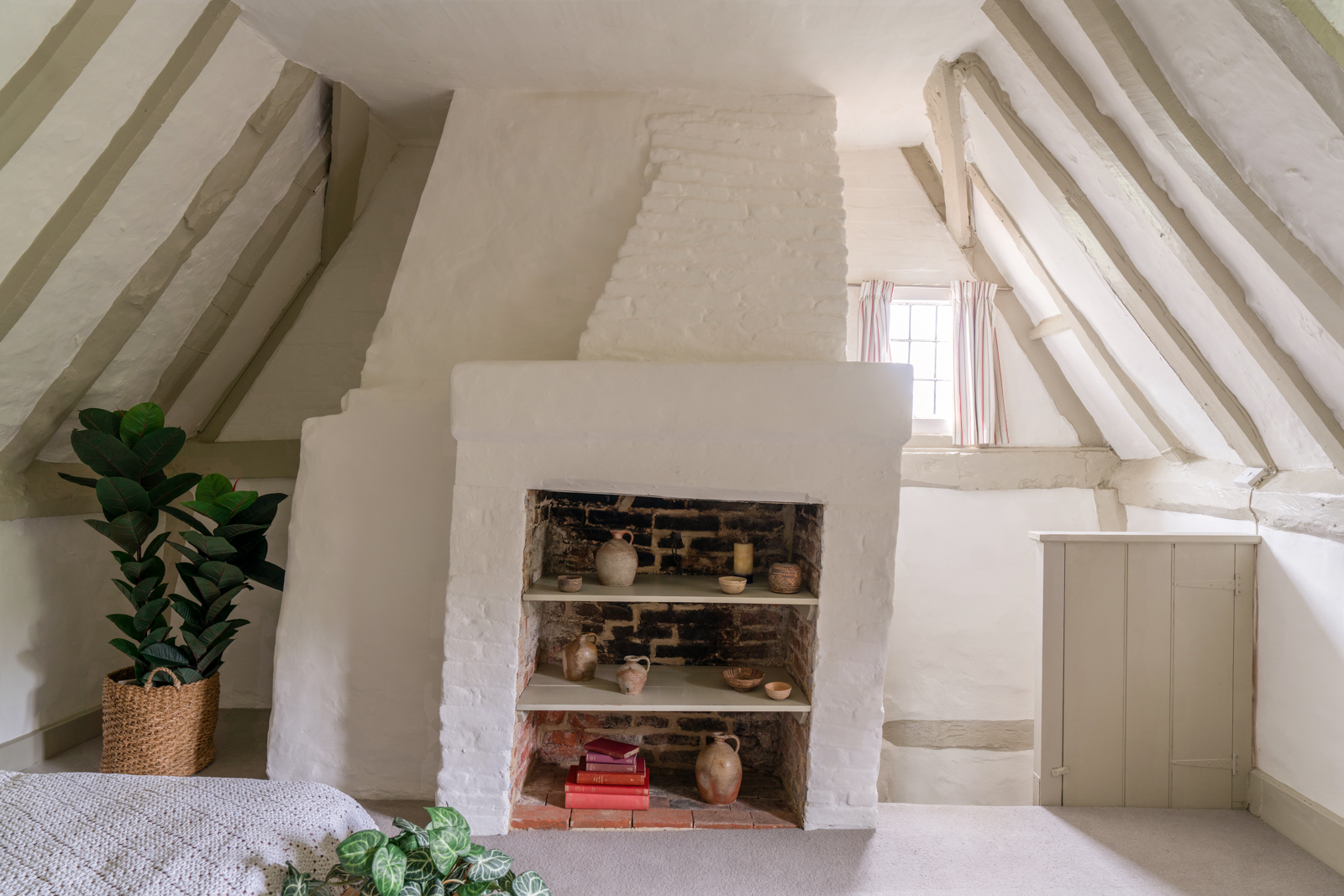
Hidden behind a timber door, well-worn stairs lead up to the first floor. In this cavernous bedroom space, the original structure of the cottage is revealed, its oak skeleton warped and worn by time and carefully restored from a piecemeal plan to its full volume. Windows frame views towards the Thames in one direction and a romantic view of the village church spire in another. The room is centred around the original brick chimney breast and fireplace; its asymmetry and charm are typical of the cottage.
Alongside the bedroom is a substantial bathroom with plenty of space for a dressing area. The bath sits centre stage and has views out onto mature willows, prized as material for cricket bats; the Thames glides peacefully past in the distance.
The Great Outdoors
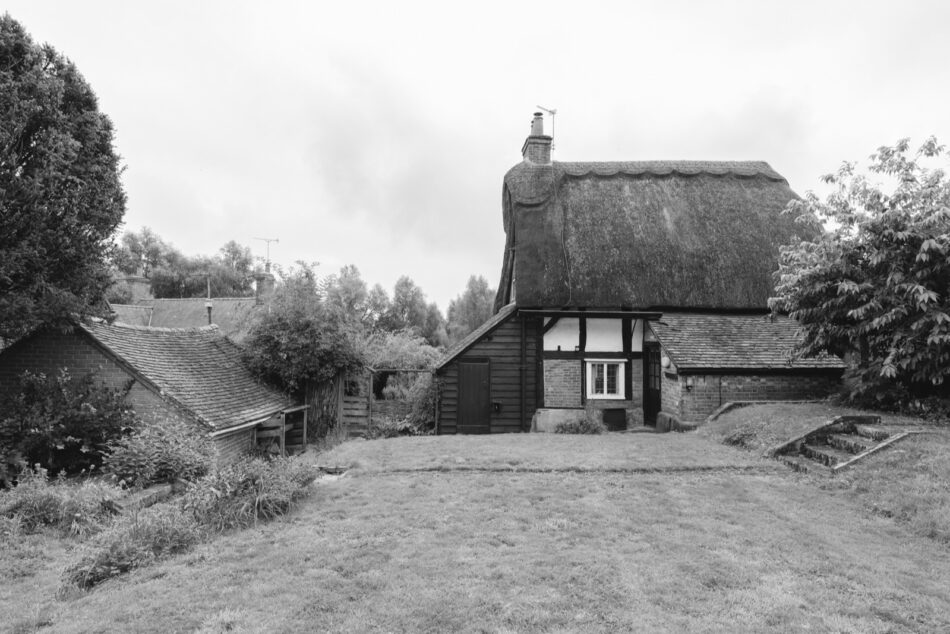
Perched atop a steep bank, the cottage is surrounded by formally composed gardens, and has a dedicated parking space. To the front, a concise and private lawn is bound by yew hedging, a cutout providing access to the house. A rambling rose clambers over the arched entrance, and the primary façade is flanked by well-established rosemary, lavender and winter jasmine.
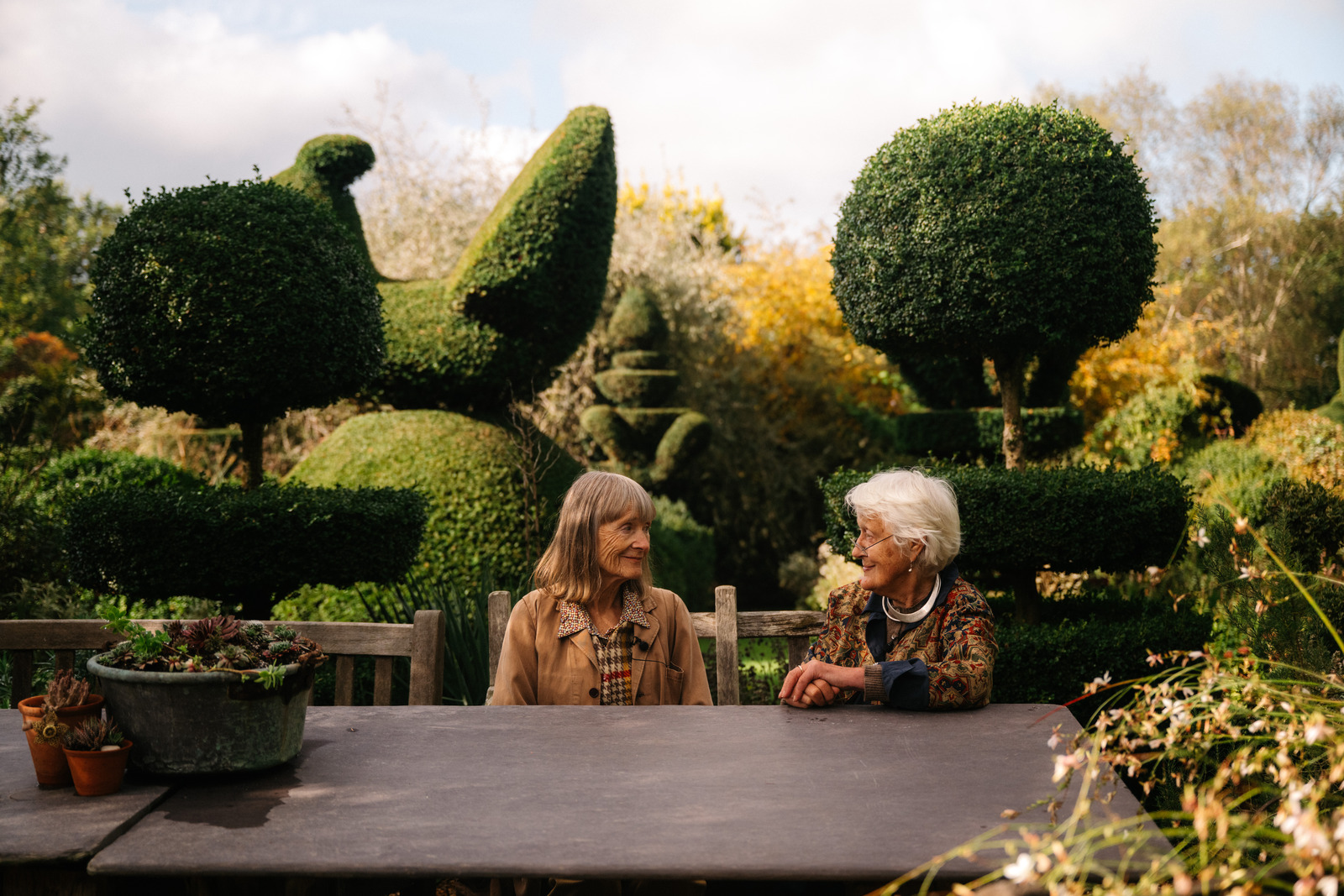
Fragrant elderflower hangs over the woven willow gateway into the rear walled garden. Here, the formal structure creates an abundant and easy-to-maintain garden. A banked lawn is bound by brick walls and established perennial borders of budleja, tree peony and echinops, creating an abundant display. A mature fig tree lies resplendent against the south-facing wall at the end of the garden, and a glass greenhouse sits beyond, with space for a small vegetable garden. Two large yew trees have been trimmed into graphic shapes arching over a pathway that cuts an axis through the garden.
Out and About
Clifton Hampden lies on the north bank of the Thames, to the south of Oxford; despite its rural setting, it is a well-provisioned area. The village is home to a primary school, GP surgery, post office and local store, church. Its pub is mentioned in Jerome K. Jerome’s book Three Men in aBoat: ‘Round Clifton Hampden, itself a wonderfully pretty village, old-fashioned, peaceful, and dainty with flowers, the river scenery is rich and beautiful. If you stay the night on land at Clifton, you cannot do better than put up at the “Barley Mow”.’
A variety of landscapes are within easy reach; to the north, the University of Oxford’s Harcourt Arboretum has over 130 acres of rare and exotic trees, and to the south, Wittenham Clumps is a local landmark with far reaching views of the expansive countryside. The adjacent Chiltern Hills are home to the wonderful Garsington Opera and many fantastic walking routes.
Oxford is 20 minutes’ drive away, and has a plethora of cultural experiences, including the famous Covered Market, which hosts everything from artisan grocers to independent cafés and boutiques. Entertainment is abundant at the Ashmolean Museum, the Sheldonian Theatre, Modern Art Oxford, Holywell Music Room, Bodleian Libraries and the History of Science Museum.
Access to the city is just as easy as the countryside, with trains from nearby Didcot Parkway running direct to London Paddington in 40 minutes.
Council Tax Band: D

 Related Stories