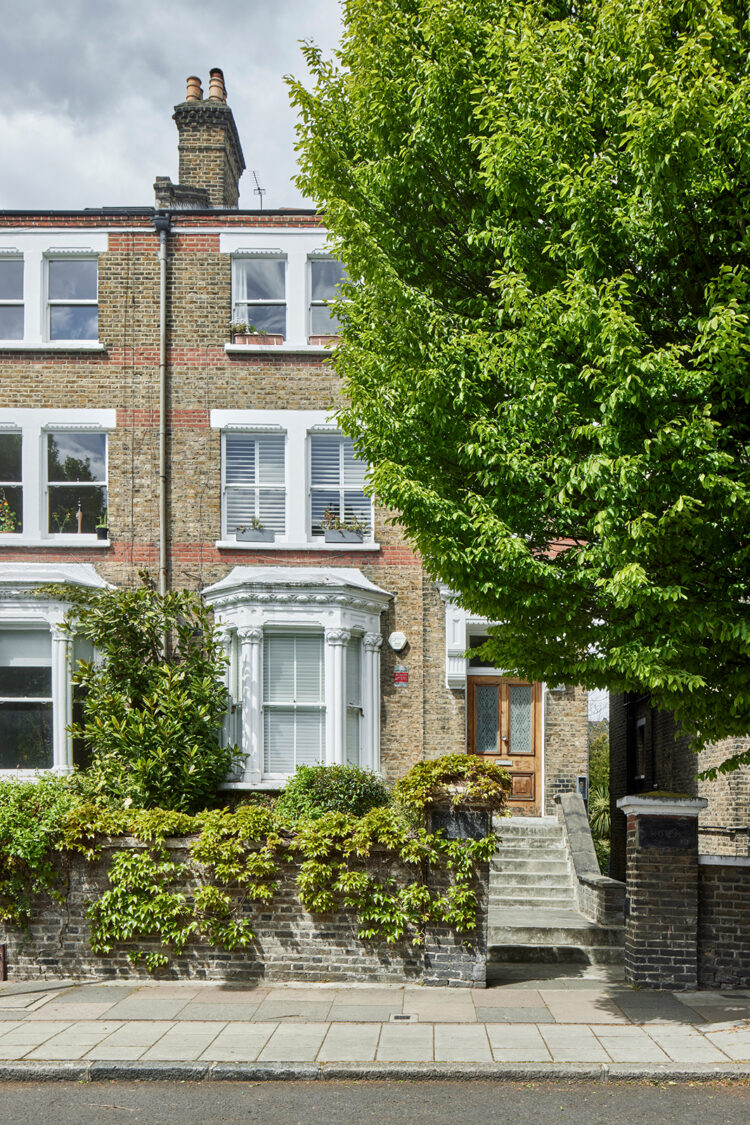
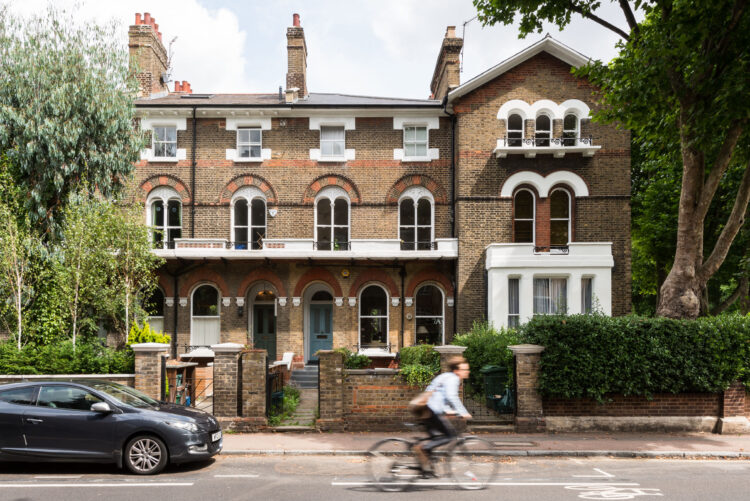
Drawing on 16th, 17th and early 18th-century sources, Shaw’s instantly popular houses could be distinguished by their carved red brick, terracotta and tile-clad surfaces, set off by gleaming white woodwork, oriels and decorative balconies. In 1877, Shaw built an entire village in this style. Bedford Park would later become known as the first ‘garden suburb’, occupied by a new, artistically minded middle class, and described by the Victorian commentator Sir John Betjeman as “the most significant suburb built in the last century, probably in the Western world.”
Because of the variety and scope of the Victorian terrace, their history in the decades since the Victorian age is, like the history of Britain itself, plural and complex. The mid-20th century saw new waves of immigration to Britain, as communities from across the Commonwealth settled in cities to fill factory vacancies and boost the post-war economy. Many new arrivals found homes in what were, by then, run-down, ill-maintained terraces. Conditions were often overcrowded and the situation was made more difficult by discrimination and anti-immigration sentiment (until 1968, it was legal to deny housing based on race, nationality or ethnicity).
In some cities, like Leeds, entire neighbourhoods of Victorian back-to-backs, once home to workers, have now come to accommodate mostly student populations – a fact that speaks to Britain’s transition from an industrial to a post-industrial economy. In London, the story of the city’s population growth and economic prosperity since 2000 can be traced through the house prices of inner-city neighbourhoods with a large volume of Victorian stock. Not just a home, the Victorian terraced house is truly a snapshot of Britain’s complex, multi-faceted history.
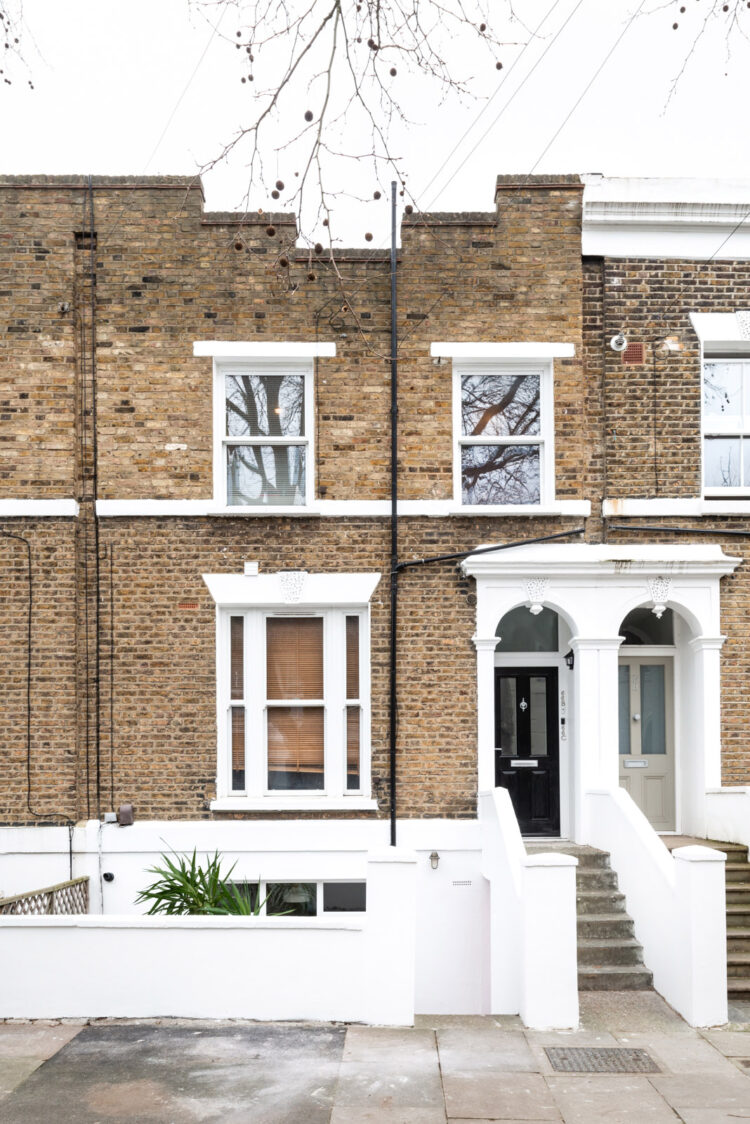
Nowadays, Victorian terraces have become a symbol of British home life, sought after for their timeless proportions, historic details, and pleasing façades. They are found throughout the country; for example, the worker’s cottages on the suitably named Copperfield Street, situated in an area strongly associated with Dickens, are just a stone’s throw from Inigo’s offices. A row of humble two-up, two-down houses, all characterised by their low ceilings and pretty, gabled front doors, Winchester Cottages were built by the social reformer Octavia Hill, perhaps best known as one of the three founders of the National Trust. Nearby, her legacy of Red Cross Garden, a pioneering social housing project, is now a thriving public space, with Tudor revival cottages facing onto a community hall and lovingly restored gardens.
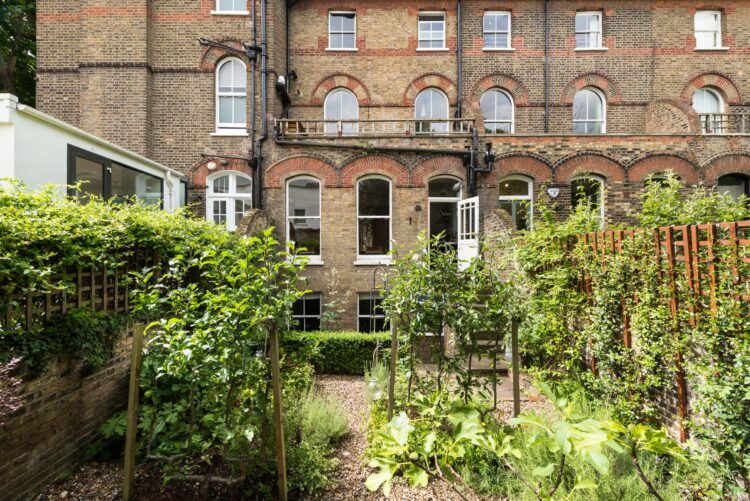
Perhaps it is this kind of adaptability that best describes the enduring appeal of the terraced house. Journalist David Dimbleby remarks that the Victorians built homes “designed to be a refuge from the world outside, a self-contained shrine to family life”. Transformed time and again over the years, these spaces participate in the spirit of community living whilst maintaining a sense of individual privacy; behind each uniform exterior lie rooms divided by brick walls just thick enough to stop neighbourly conversation from filtering through – but not quite thick enough to block the sounds of life out completely. It is this unassuming, flexible design that has proven so popular in forming the foundations of city living today.
FURTHER READING
The Victorian Society Book of the Victorian House
A Home with a History: the elegantly restrained interiors of Georgina Mann’s Victorian terrace
A History of English Architecture by Peter Kidson, Peter Murray, and Paul Thompson
How We Built Britain (TV series) by David Dimbleby