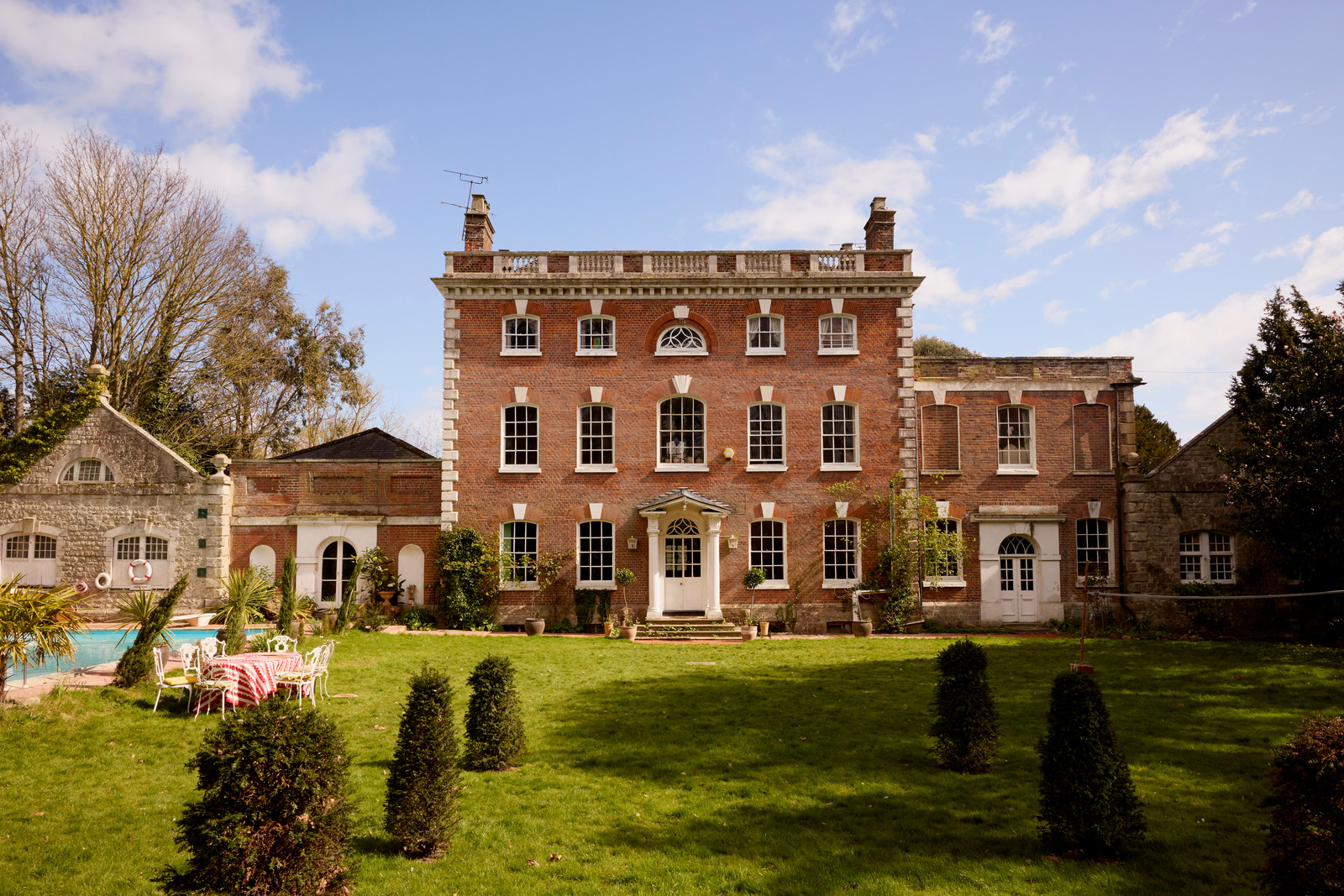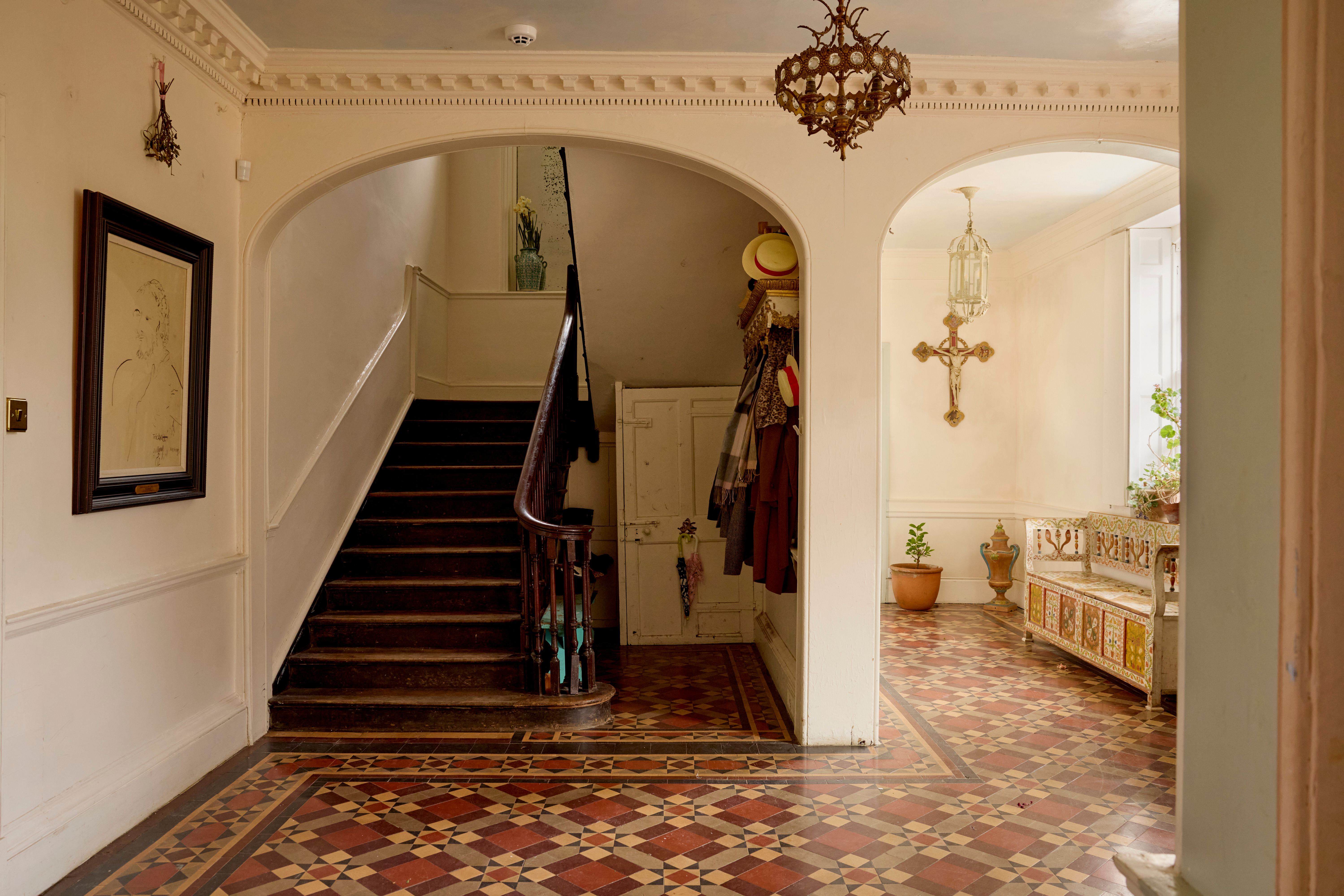



Barming Place has as Kentish a background as they come, finished in 1768 for a family of successful fruit and hops farmers. At one point, it was the only house in the domain – a paradigm of the Georgian red-brick, with just a Norman church for a neighbour. “It’s the archetypal English Georgian house,” says Robert, “the kind of house they based doll’s houses on.” Now, the village is a little more developed, “But in summer we’re so secluded, surrounded by a cathedral of trees and so close to the river, which is the natural border between urbanised and rural Kent. Beyond the Medway, it’s just fields and farms, all the way to the coast.”
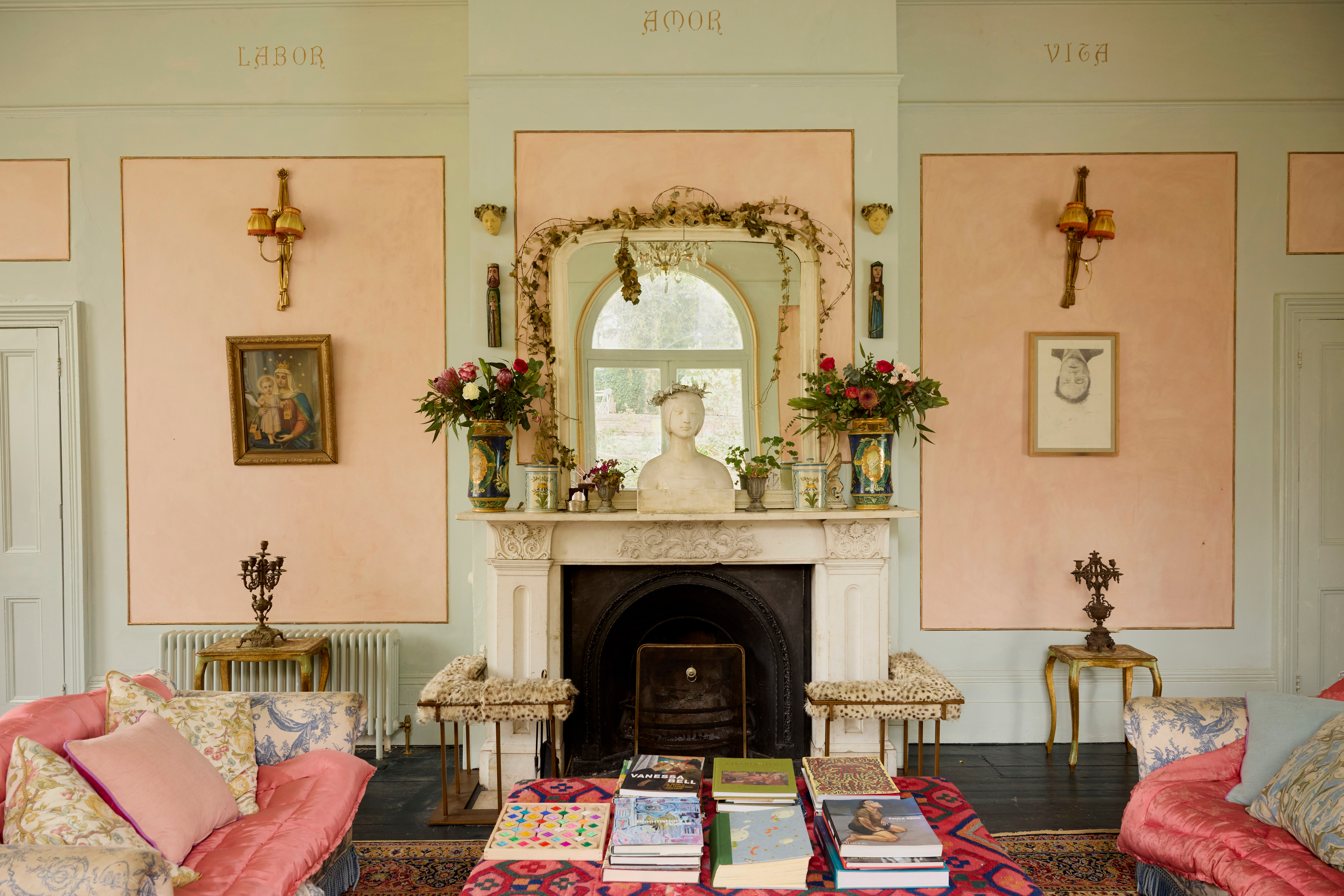
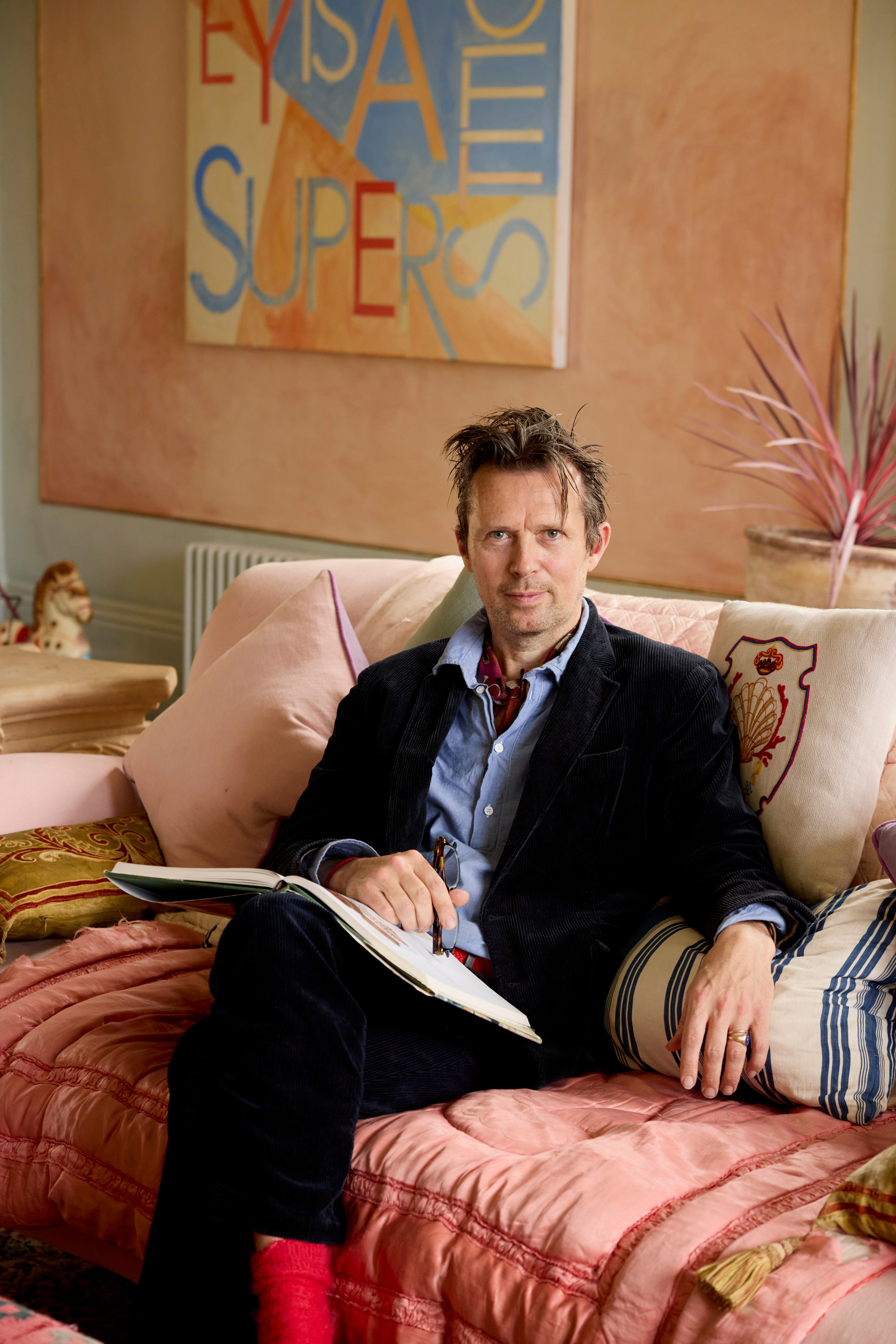
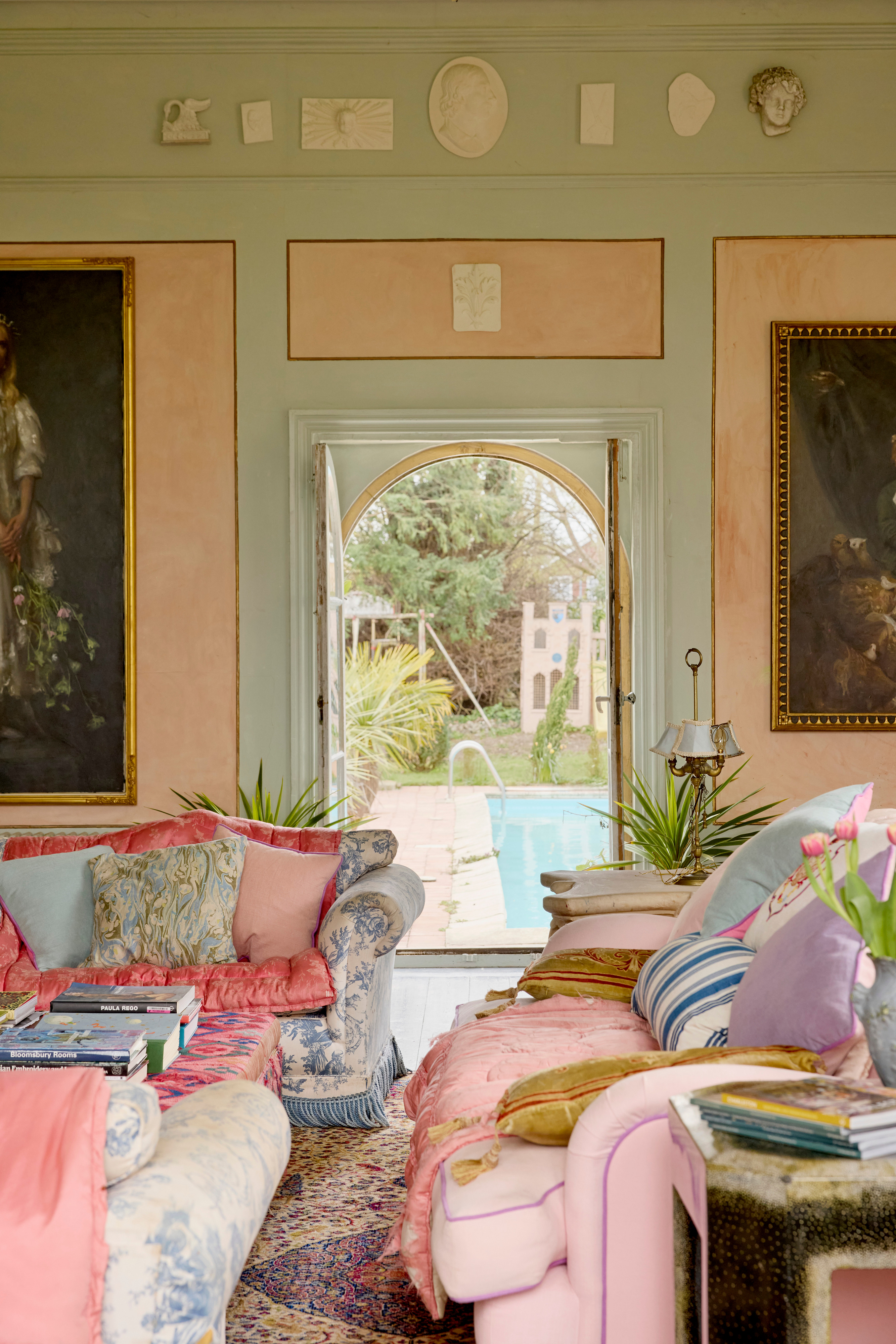
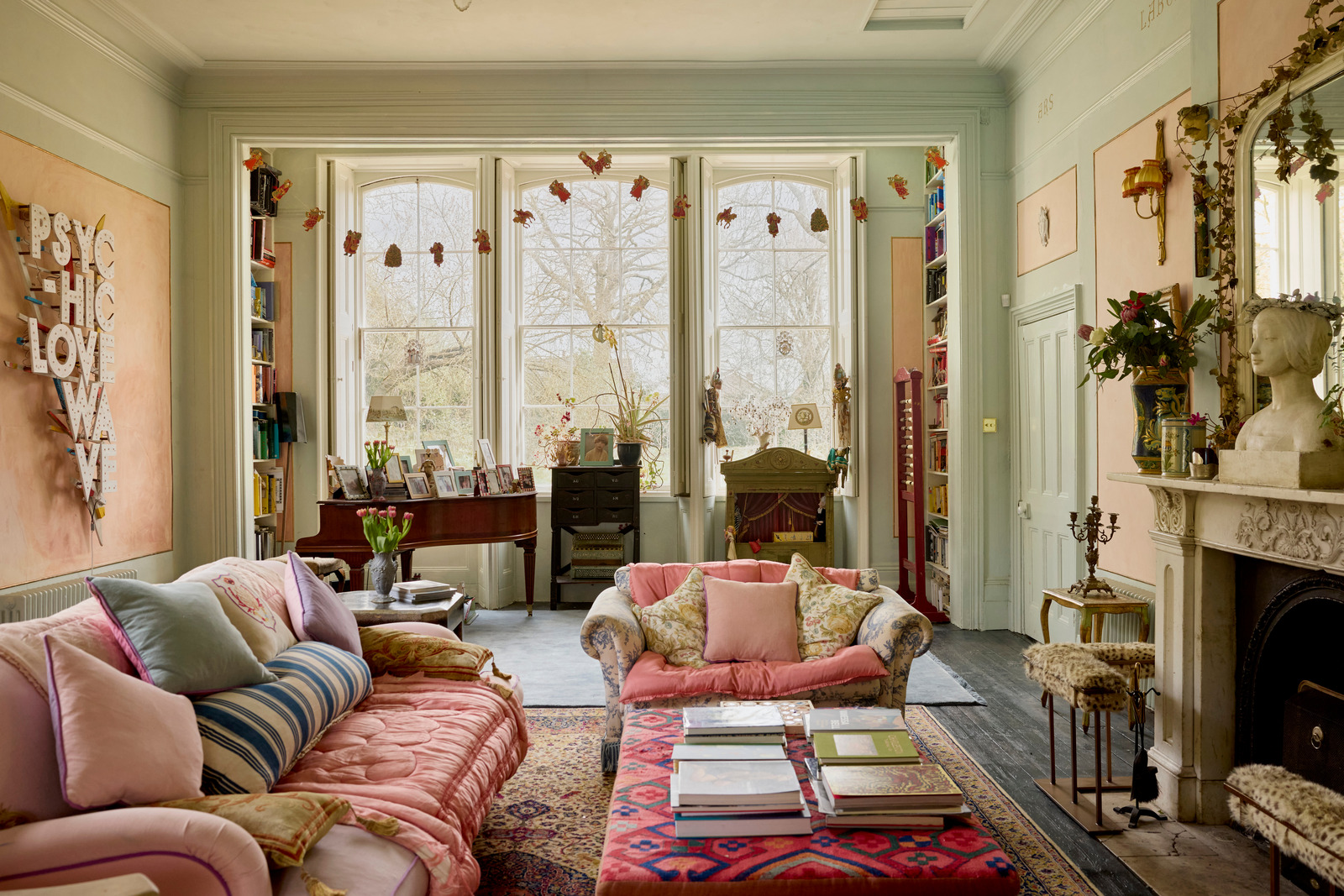
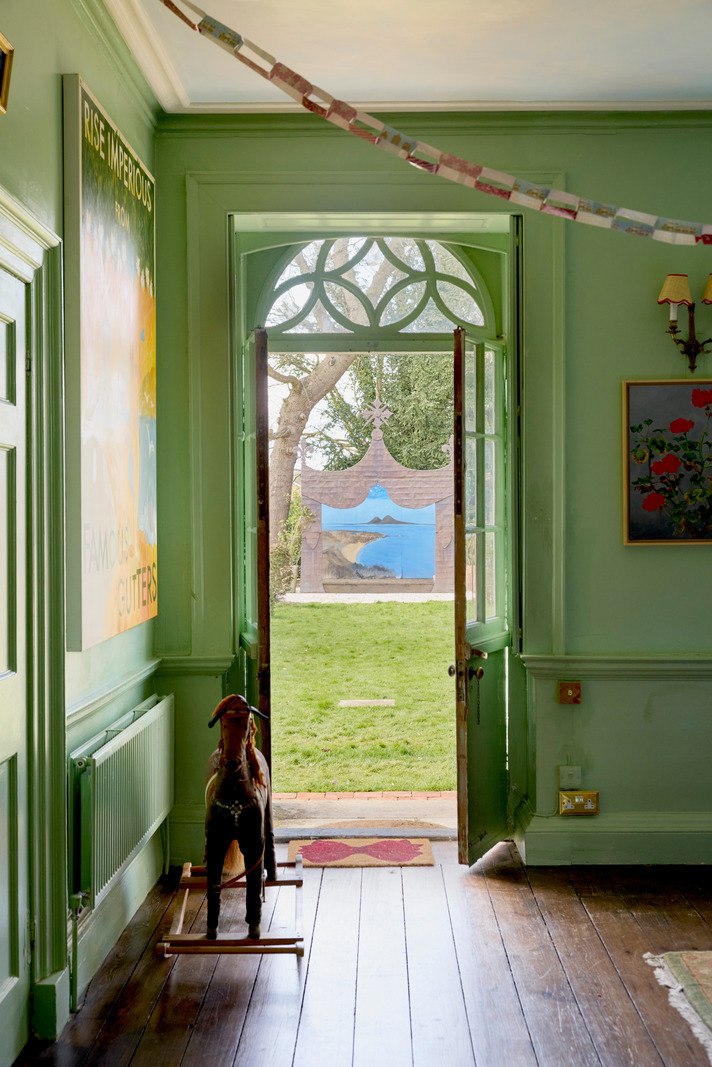
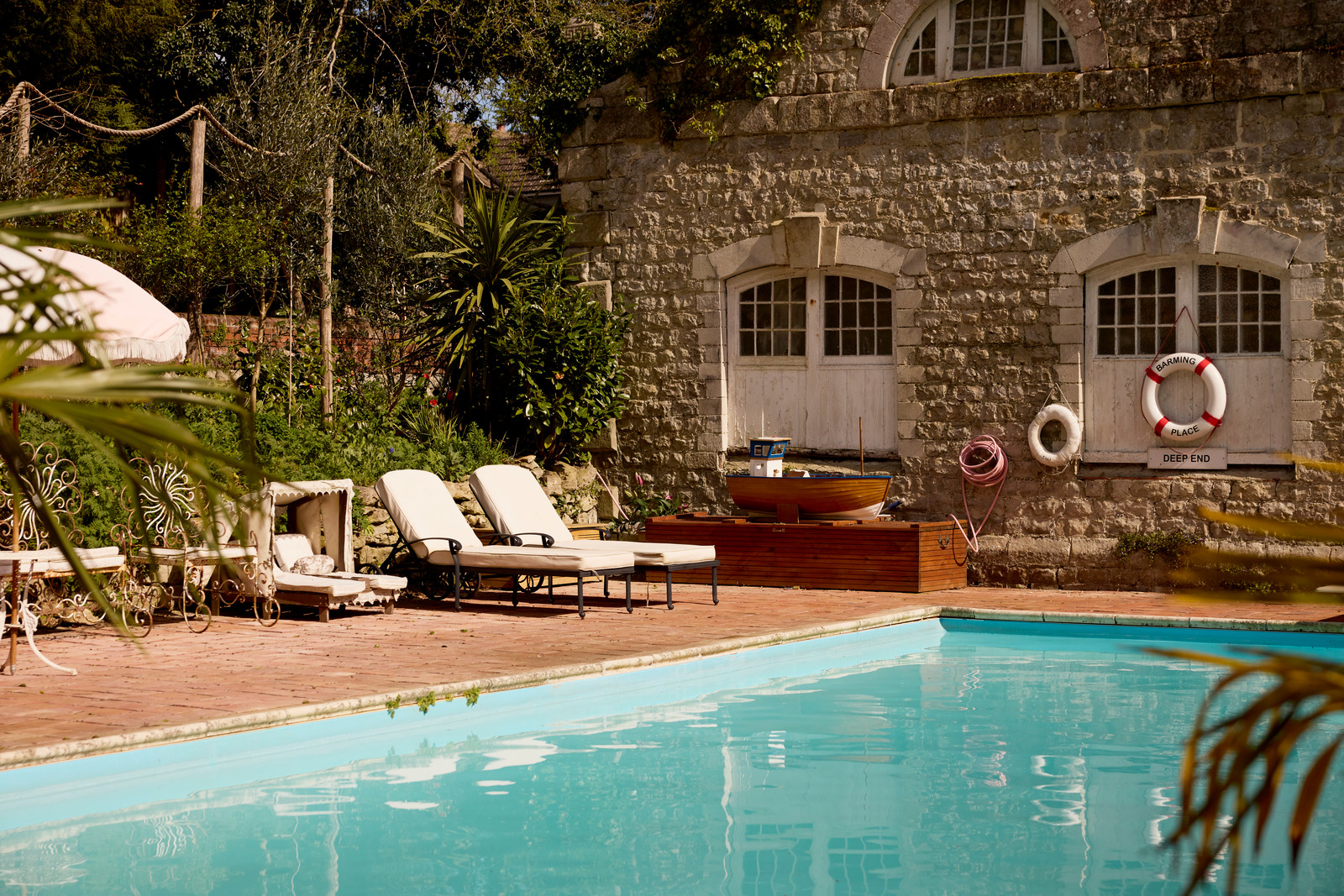
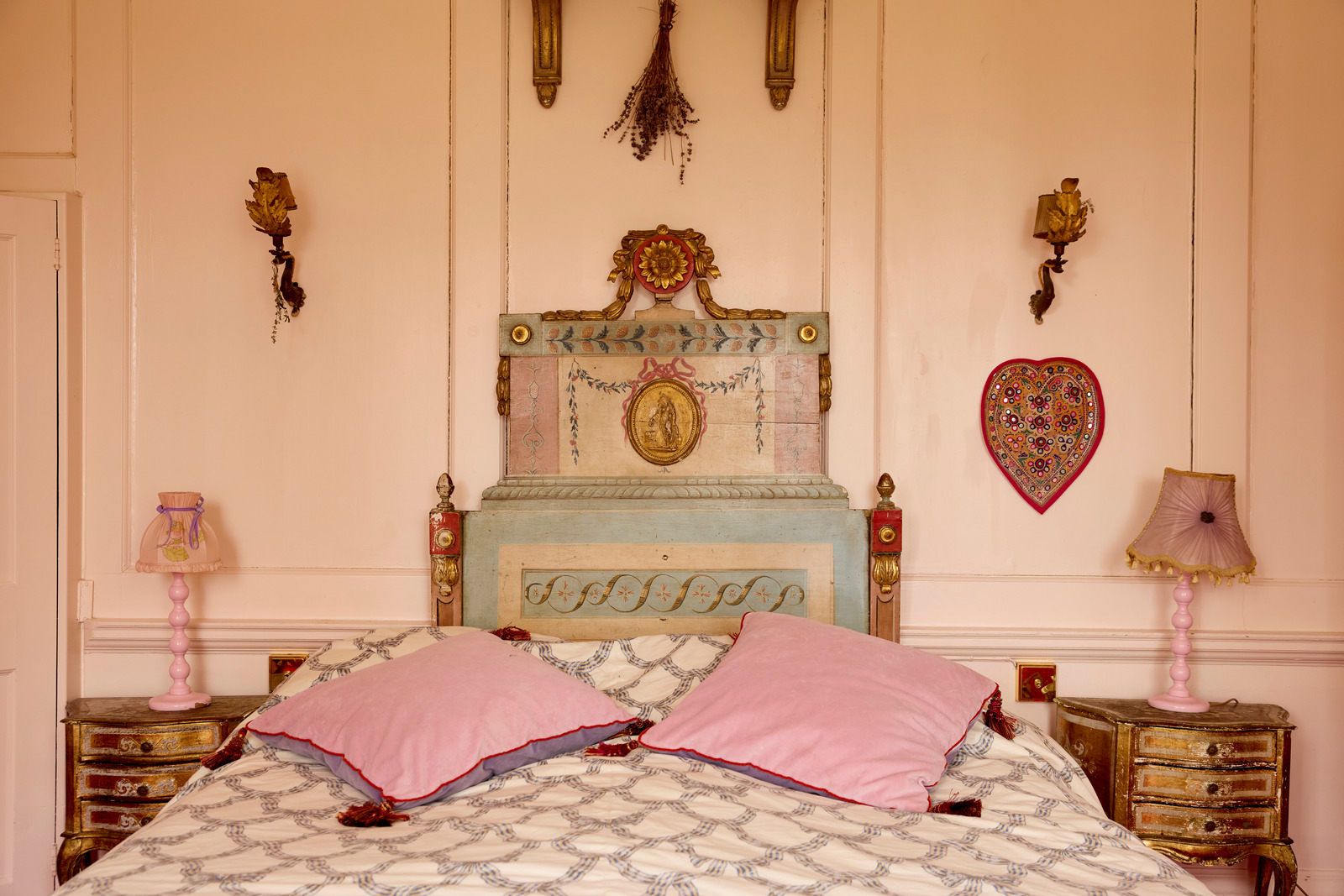
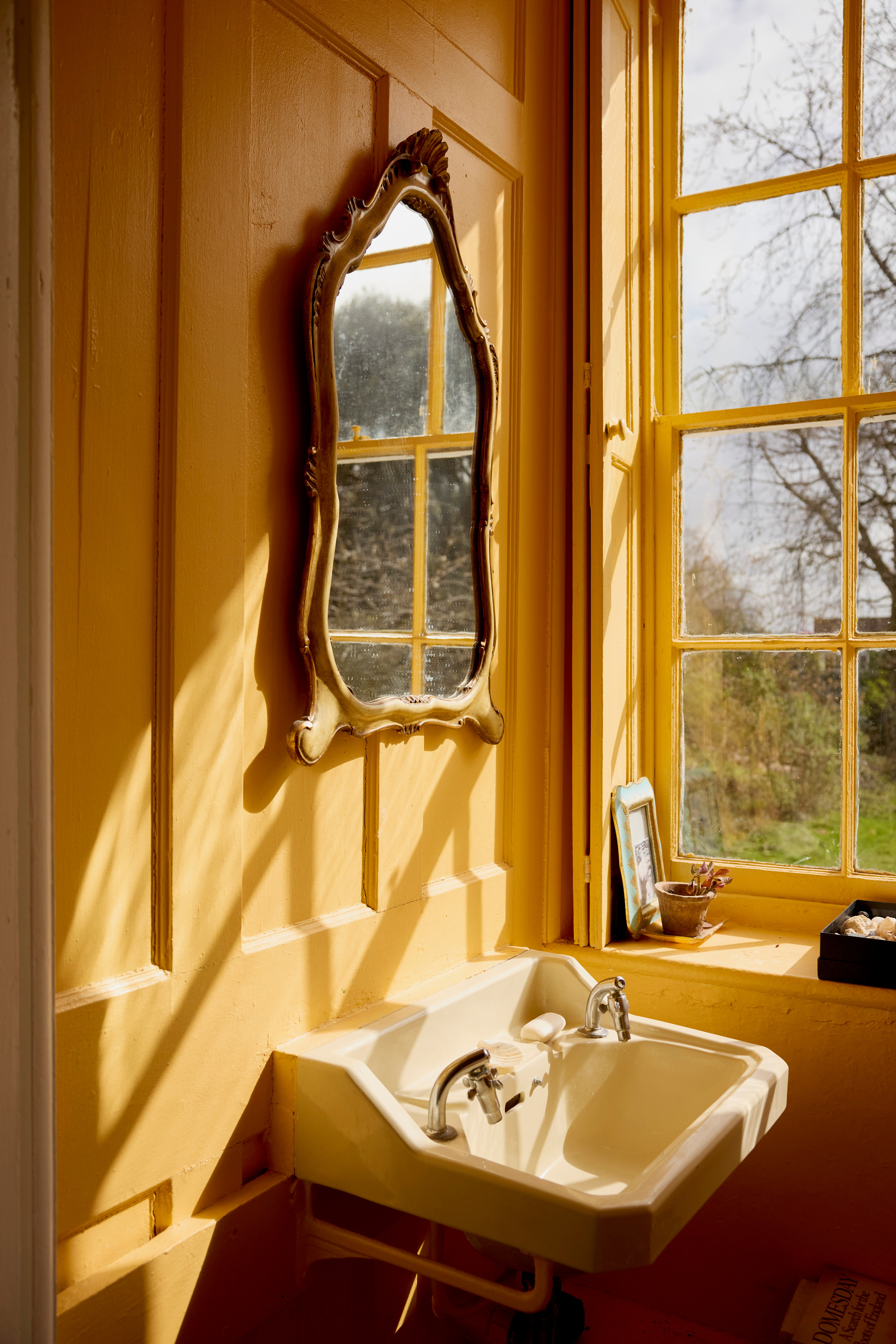
In the six years Robert, whose work is currently on view at Charleston House’s Lewes outpost, and his wife – also a poet, as well as an actress and filmmaker – have lived at Barming Place, they have imbued its formerly decrepit rooms with an air of genuinely eccentric charm, pairing distempered walls with candy-shop colour palettes and umpteen Italian chandeliers. There are art studios and writing spaces, a music room for jam sessions and a miniature theatre – which Robert has painted as the Bay of Naples – for the children in the garden, strides away from a somewhat less tempestuous swimming pool of heavenly Hockney blue. Nearby, Robert’s own monumental poetry installations tip everything briefly towards the sublime. It is a house made for enjoyment and creativity, a place for a happy, fulfilled life, as the words emblazoned on the walls of the music room – ‘Ars Labor Amor Vita Ars’ – remind any fortunate denizens: ‘Art, Work, Love, Life, Art’.