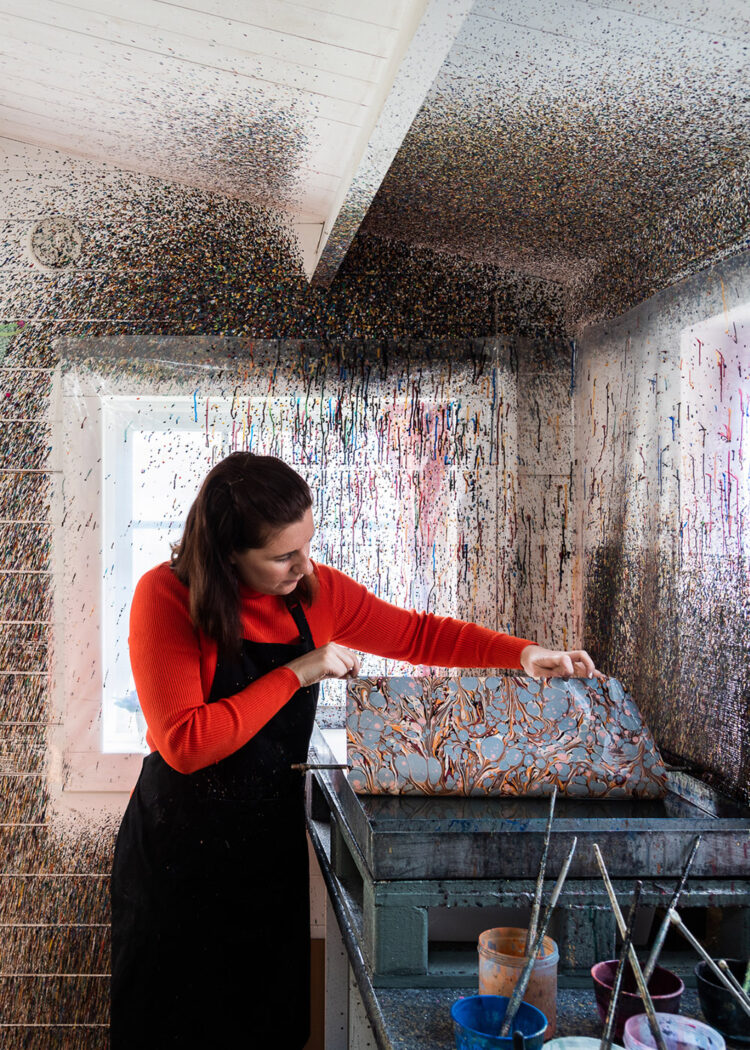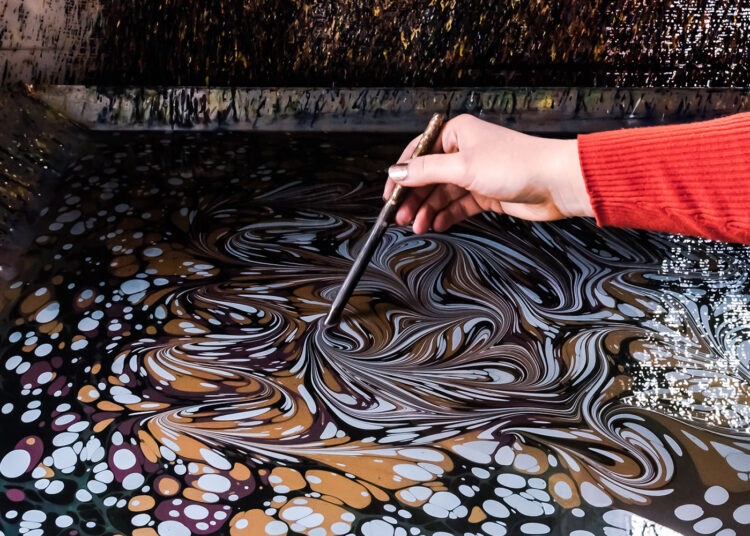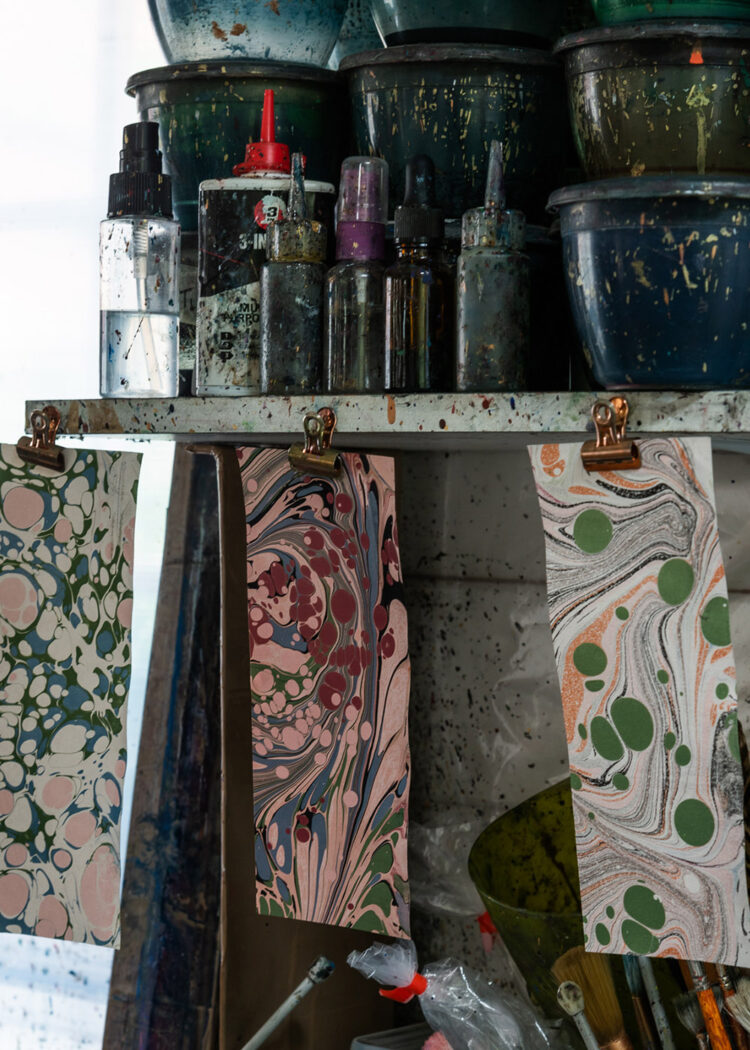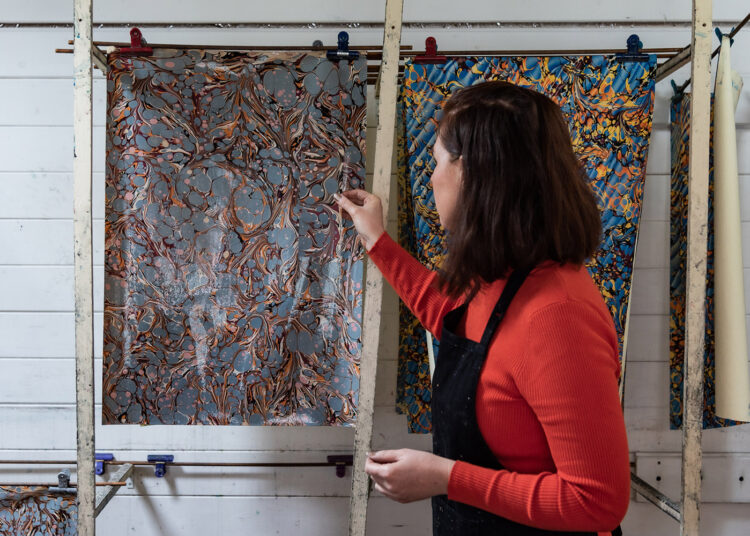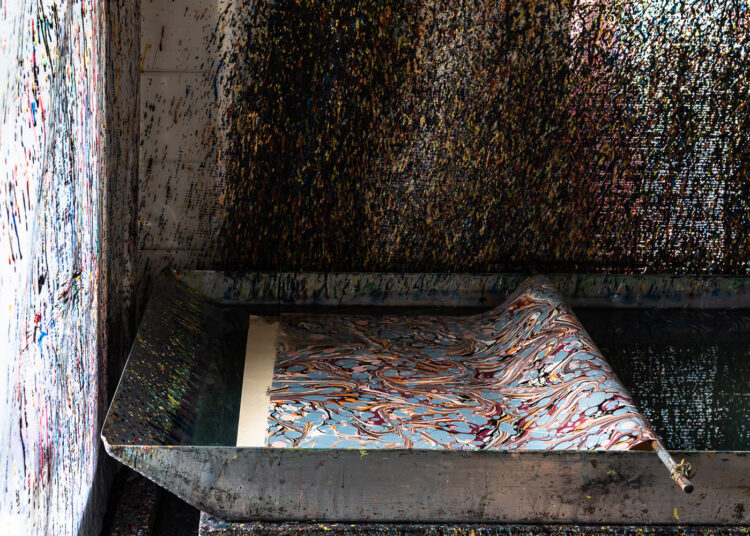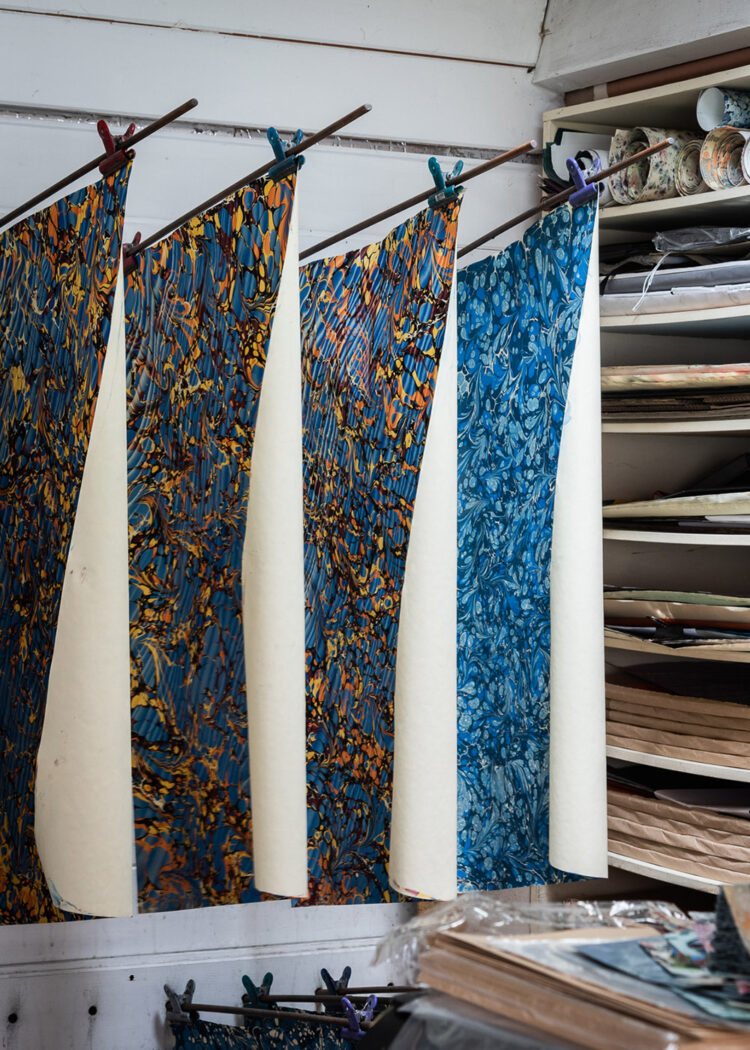



Sometimes an idea is so good that it barely needs changing, even while the world changes around it. Take, for example, the art of paper marbling. It has been practised, in some form or another, since the 12th century, when the process of suminagashi (literally “ink floating”) was first carried out in Japan.
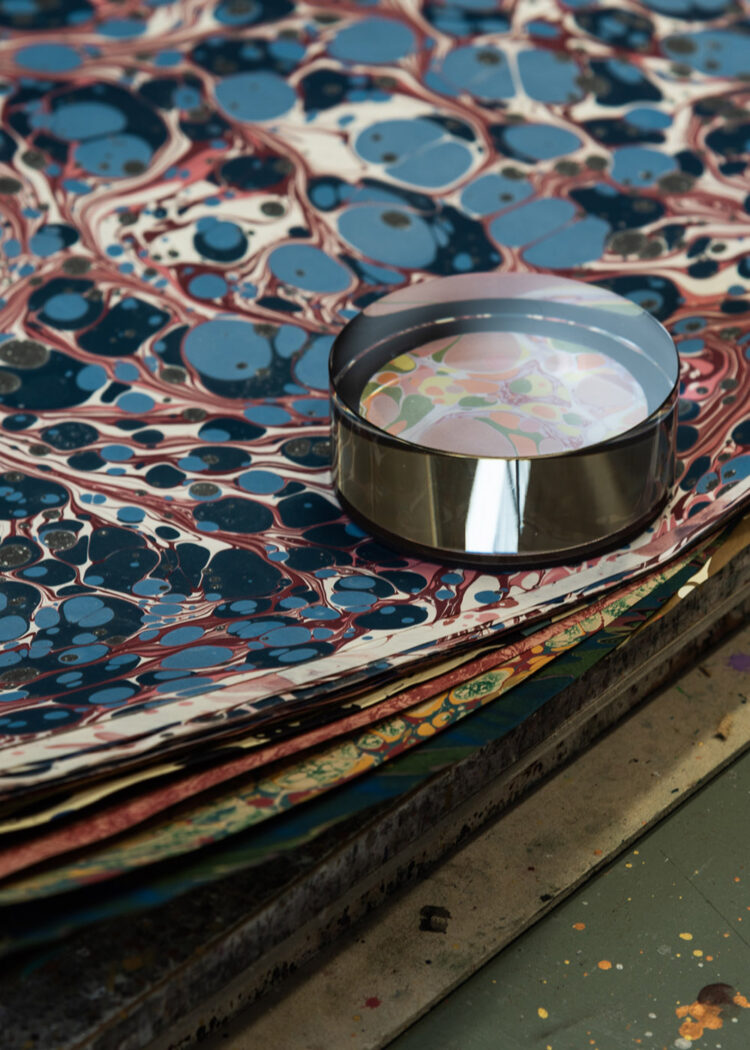
After being imported into western Europe from Turkey and Persia in the 1600s, marbling became quite the craze in England in the 18th and 19th centuries – a development that we can thank for all the beautifully embellished books with marbled endpapers which line the shelves of our historic libraries and antiquarian bookshops.
Marbling reached such popularity that, in 1761, novelist Laurence Sterne included a marbled page in the third volume of his Life and Opinions of Tristram Shandy, claiming that it acted as a “motley emblem” of his constantly shifting and inventive writing style.