InigoInigo Logo

A Home with a History: the legendary artist Rose Wylie OBE has gone from making jam to making art history in her idiosyncratic Kentish house and studio

Rose Wylie’s art is as singular as her life: aged 91, she will shortly become the first British female artist to have a one-woman exhibition in the main galleries at London's Royal Academy of Arts. Inigo visits her in her home and studio – an installation in itself – as she continues to create works for her forthcoming retrospective ...

Homes / Interiors
Words
Celia Lyttelton
Photography
Clàudia Padrosa
A Home with a History: the legendary artist Rose Wylie OBE has gone from making jam to making art history in her idiosyncratic Kentish house and studio

At 91 years old, the artist Rose Wylie is a graceful, youthful and inquisitive presence. Her paintings, immediate and spontaneous, form a panoply of her past and present: inspired by memories from as far back as the Second World War (doodlebugs in a yellow sky); recent newspaper headlines; fashions and daily life – all rendered in a seemingly simplistic style that belies her sophisticated ideas. “Why is it childish, just because it doesn’t look like a da Vinci?” she challenges.

Popular culture, history and her own life are key influences for Rose; her subjects range from the Queen of Sheba to the footballer John Terry, from pharaonic and Assyrian temple friezes, to Henry V with a pudding bowl haircut. (The latter is perhaps a nod to Rose’s paternal grandfather, the historian James Hamilton Wylie, who wrote the multi-volume, detailed work, The Reign of King Henry V.) In other works, she plays with witty erotica: Kate Moss appears in her pants, Serena Williams in a postpartum bodysuit, Nicole Kidman in a pink frock.
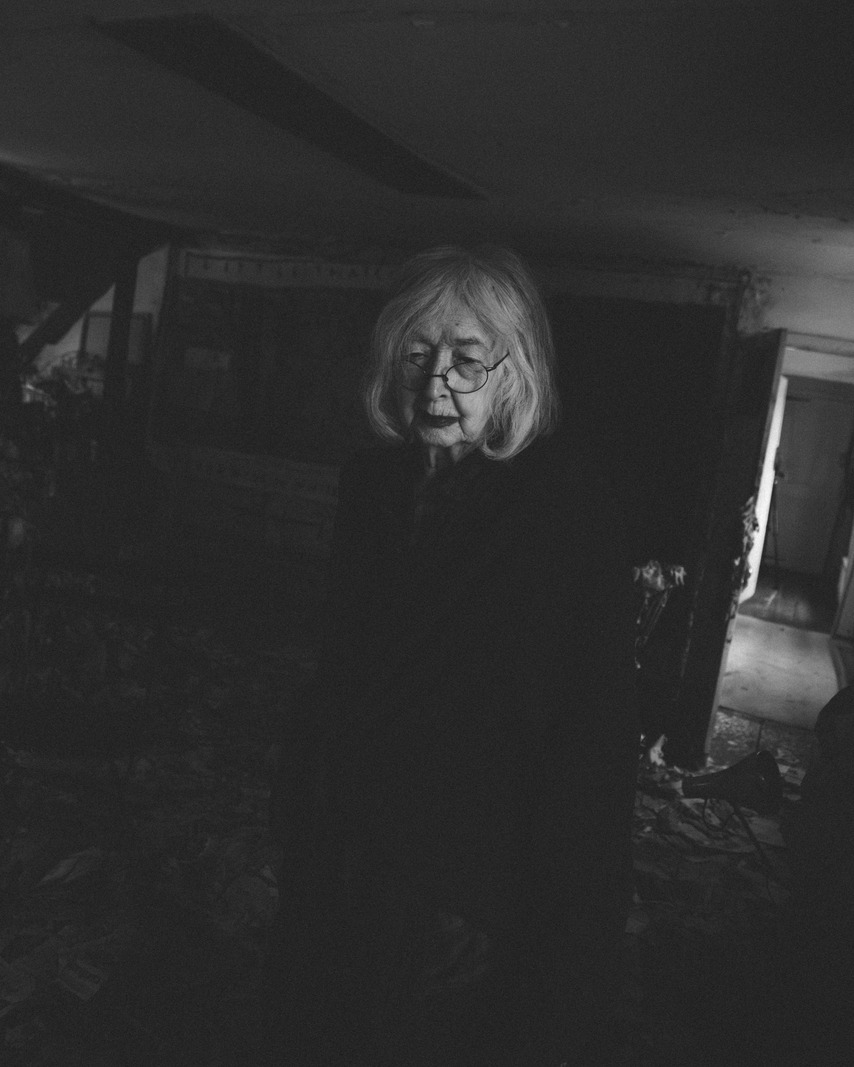
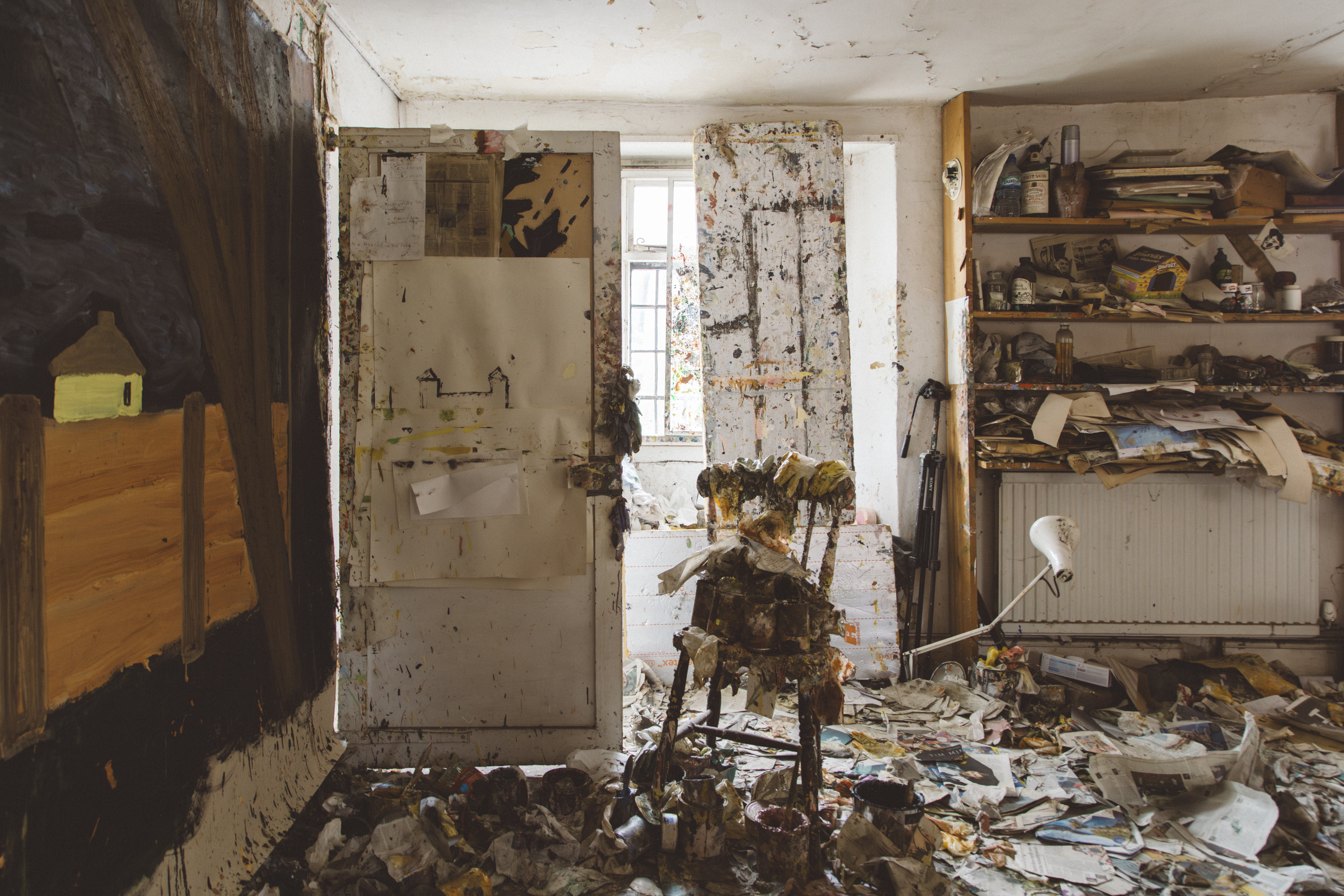
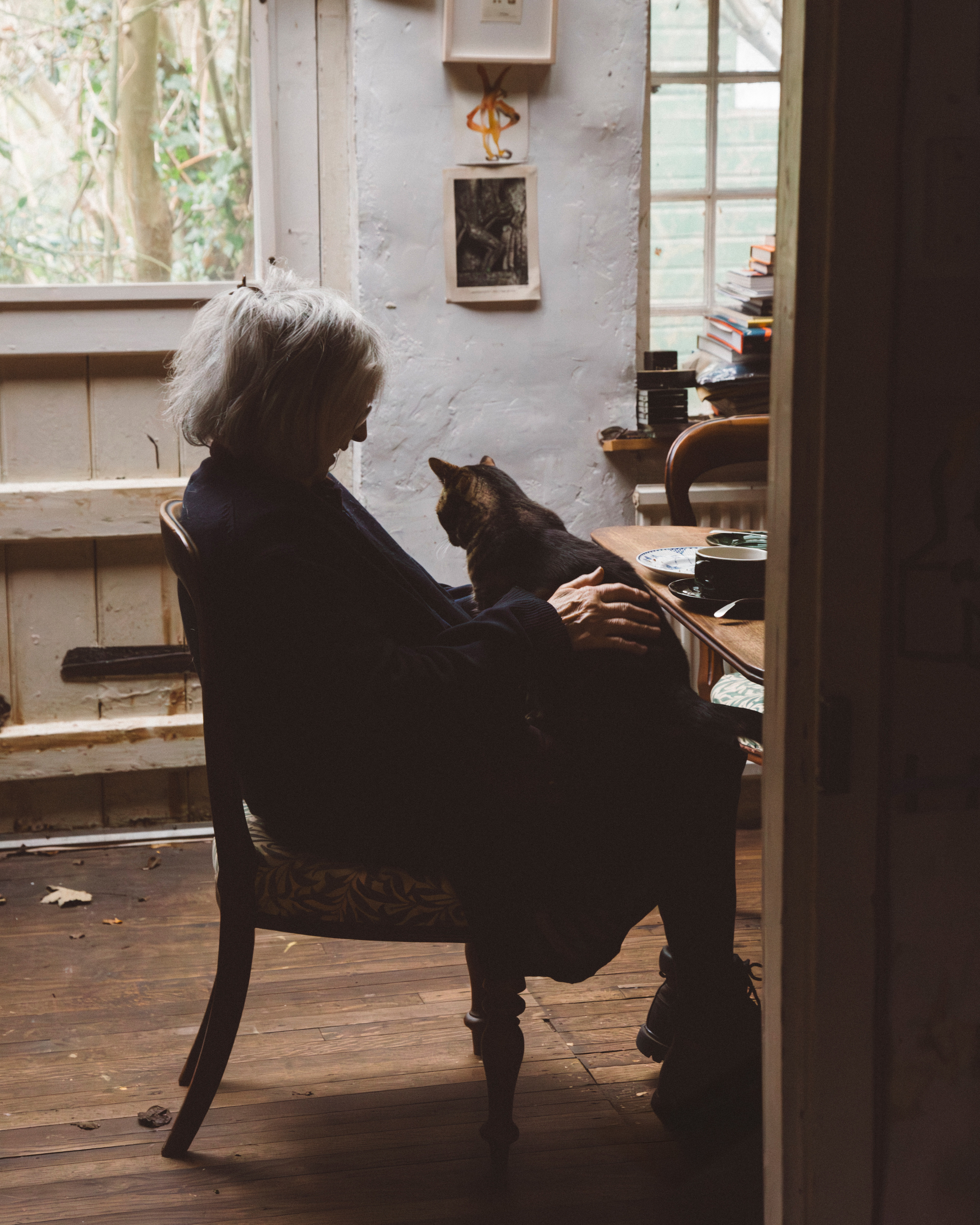
Rose has lived in the same 17th-century house for 60 years; now living there alone, it was previously the family home, with her late husband, the painter Roy Oxlade and their three children. Located in an unspoilt Kentish village, orchards stretch as far as the eye can see. Rose's story is one of many women artists who put their brushes down to raise their children. But, since Roy’s death in 2014, Rose’s art has elevated her to higher realms. In her early seventies, she became a resounding success, with solo shows including Tate Britain (2013), the Turner Contemporary, Margate (2016) and The Serpentine Gallery (2017). In 2016 she was awarded an OBE. In February, she will become the first British female artist to have a one-woman exhibition in the main galleries at the Royal Academy of Arts in London.

During the late 1960s and 70s, Rose taught art at several colleges, sporting white fishnet tights. In 1968, Roy was appointed head of the art department at Sittingbourne College of Further Education, prompting the move to Kent; Rose has lived there ever since. Little has changed since they moved in, except for Rose’s abundance of overflowing creative endeavour. She remained the ‘artist’s wife’ until the 1980s when the children left home and she had space for a studio. “I put all my energy into making jam, soups, Christmas cards, curtains and raising our children,” she says. At 45 she went to the Royal College where her dissertation was 'On the Language of Drawing and How It Is Taught'.

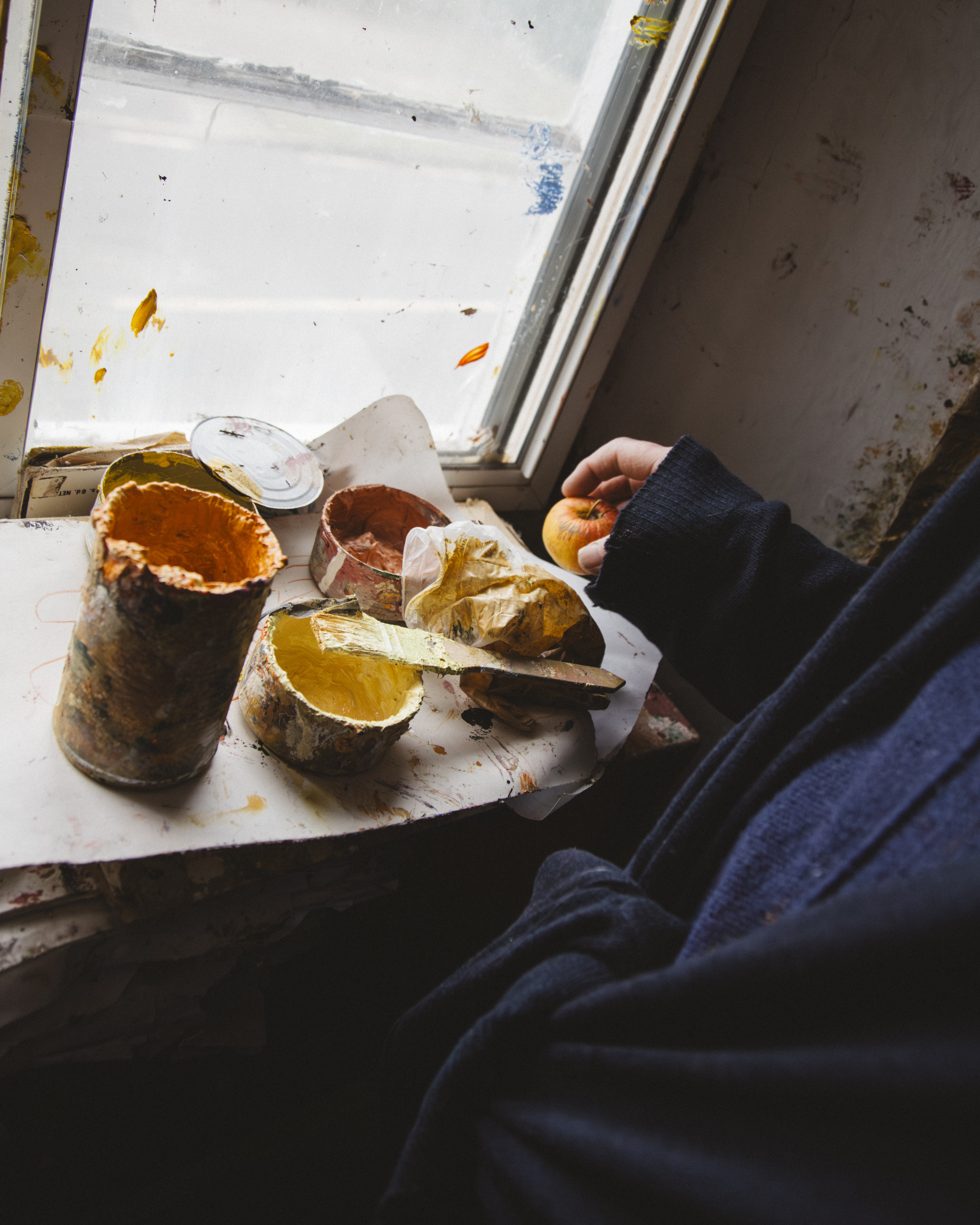
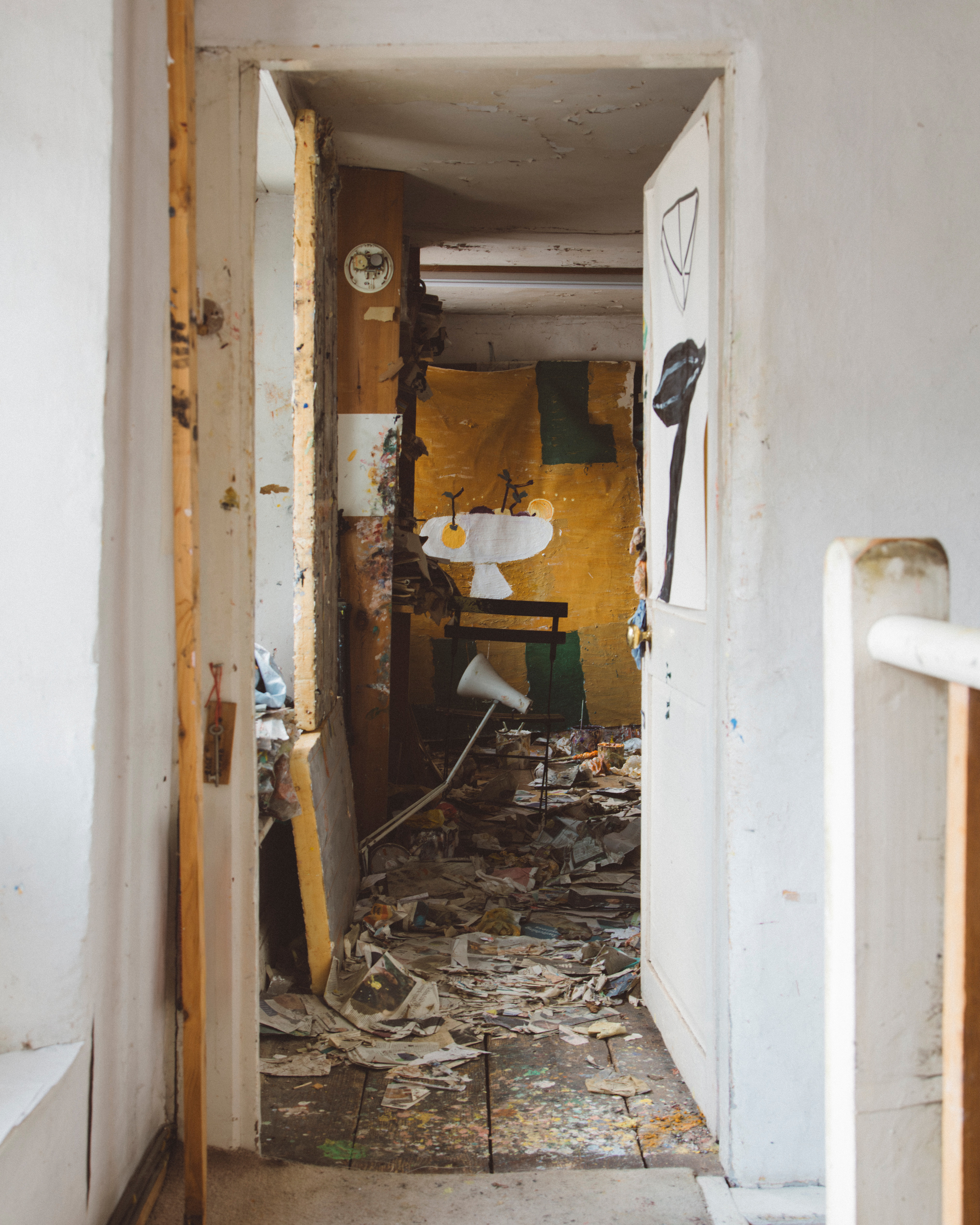
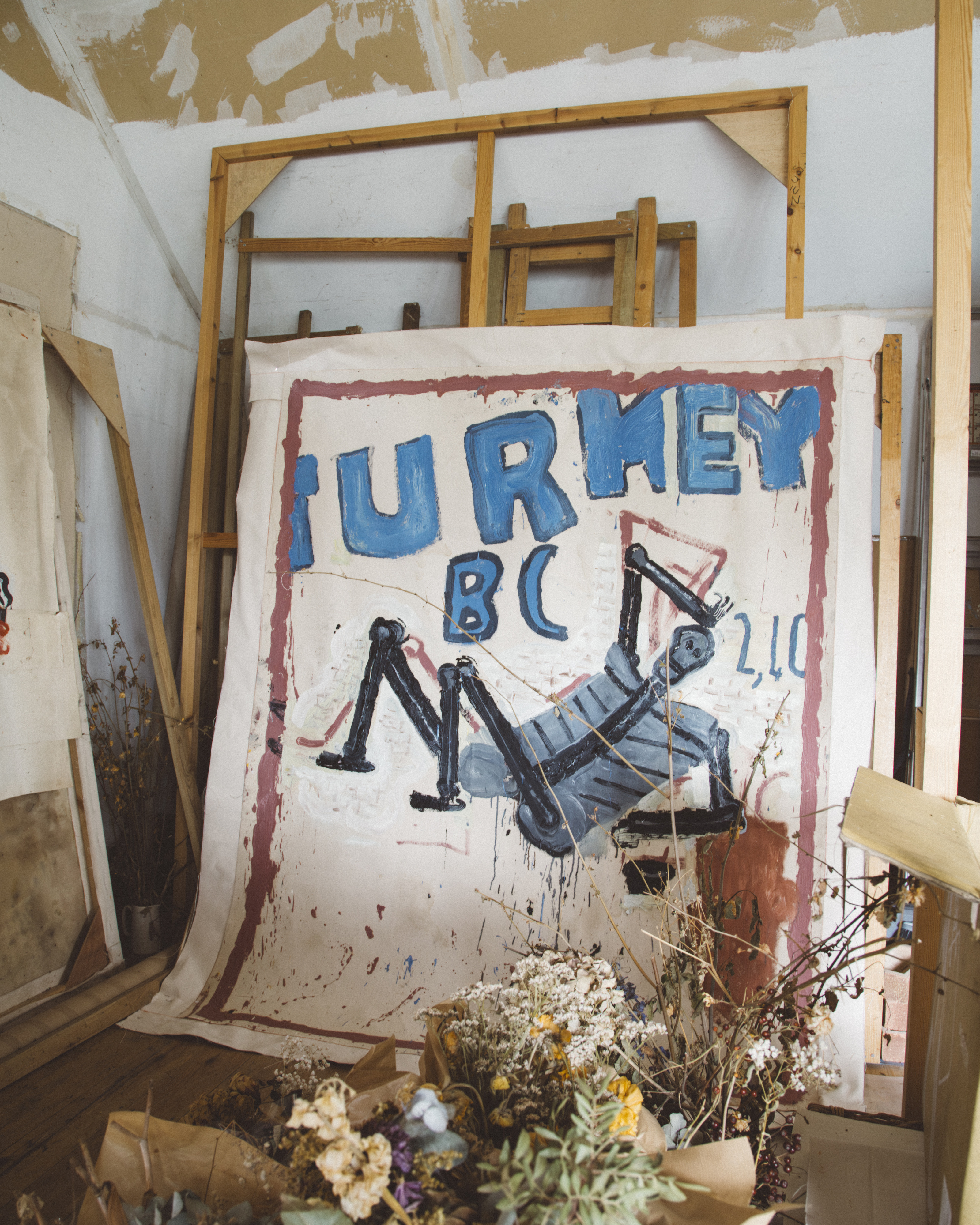
Rose, however, is not a part of a generation of figurative painters; she has forged her own path. This is readily apparent in her canvases – large, unstretched, unprimed and stapled to the wall of her studio. If the composition spills over the edge, she simply staples another piece of canvas on. Surfaces are spattered with vibrant paint colours and the plug sockets are positively rococo. The studio is itself an installation where a mini mountain range of newspapers, magazines, dried-up paint globules, paint cans, tubes, rags, dried flowers and a kitsch pink telephone form a scene so spectacular, a Korean gallery imported it in its entirety to exhibit as an installation last year. “I see subjects everywhere,” Rose reasons. “You use what you’ve got.”

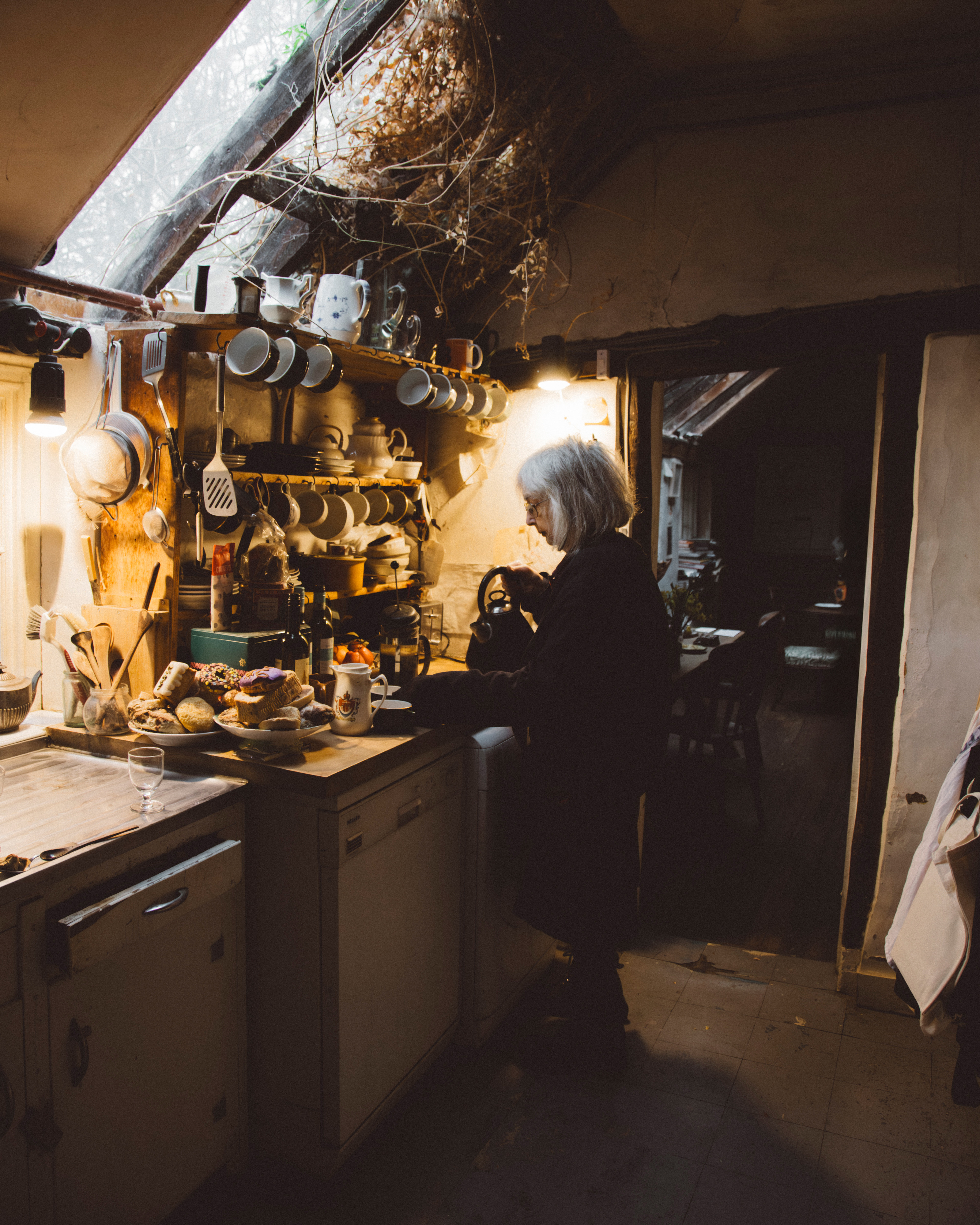
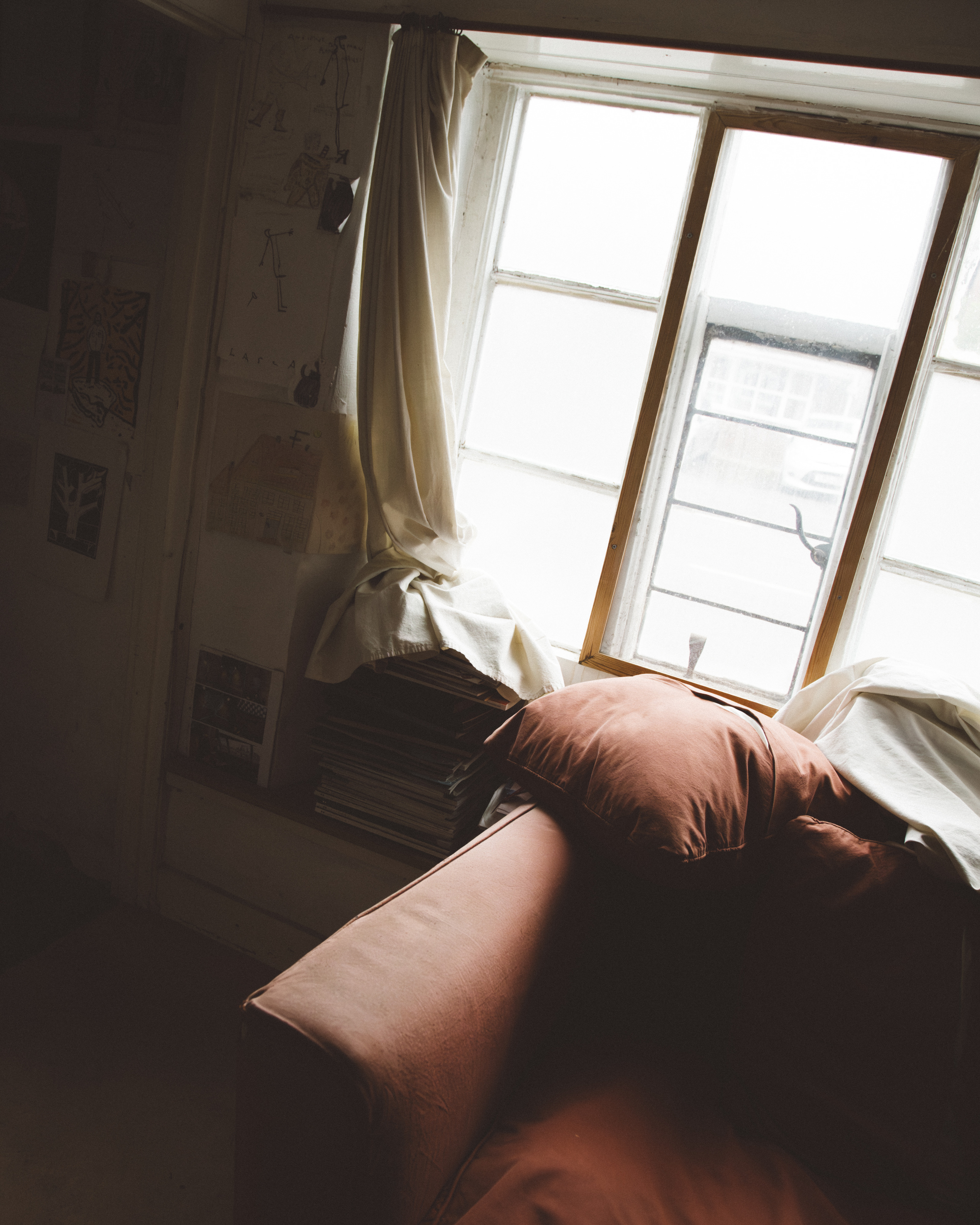
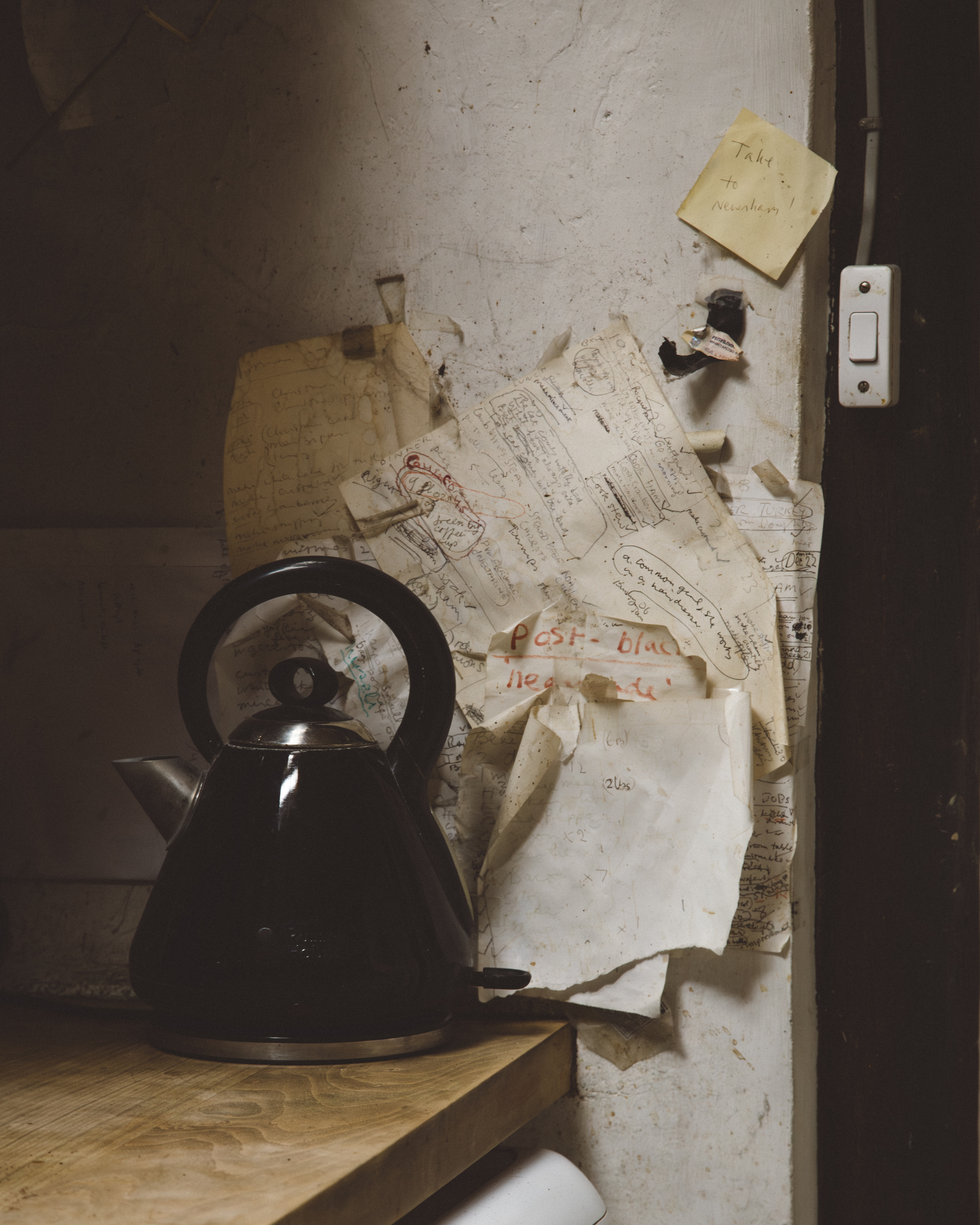
The house smells of woodsmoke, paint and turps. It is mid-winter and heat billows from a heap of smouldering embers in a high-mantled fireplace in the hallway. A Welsh settle and a few chairs cluster round the fire. The sitting room is furnished with capacious sofas and armchairs, while Russian vine and wisteria dangle through the window panes of a conservatory-cum-dining room where the table is enticingly laid with silver candlesticks and fortified wines. The kitchen is spare and utilitarian: no units, only shelves and hooks for kitchen paraphernalia, a plate of cakes and iced buns on offer for friends who drop by, and a Welsh dresser displaying chinaware. The garden is left to grow wild with roses, wisteria, ferns, ground elder, cow parsley, meadow flowers and nettles, where serpentine paths lead to benches, tables and chairs overlooking meadows and orchards.

A pantry well-stocked with champagne and cooking apples leads into an outdoor studio for completed paintings. One of them is Frick, a diptych destined for her forthcoming RA retrospective. It is a striking optical illusion, comparable to Rubin’s Vase and My Wife and Mother-in-Law by W.E Hill. In Rose’s ambiguous diptych, the two cobalt blue and grey canvases can be interpreted as alleyways in a north African town or, erotically, as wide open female legs. The subject is, in fact, The Frick Collection ceiling.

Rose speaks eloquently in clipped short phrases. She turns to a canvas she is painting from a 2,400-year-old mosaic excavated in Turkey, which depicts a skeleton holding a drinking vessel alongside bread, a wine amphora, votive candles and an ancient Greek inscription that reads: ‘Be cheerful enjoy your life’. She explains, “Some people say: ‘You must be having a whale of a time, doing just what you want to do. It’s not like that. I’m always frightened to start. Sometimes, I might work until three in the morning. But art is the best thing for coming back to. You just need a pencil and a bit of paper.”

Rose Wylie’s retrospective is at the Royal Academy from 28th February-19th April 2026

Feeling inspired?

A Home with a History: the legendary artist Rose Wylie OBE has gone from making jam to making art history in her idiosyncratic Kentish house and studio