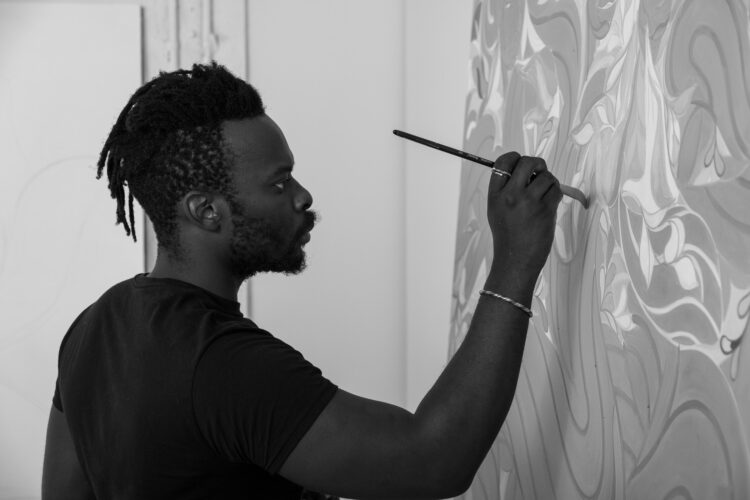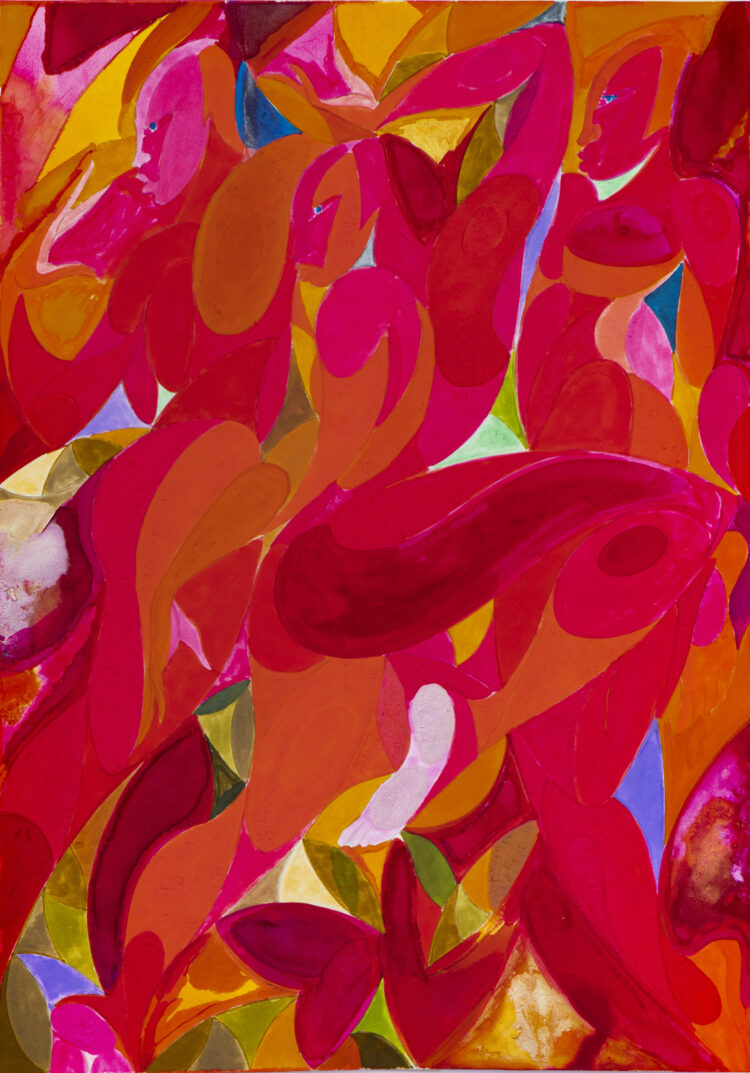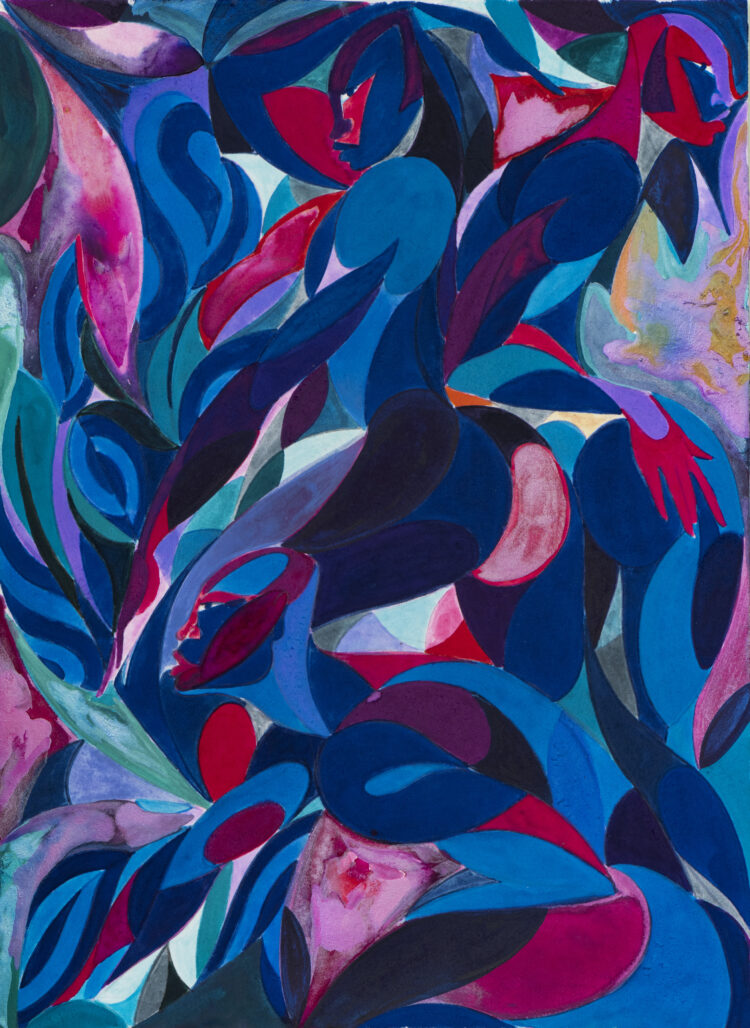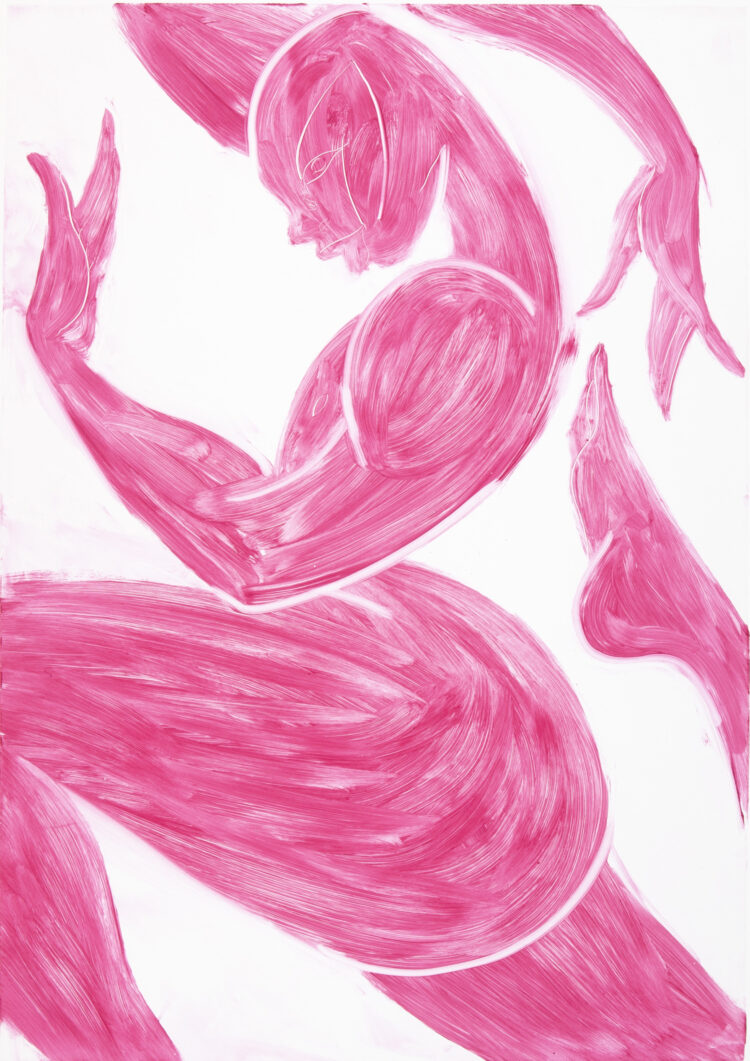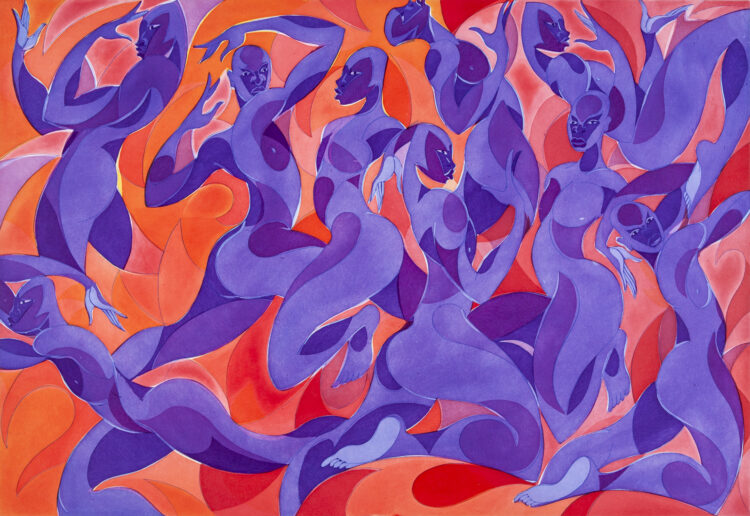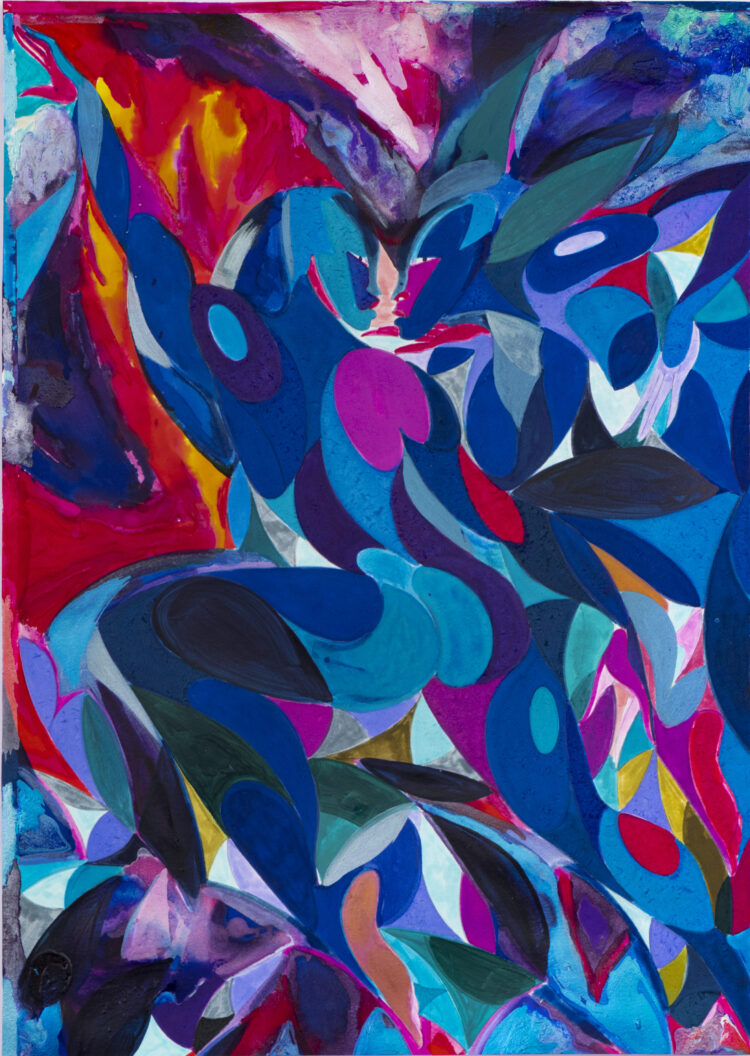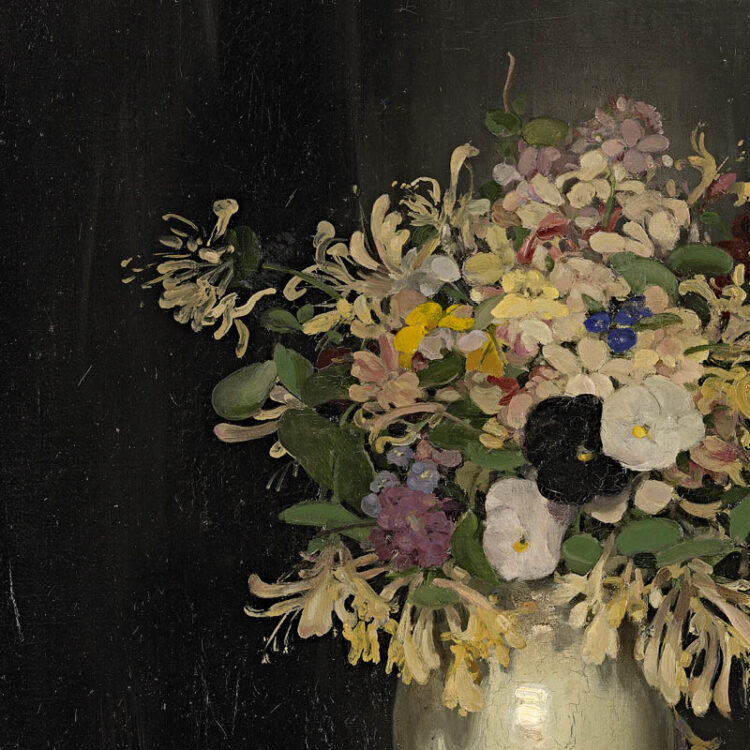



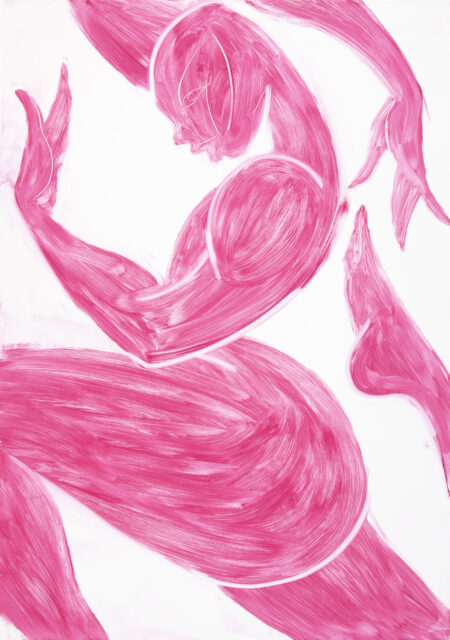
When looking at two artists side by side, the temptation is always to draw out the parallels. It’s natural, of course, to want to find the similarities that make a comparison legible. Take Tunji Adeniyi-Jones, for instance, who joined White Cube’s roster in August 2021, and Bloomsbury’s Duncan Grant, whose solo shows cleverly coincide at Charleston this September. What links these artists, working a century apart? The shows are both firsts, for a start: Adeniyi-Jones’s inaugural solo exhibition sits alongside a ground-breaking recreation in its entirety of Grant’s in 1920. Viewers will recognise that the painters speak a shared language too: bodies, lithe and dancing; expressive colour; a lyrical sense of line. But beyond that common visual tongue, it gets a little nebulous.
In fact, Adeniyi-Jones himself feels that to look for the nexus is to miss the point somewhat; for him, it’s what he calls the “tension” between the artists that makes things interesting. “We have very different points of reference,” he explains over Zoom from his studio in New York, where he’s been putting the final touches to the works for Astral Reflections, which opens at the Sussex farmhouse on 18 September. Rather, it’s the contexts that help the shows chime. Despite there being “a space, a pocket” in between the two men, both shows reflect “a young artist at a particular point in their career, trying to discover themselves, to understand where they’re from and what they’re about.”
Identity is a recurring theme in Adeniyi-Jones’s work. Born in London in 1992, the half-Nigerian artist, now living in Brooklyn after studying for a master’s degree at Yale School of Art, has always used the human form – in particular the Black body – to explore that theme. He uses imagery of sinewy strong limbs and torsos “to speak to my Nigerian heritage,” he explains. It’s interesting now, he says, pitching his work against Grant’s, how African customs and culture played a part in the latter’s more abstract works too. Grant, who had almost certainly read Roger Fry’s writings on African art, studied in Paris in 1907, where he met Picasso and Matisse, with whom he shared an interest in African sculpture.