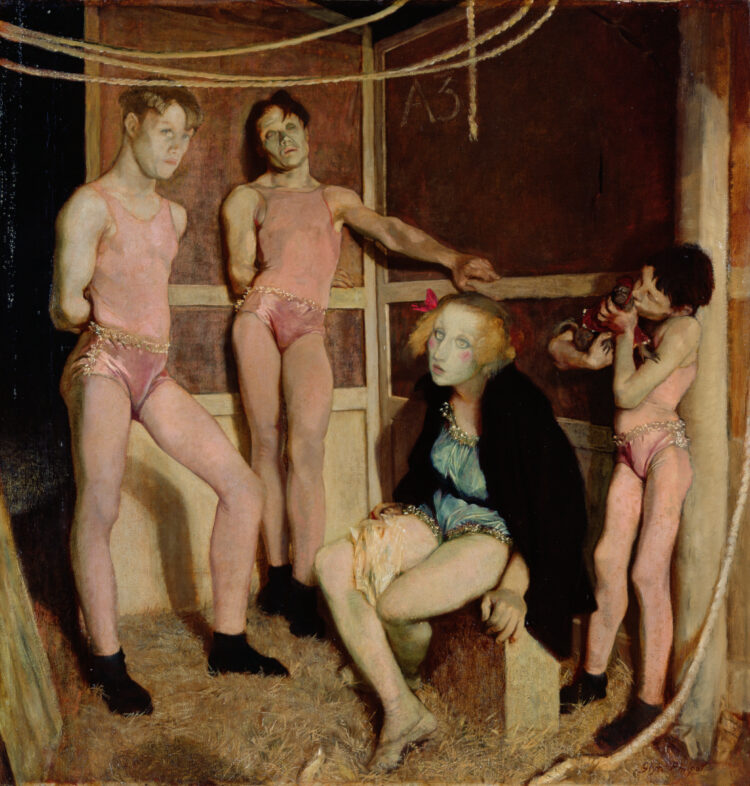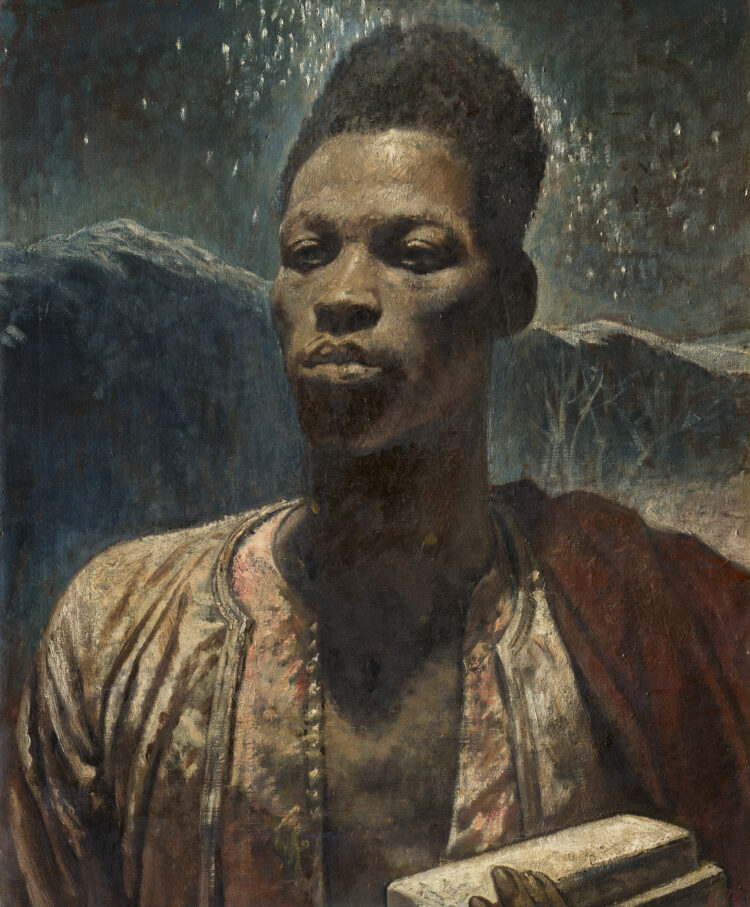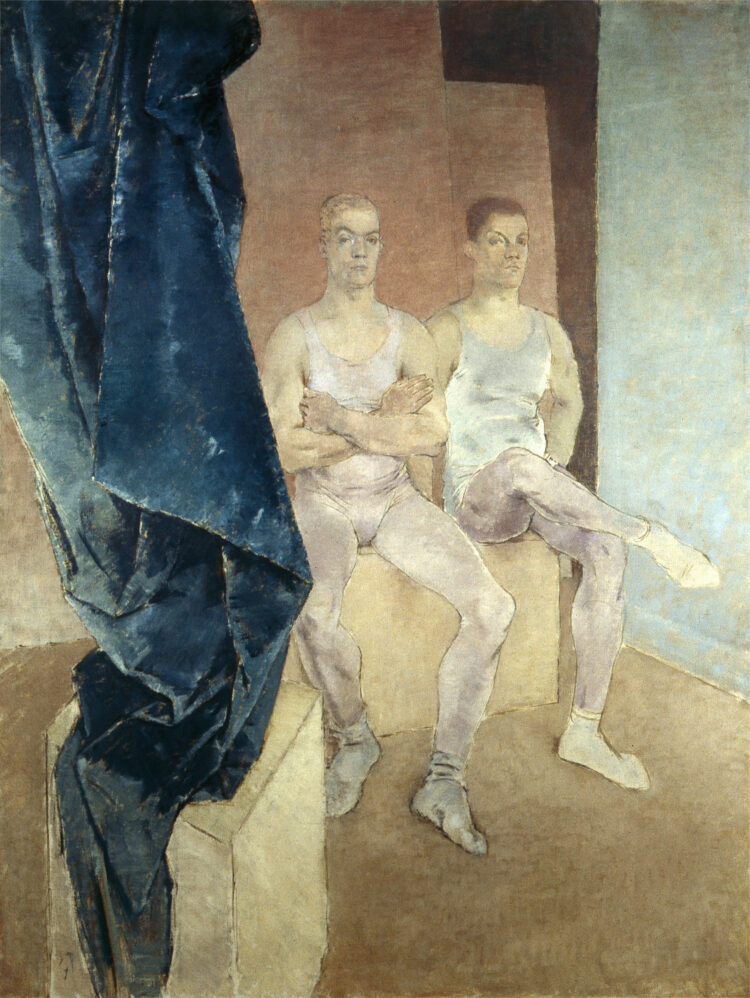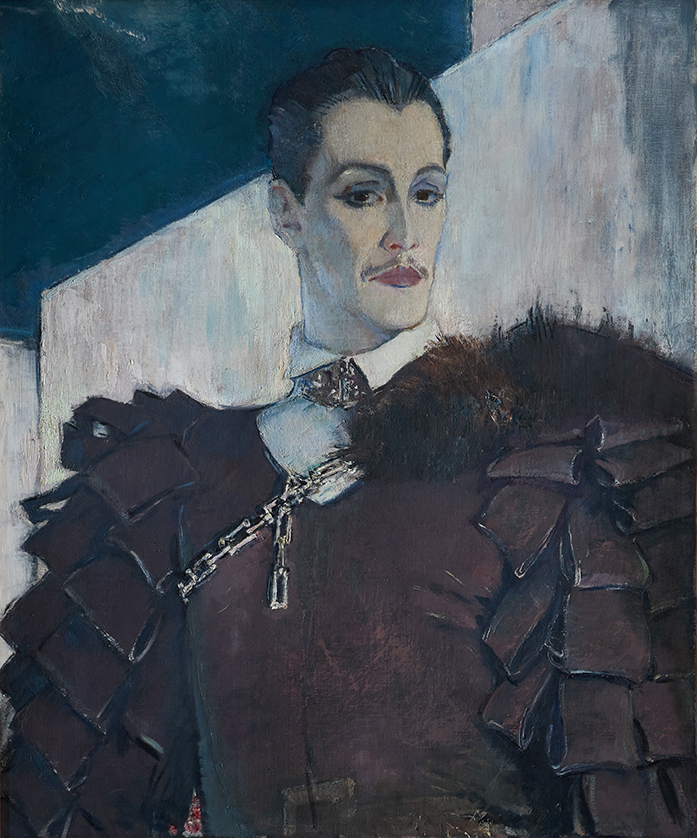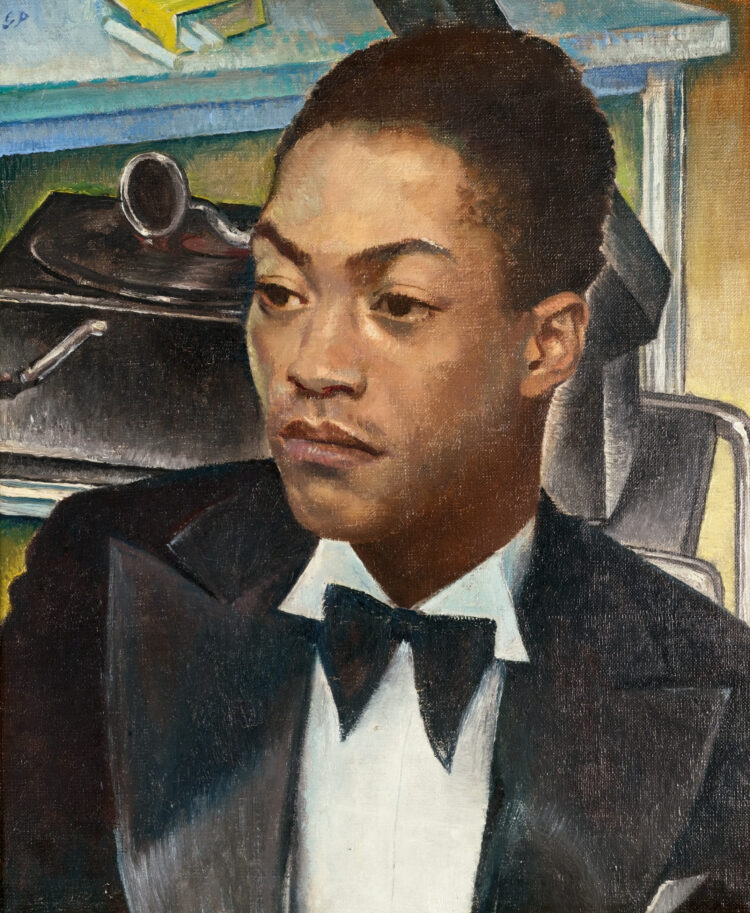



Part way through ‘Glyn Philpot: Flesh and Spirit’, at Pallant House Gallery, is a painting of four circus performers waiting in the wings. Rather than the spectacle of the big ring, the artist provides a voyeuristic glimpse of the daily grind and the backstage emotions. A young boy cradles a monkey and tenderly kisses it on the cheek. A red-headed woman sits on a stool, slumped with exhaustion, in a daze. A man leans against a wall, one arm tucked behind his back, the other outstretched, providing an unobstructed view of his muscular body, barely covered in a pastel pink vest and shimmering briefs. Beside him, a second man in a matching get-up watches us watching him.
Part of the Chichester gallery’s mission is to provide new perspectives on overlooked British artists, and Philpot is ripe for reappraisal. From an early age he had talent and in 1900 he won a scholarship to Lambeth School of Art, where he made paintings inspired by the Pre-Raphaelite movement. During his studies at the Académie Julian in Paris and trips to Spain, he encountered the art of Manet, Titian and Velázquez, and in his early works he emulated their veiled backdrops. In the 1910s and 1920s, he became one of the most successful and best-paid artists in Britain.