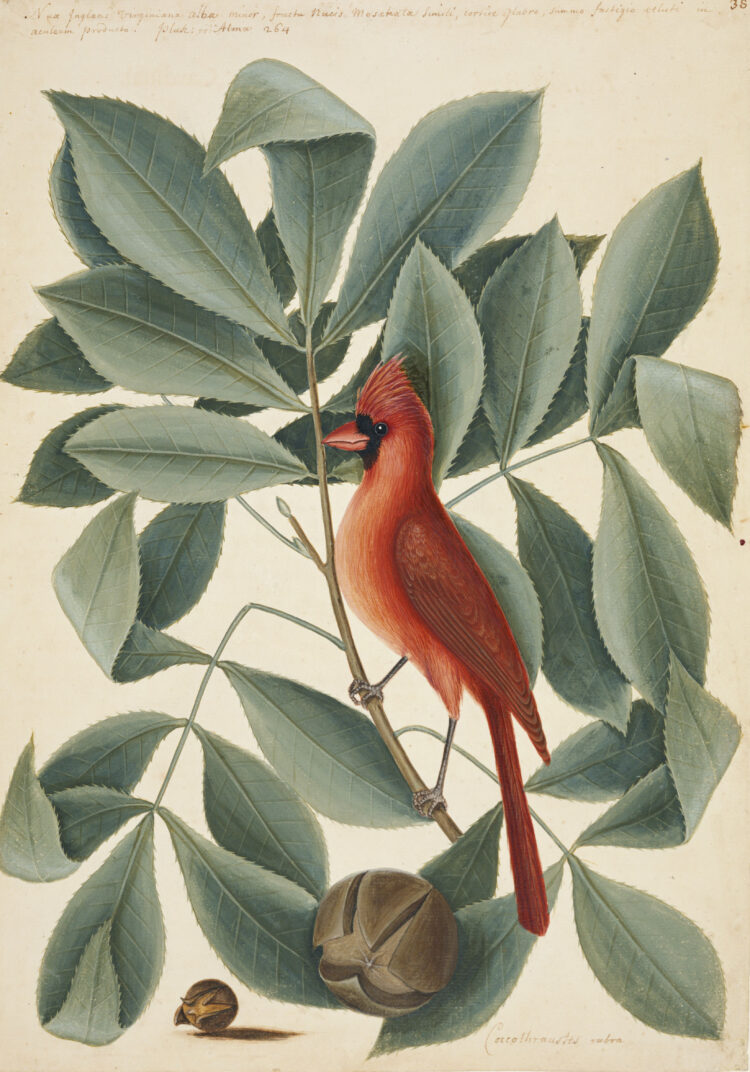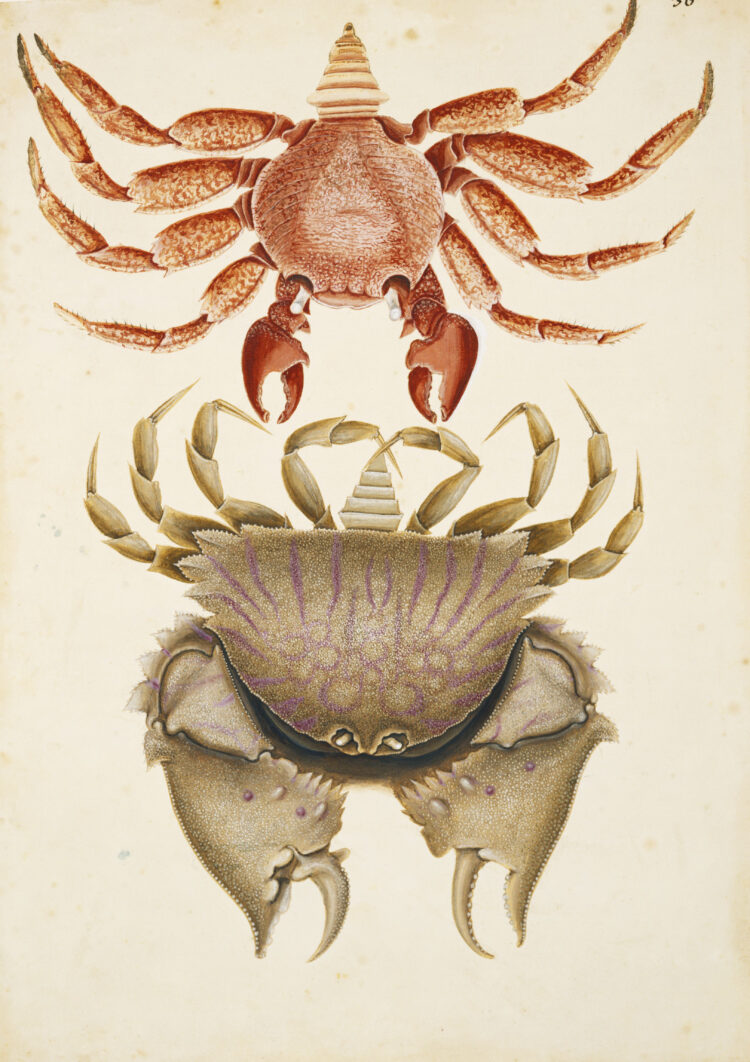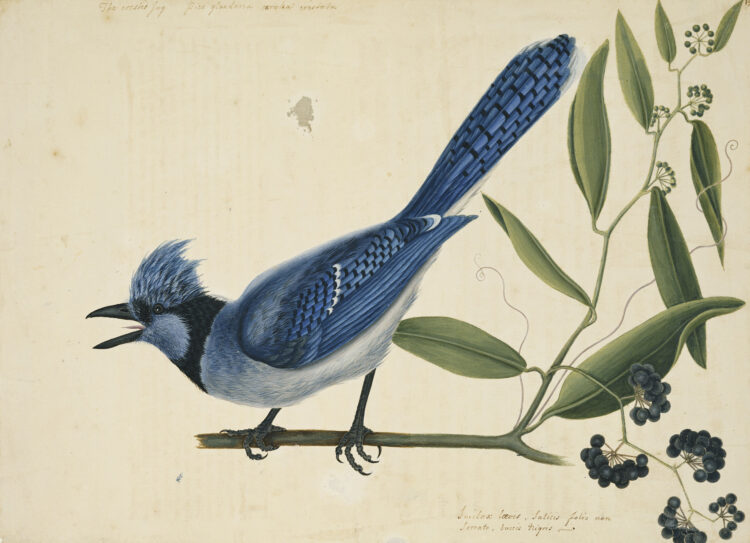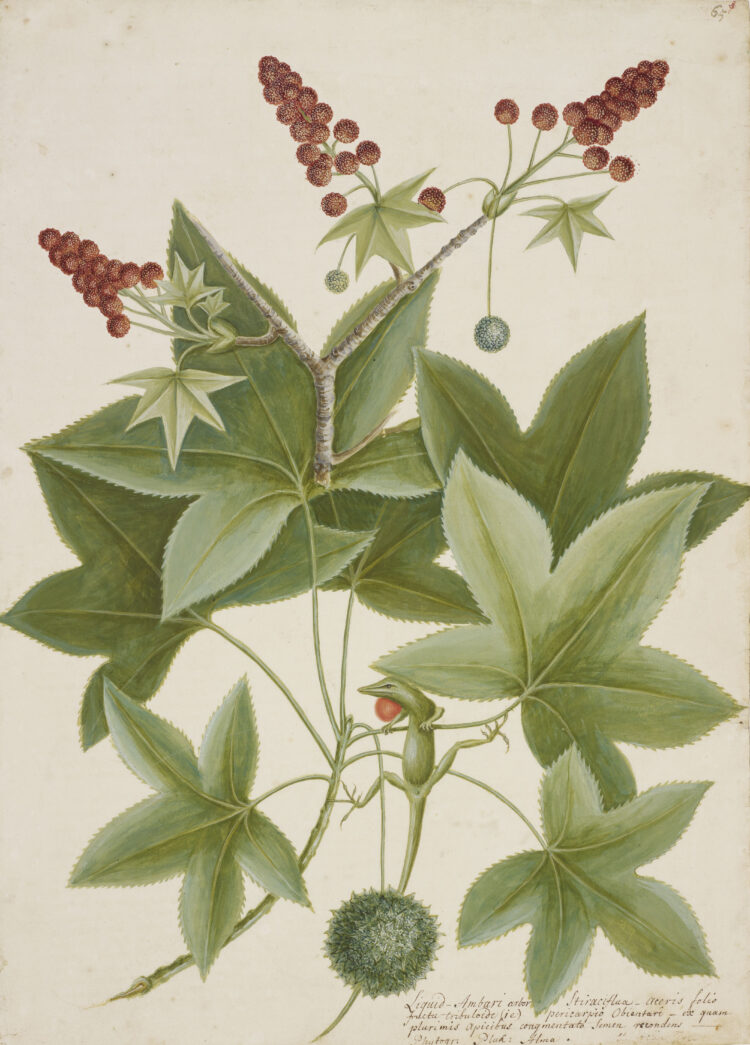




This is “a book about a book”, writes Henrietta McBurney in Illuminating Natural History, her in-depth exploration of the making of English naturalist Mark Catesby’s magnum opus, his Natural History of Carolina, Florida and the Bahama Islands (1731–43). Catesby’s hugely influential book was the first comprehensive survey of the flora and fauna of southeastern North America and parts of the British colonies.
Working during a period of transition when the world of science was on the cusp of change, Catesby was not only a naturalist, but an artist and a researcher whose work has remained unsurpassed as a point of scientific reference for many years. Nevertheless, McBurney’s book takes a new angle, examining the intricate beauty of his natural drawings, interweaving elements of art history, colonial history and the history of science.
We not only see Catesby’s etchings of plants in meticulous detail, replicating the pore of each plant; we also see his most enduringly profound images which evade absolute verisimilitude in favour of somewhat surreal images: a flamingo’s impossibly red feathers set against baby-pink coral reefs; a spotted fish swimming between two floating terrestrial plants with branches raised upwards to the sky. It’s clear that his artistic process produced images of nature that were at once an imprint of reality and a profoundly complex composition.