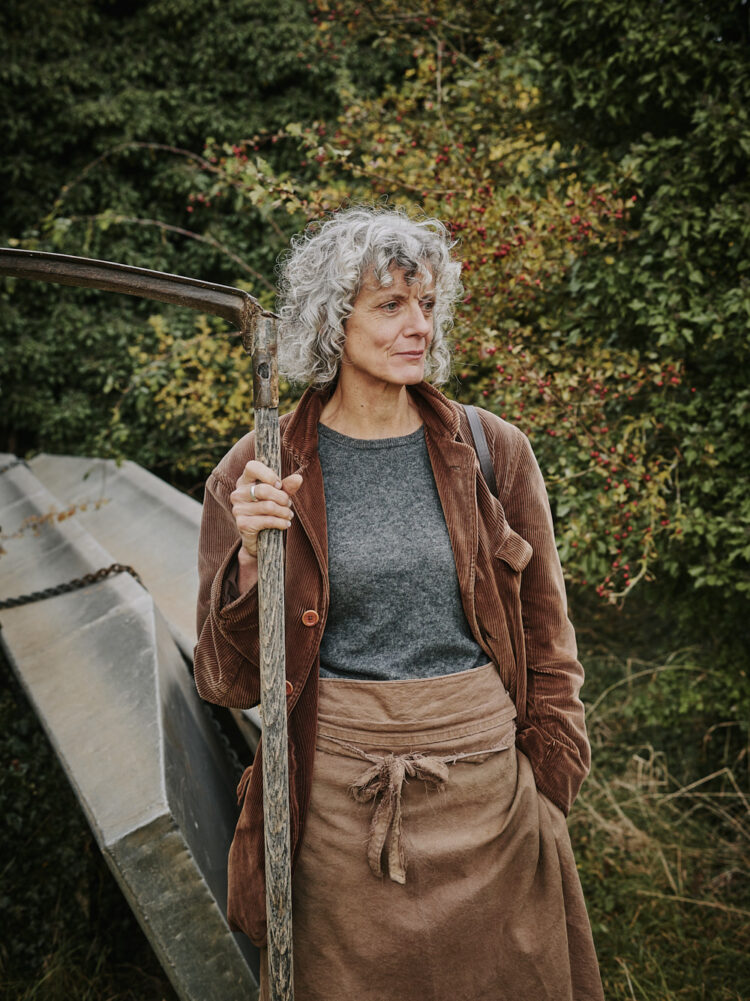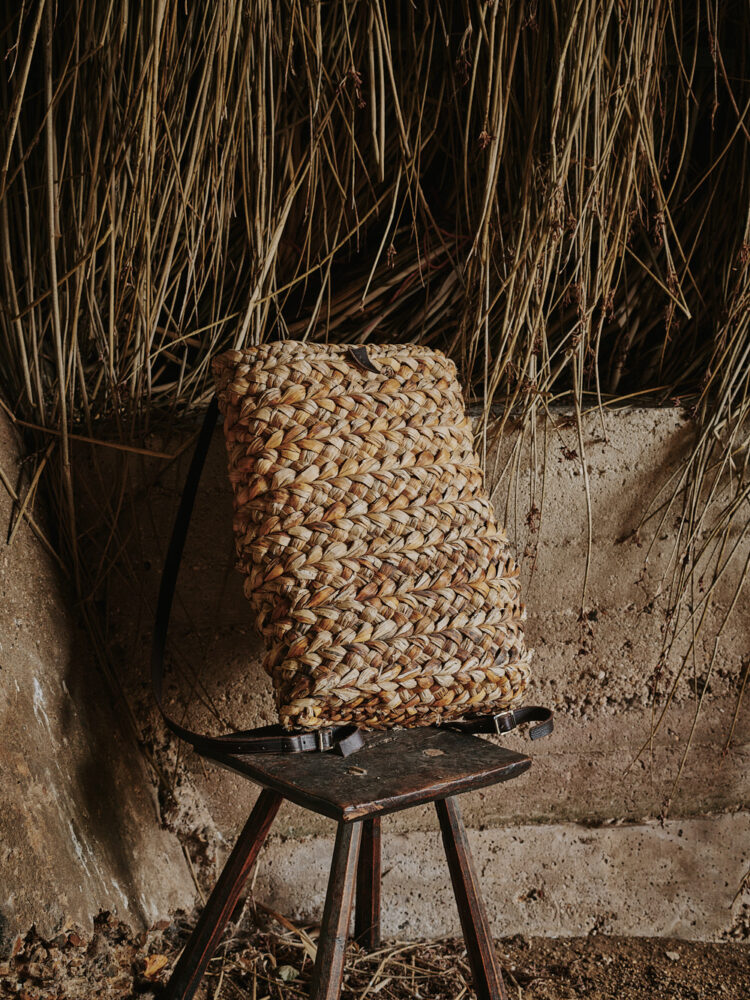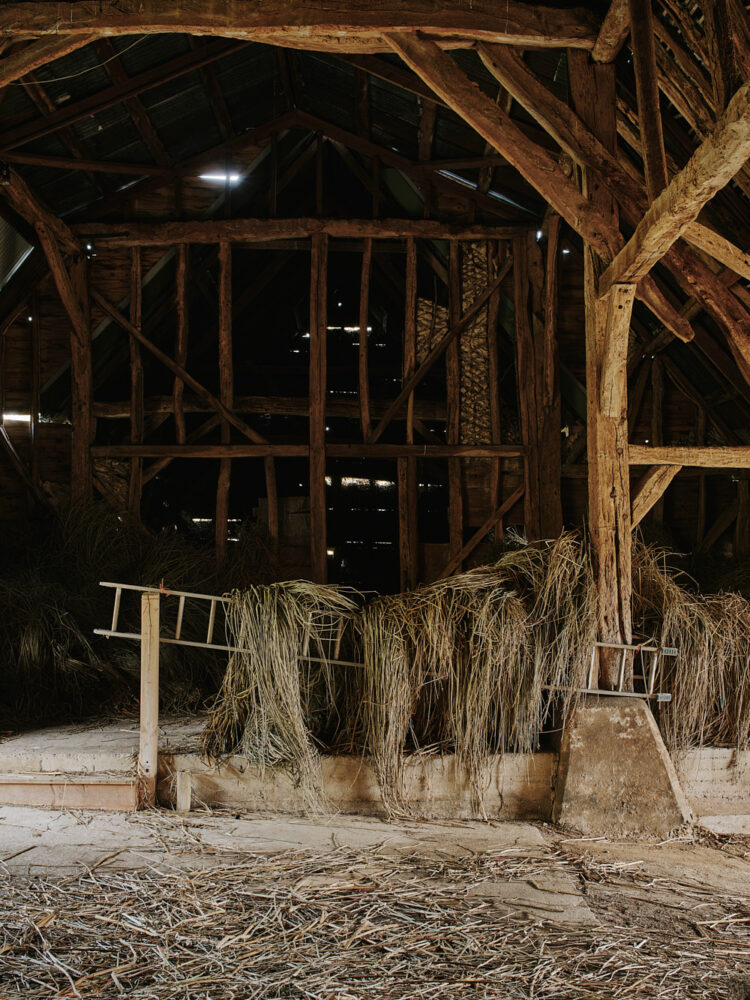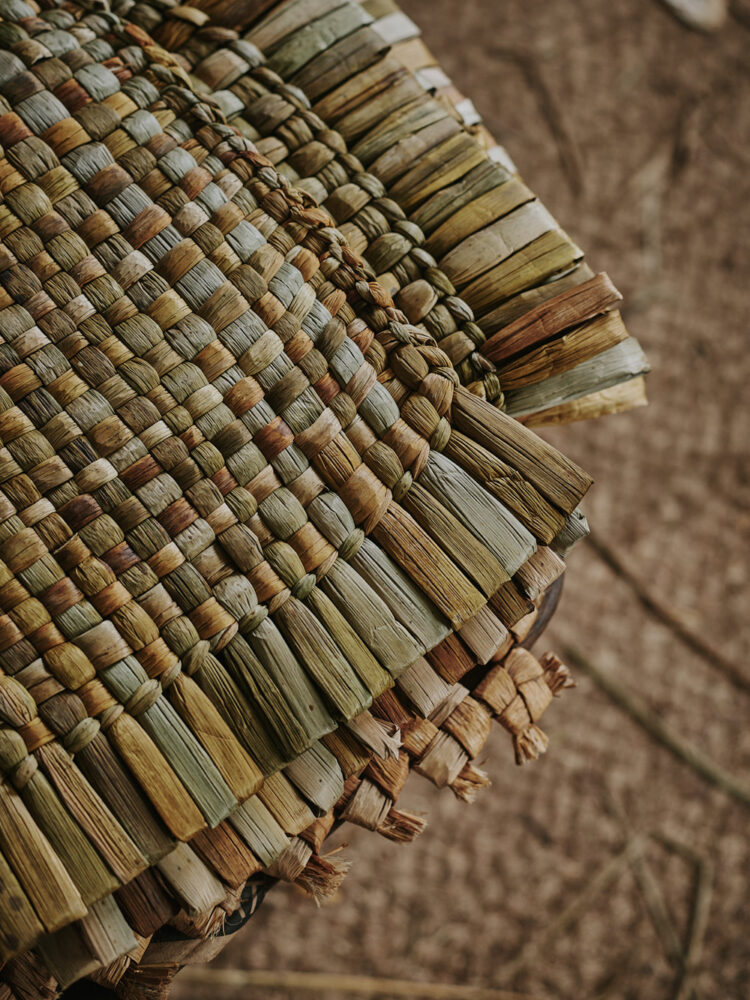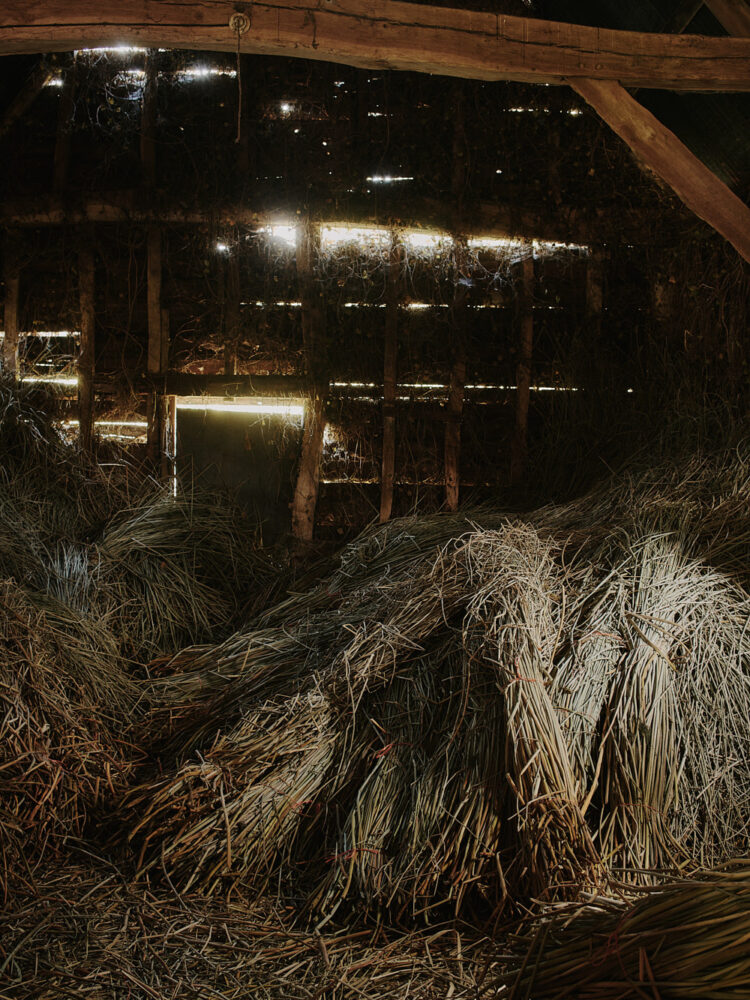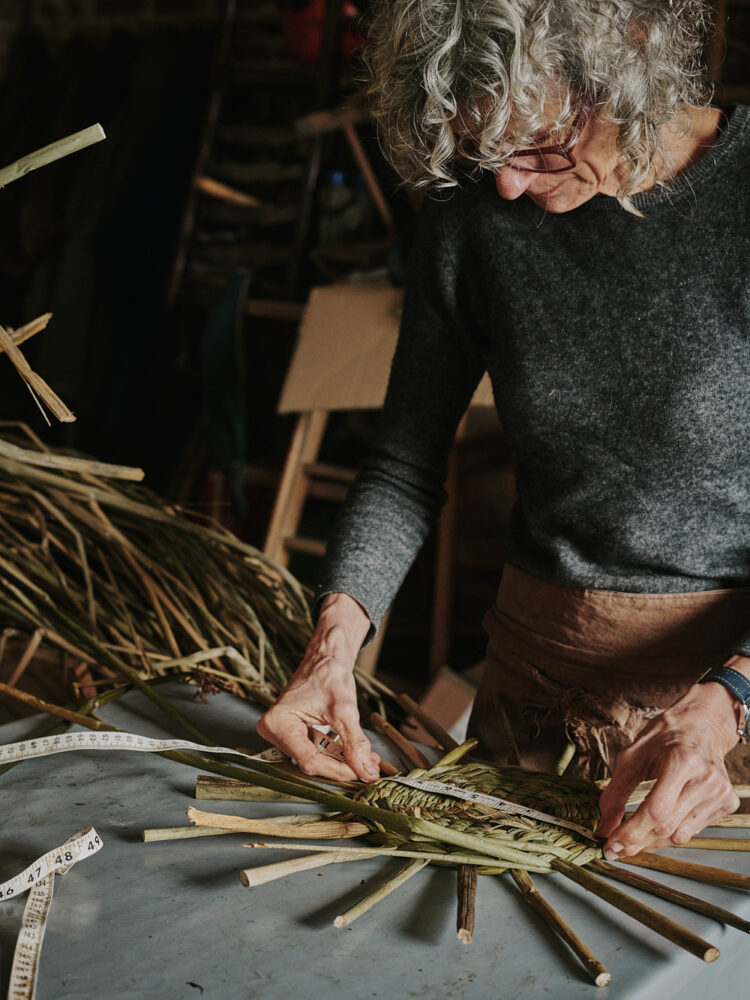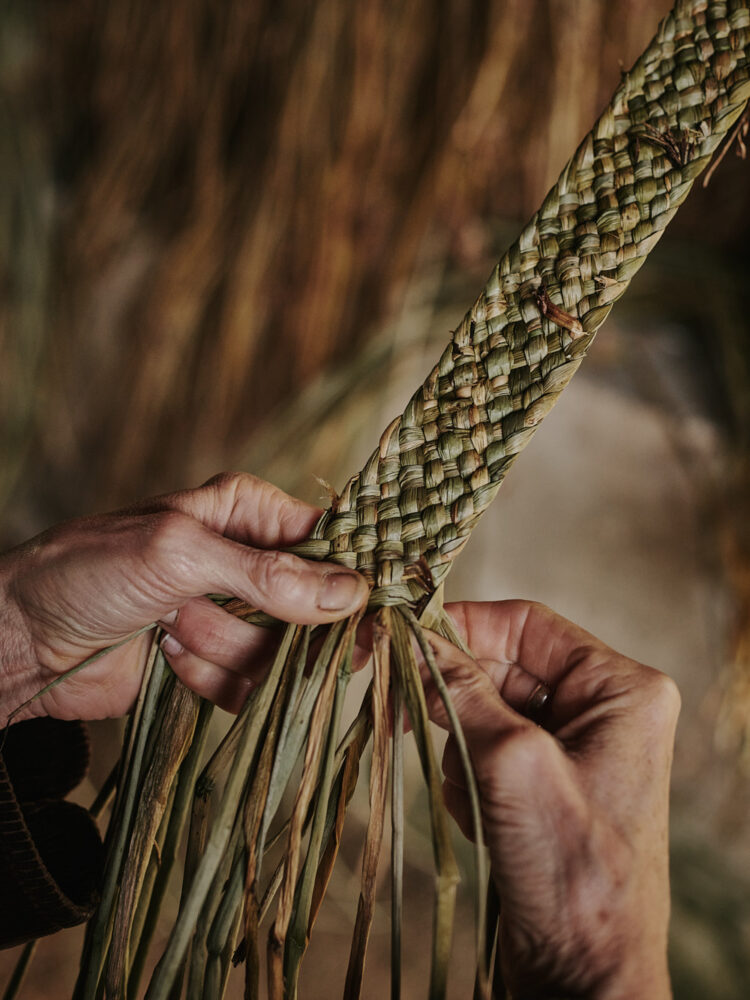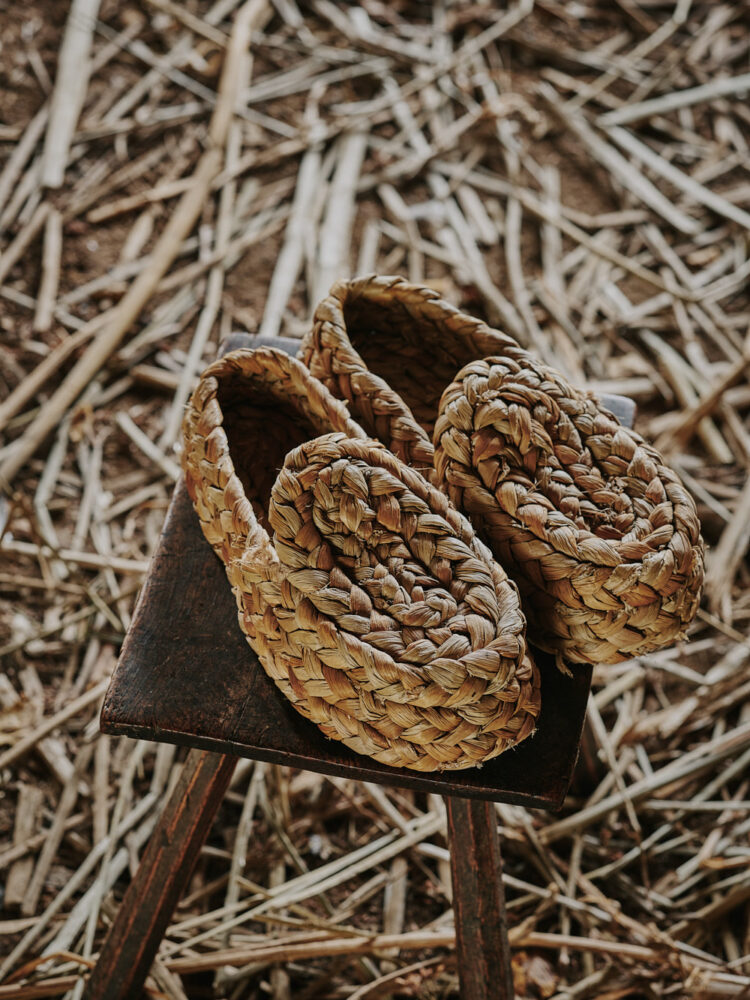



Felicity Irons is one of the few rush weavers left in Europe, a custodian of a craft that traces its roots in Britain back to the Anglo-Saxons. However, while the method is ancient, it’s far from dying – evidenced by the hustle and bustle of her workshop in Bedfordshire, a 14th-century barn that has been the headquarters of her company, Rush Matters, for the past 18 years. Entering this long, low-ceilinged space, you are hit by both a flurry of activity and by the sweet, post-summer smells of dried grasses. Across two rooms, a small group of men and women weave, their soundtrack the gentle swish-swish-swishing of rushes being plaited together for various projects: placemats, rugs, baskets. Rushes are leaned against walls and stacked on surfaces, all harvested from local rivers and dried here on-site over sunnier months.
Rush Matters might be a thriving enterprise today – albeit a local one – but it started as a one-woman show. Having been born in Sydney, Australia, Felicity’s family moved back to their native Bedfordshire in 1977. At first, Felicity had dreams of being an actress, but after suffering serious injuries in a car accident, plans changed. “I lost all my confidence,” she says. “I didn’t feel I was going to be good enough to act.” Convalescing at home with her antique dealer mother, she got “really bored” and one day picked up a book on caning and rush seating. “There were always chairs hanging around that needed working on, so I undid one and redid it three or four times until I thought it was good enough for someone to pay money for it. Thirty years later, here I am!”
Since founding Rush Matters in 1992, Felicity’s gone far beyond chairs. She’s installed flooring in celebrity homes, collaborated with some of the biggest names in fashion and design (Tom Dixon, Faye Toogood, Jasper Conran, Ralph Lauren), and worked in film and television, perhaps most notably on Game of Thrones. “Diana Rigg’s character died on our matting!” she exclaims, proudly. Over a cup of tea in the workshop with Inigo, Felicity enthused on her passion for keeping weaving alive, and told us how the projects she chooses help her to continually reinvent this ancient art form for modern times.