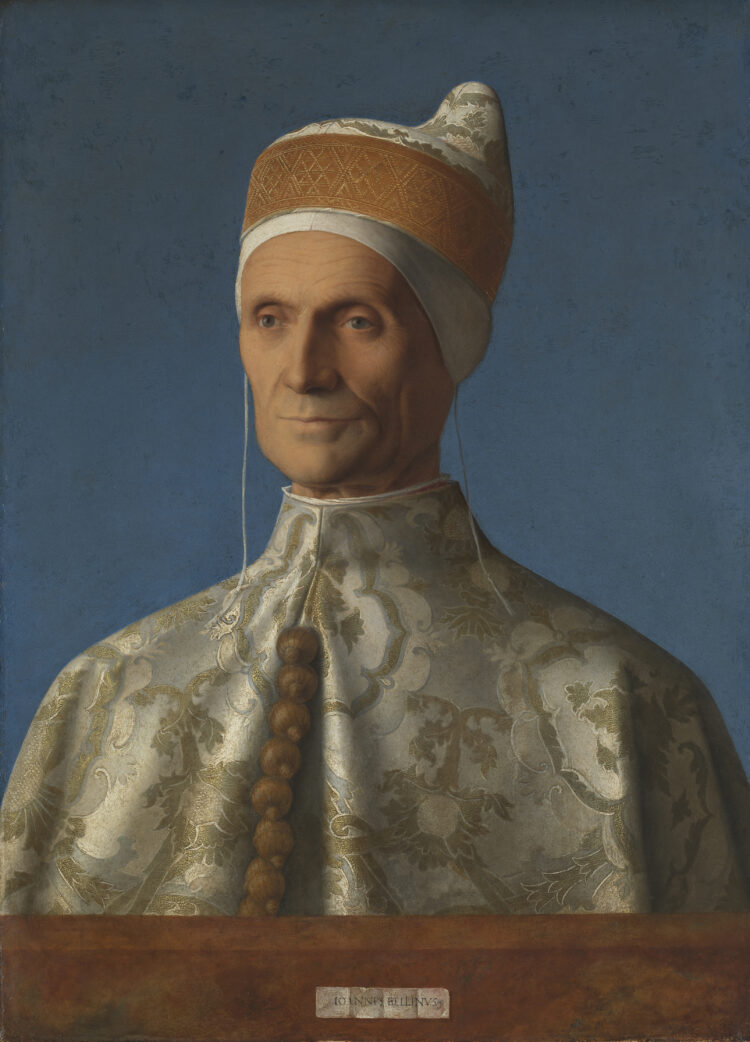



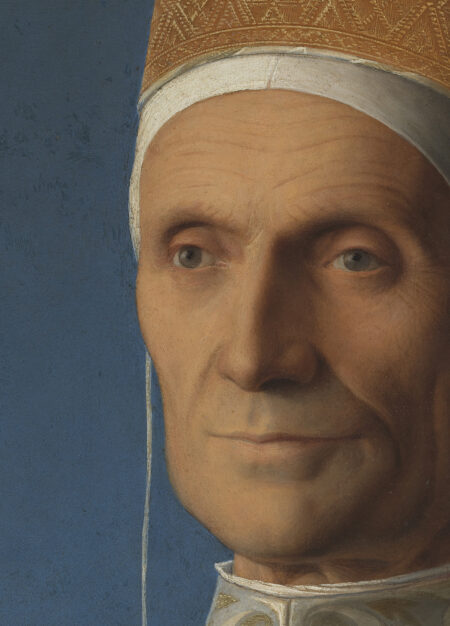
Ore Gazit is an alumnus of the Art History Link-Up programme, through which he studied – free of charge – for an Art History A-level and EPQ at the National Gallery the Wallace Collection and online (as a result of the pandemic). Ore is now working towards a history degree at the University of Oxford. Off the back of his AHLU studies, he undertook an internship at Christie’s, the London auction house and AHLU partner, in a university holiday. The picture he’s chosen is Giovanni Bellini’s Doge Leonardo Loredan, c1501-02
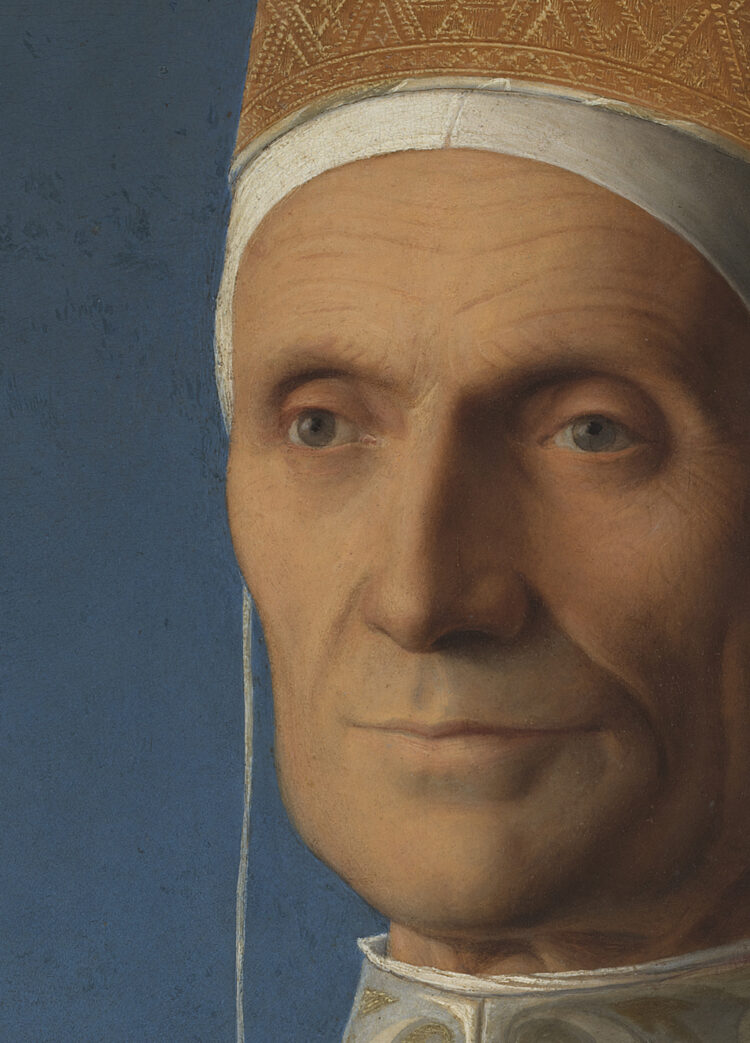
Walking past this picture at the National Gallery is like being reacquainted with an old friend. The gaze of the doge is unmistakable and seems to catch your eyes before they even reach the painting yourself. Deep in thought, Leonardo Loredan’s eyes narrow and his lips curl, as if about to reveal a secret, before holding back. Bellini was able to represent the Machiavellian leader of a war-torn republic in a state of transient peace.
This portrait always strikes me as an intensely passionate love letter to Venice. The rich, blue background transports the viewer to the humid heat of the Piazza San Marco and the winding canals that run through the city, better than any Canaletto could. Draped in delicate silk robes, the doge symbolises Venetian prosperity, access to trade with the East and the adoption of new ideas at a time of intellectual and artistic overhaul.
The work itself is of modest size, especially when seen next to the domineering Crivelli’s nearby that crane your neck up towards the ceiling. Yet it continues to invite and intrigue. Small but mighty – a feast for the eyes – it is a gem of blue and gold set in the heart of Trafalgar Square.
I was fortunate to learn about this work during the height of lockdown, as part of my A-level History of Art studies with Art History Link-Up. We had already studied the Renaissance in Florence and Rome, and were getting to grips with the Venetian masters.
I had studied this portrait alongside Bellini’s St. Jerome in the Desert. Both works made me appreciate the painter’s mastery of fine details, which surely rivals the craftsmanship of Van Eyck. These works were able to tell stories about life, faith, nature and power and were a welcome escape from the monotony of life in quarantine.
When the National Gallery first opened after restrictions were lifted, I remember paying attention to the work for the first time, having skipped over it in the past. Now, every time I return to it, I am reminded of those virtual lessons, of seeing my teachers and classmates in small squares on my screen rather than being sat alongside them and of falling in love with Venice in the heat of London’s exceptionally warm summer lockdown of 2021.