


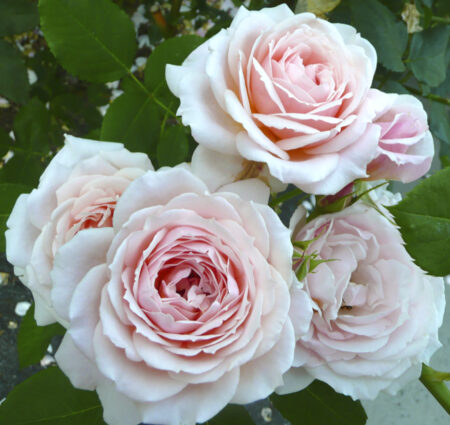
What did Gertrude Stein mean when, in 1913, she wrote “A rose is a rose is a rose”? On first reading, one supposes it may be about the indelible nature of any given thing, that it is what it is. But that line also seems to beg the question: can it be more? Can you separate the word from the thing? Shakespeare clearly thought so – just think of Romeo’s immortal line to Juliet. Another great poet, Robert Frost, also believed as much. In a playful little love poem published 15 years after Stein’s, he suggested that “The rose is a rose/And always was a rose/But the theory now goes/That an apple’s a rose”; by that tenet, so was the beloved object of his affection. As far as Rosa, published by Yale University Press, is concerned, the theory now goes that the rose is more mutable perhaps than even that; greater than the sum of its parts. It is, to misquote another poet raving about roses, Louis MacNeice, “incorrigibly plural”.
This handsome publication works its way through the idea that the story of the sprawling shrub – extant for a staggering 35 million years – is inextricably tangled with the history of art, literature, even culture itself. It’s less a thorny issue than a many-petalled one. These layers are explored by author Peter E. Kukielski, a garden designer and horticulturist by trade, whose knowledge and experience of handling the rosaceae family is remarkable. Together with Charles Phillips, he has written a book not so much for rose-growers as one for rose-lovers, less instructional on botany than on beauty. The cast of fellow devotees in this book is as starry as it is diverse: Stein and Shakespeare naturally get a mention (Frost and MacNeice are sadly overlooked); so do Edith Piaf, Plutarch, Alexander the Great, Georgia O’Keeffe and many more.