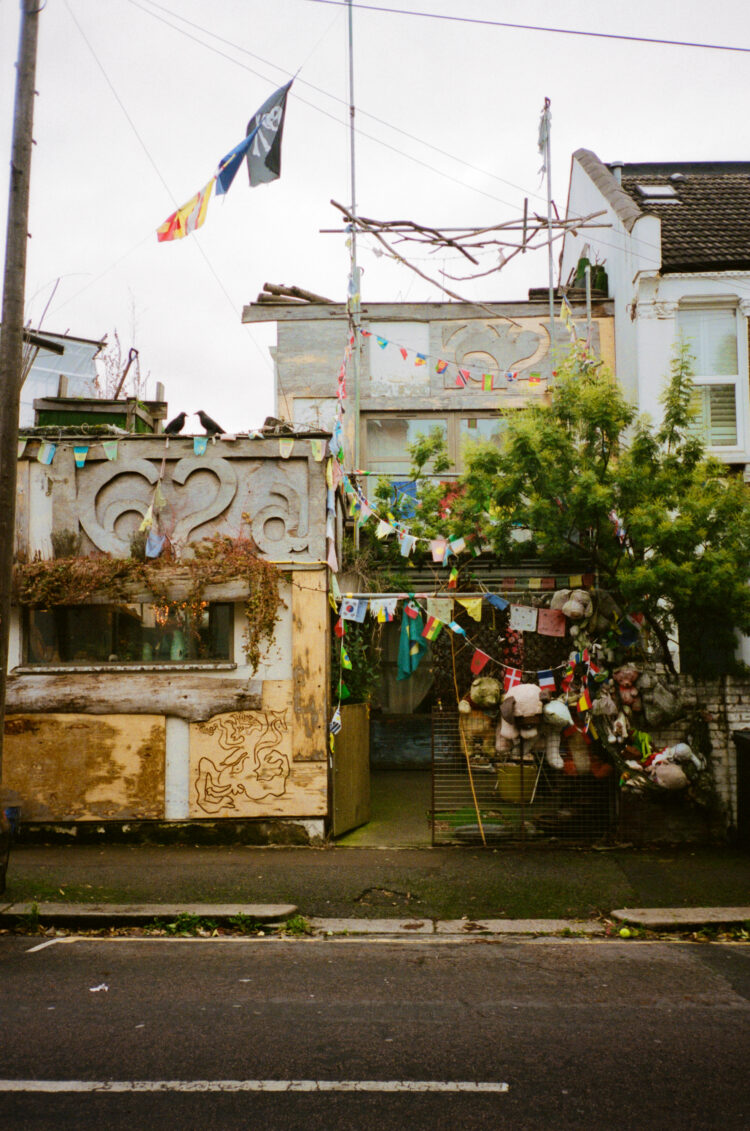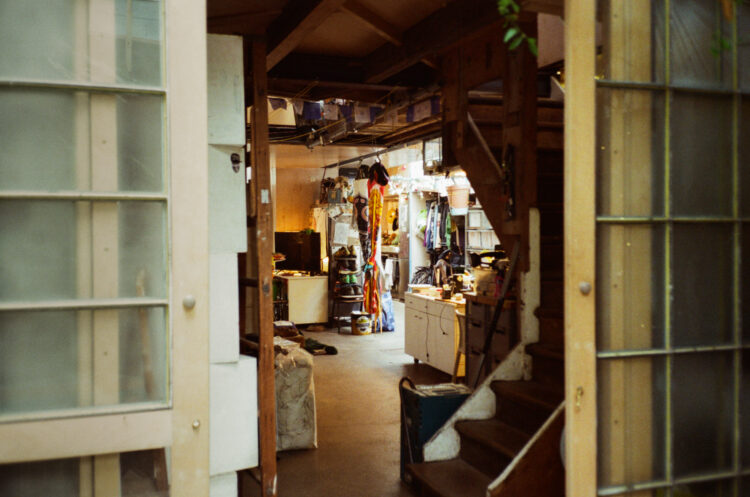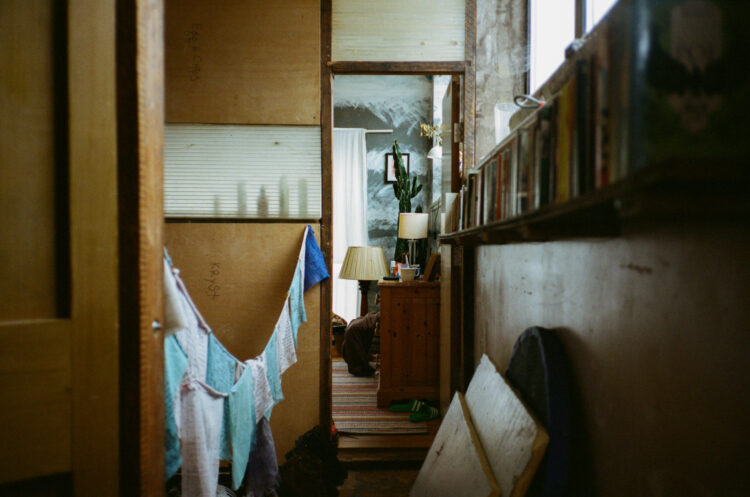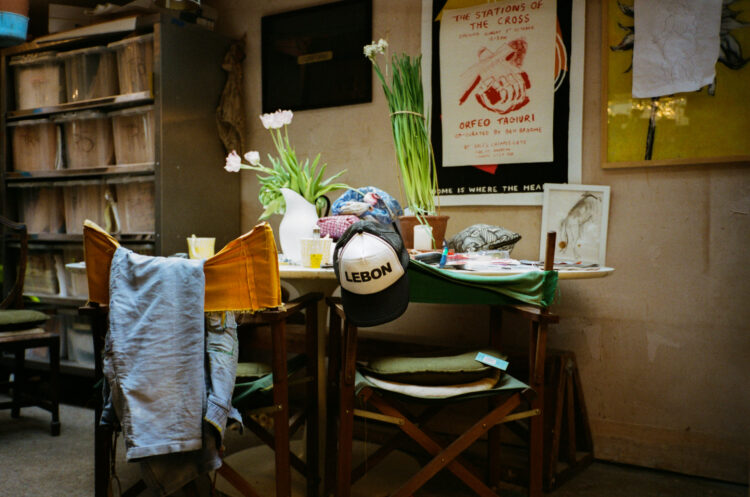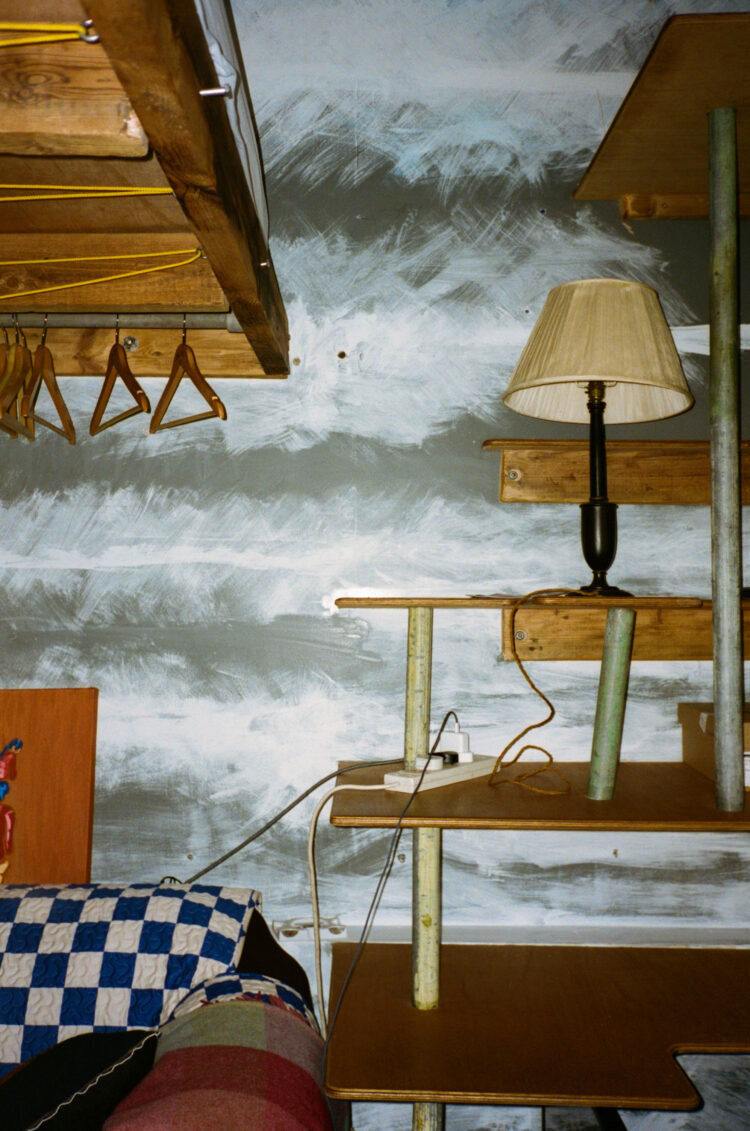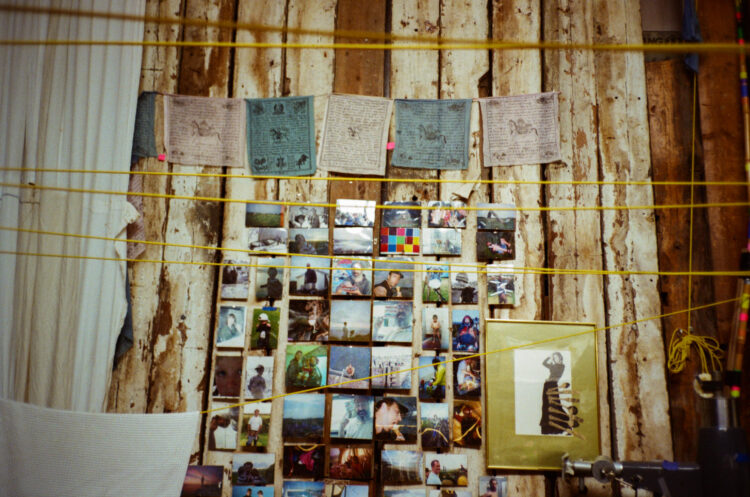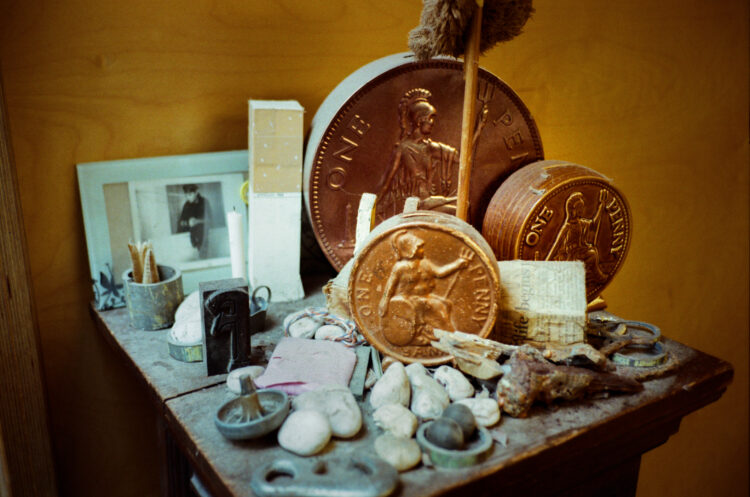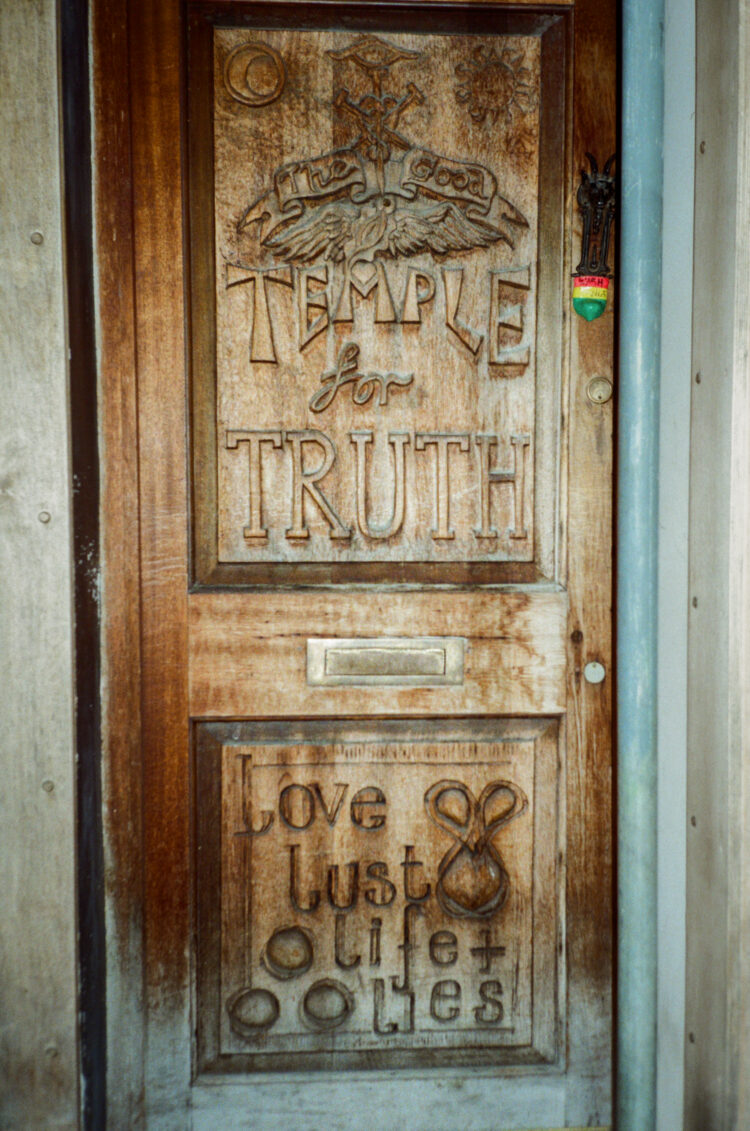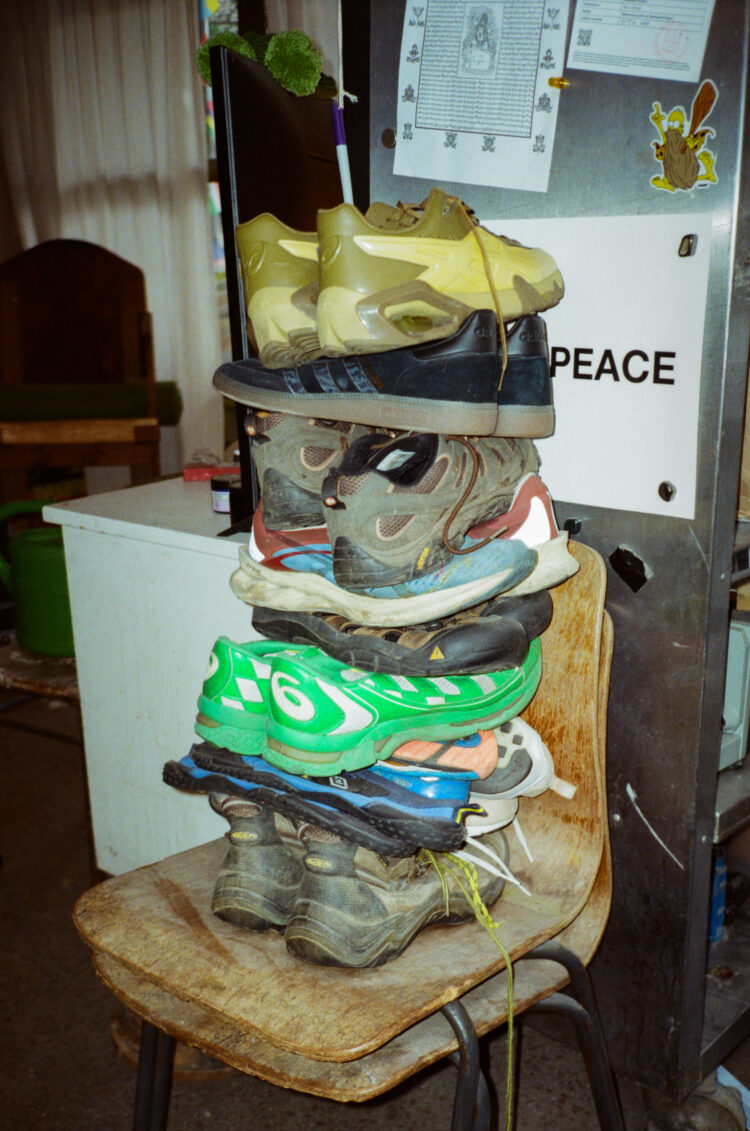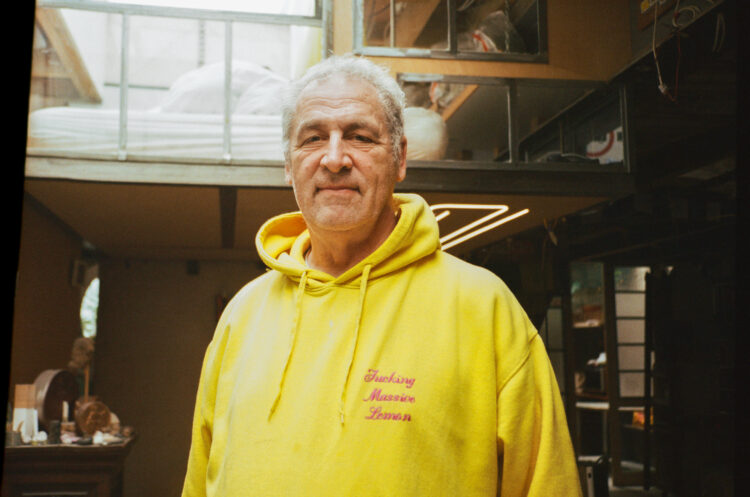



Residents of Kensal Rise in north-west London may well know Mark Lebon’s house without realising they do. Crunch, as it’s called, stands in clear contrariness to its perfectly polite, Victorian stock-brick-and-stucco neighbours. Haywire and teetering where they’re rigorously vertical and carbon-copy, it bears its street number – carved in huge numerals overhead – like a badge. Twice. A Jolly Roger flutters above and Tibetan prayer flags quiver among the branches of a mimosa that bursts into scented yellow every spring. Over the top of the gate, held shut with alligator clip wires, you’re more likely to see the front door open than closed, Mark’s tousled blond lurcher, Hank, lazing across the threshold. It’s a house designed, after years of thought, to bring joy. As Mark says in this film, originally produced for The Modern House, “I so often look up [from the kitchen] and there are people smiling as they walk past… It’s really nice to have a building that makes people smile.”
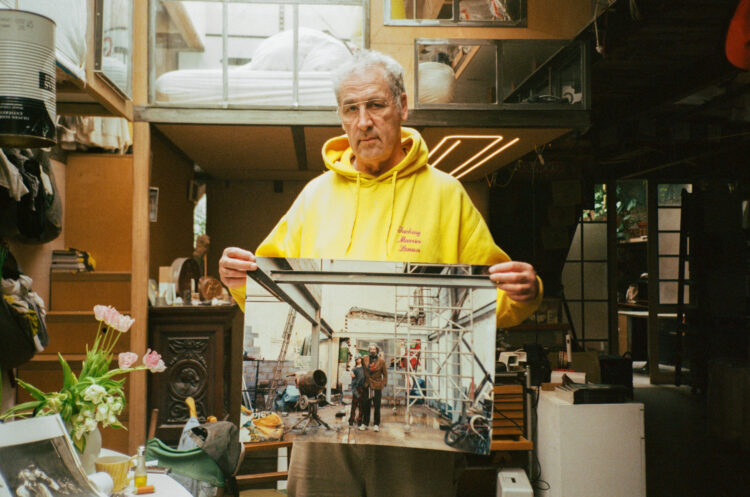
In all its eccentricity, this is an unsurprising place to find a man who’s always broken the mould. In the 1980s, when Mark bought the garage that was to become Crunch, he was busy making a name for himself as a photographer and filmmaker, producing work for The Face and i-D when the magazines were at their blazingly iconoclastic peak, and proving himself invaluable in the establishment of the House of Beauty and Culture (HOBAC), one of London’s foremost post-punk design collectives of the 1980s and 90s. Think of a name associated with the maverick subcultures of those wild and heady days and, chances are, Mark worked with them: Neneh Cherry, Judy Blame, Ray Petri, Christopher Nemeth, John Galliano, Jean Paul Gaultier…