InigoInigo Logo

A Private View: the north London laboratory of two of Britain’s brightest designers

Peering over Camden Square is Duncan Campbell and Luke Edward Hall’s marvellous and mellifluous home, a space that has served the two as an exploratory testing ground over the past two decades. Recently sold via Inigo, the multi-hyphenate artists-designers-writers reflect on their journey here, considering how the home stands as an evolution of their changing tastes, an embodiment of their treasure trove of references, and the perennial desire to find the perfect leopard-print carpet ...

Homes / Interiors
words
Sophie Sims
photography
Neil Perry
A Private View: the north London laboratory of two of Britain’s brightest designers

When Duncan moved into his apartment on Camden Terrace some 18 years ago, it was in a far less refined state. “It was actually pretty grotty,” he recalls: “It was a total gut-out: it had plaster peeling off the walls.” This couldn’t be further from its current iteration, a resplendent retreat adorned with hand-painted murals, ornate wallpapers, and a delectably rambunctious medley of textures and patterns. Well-connected but private, the home hovers above Camden Square’s trees; when their canopies come into their fullness, it makes you feel, as Duncan puts it, “a bit like you’re in a treehouse” – albeit one with infinitely more intricacy than the classic timber-built example.

Luke moved in after Duncan had carried out much of the initial work; in the years since, it has served as a design testing ground for the pair, who have trialled a variety of styles in their time here. “We were laughing recently about how many times we’ve changed the big mirror in the living room,” says Luke. “It’s been a real laboratory,” Duncan adds, “because we’ve had it for the whole time we’ve known each other. It’s a story of the evolution of the things we love and have found together.”
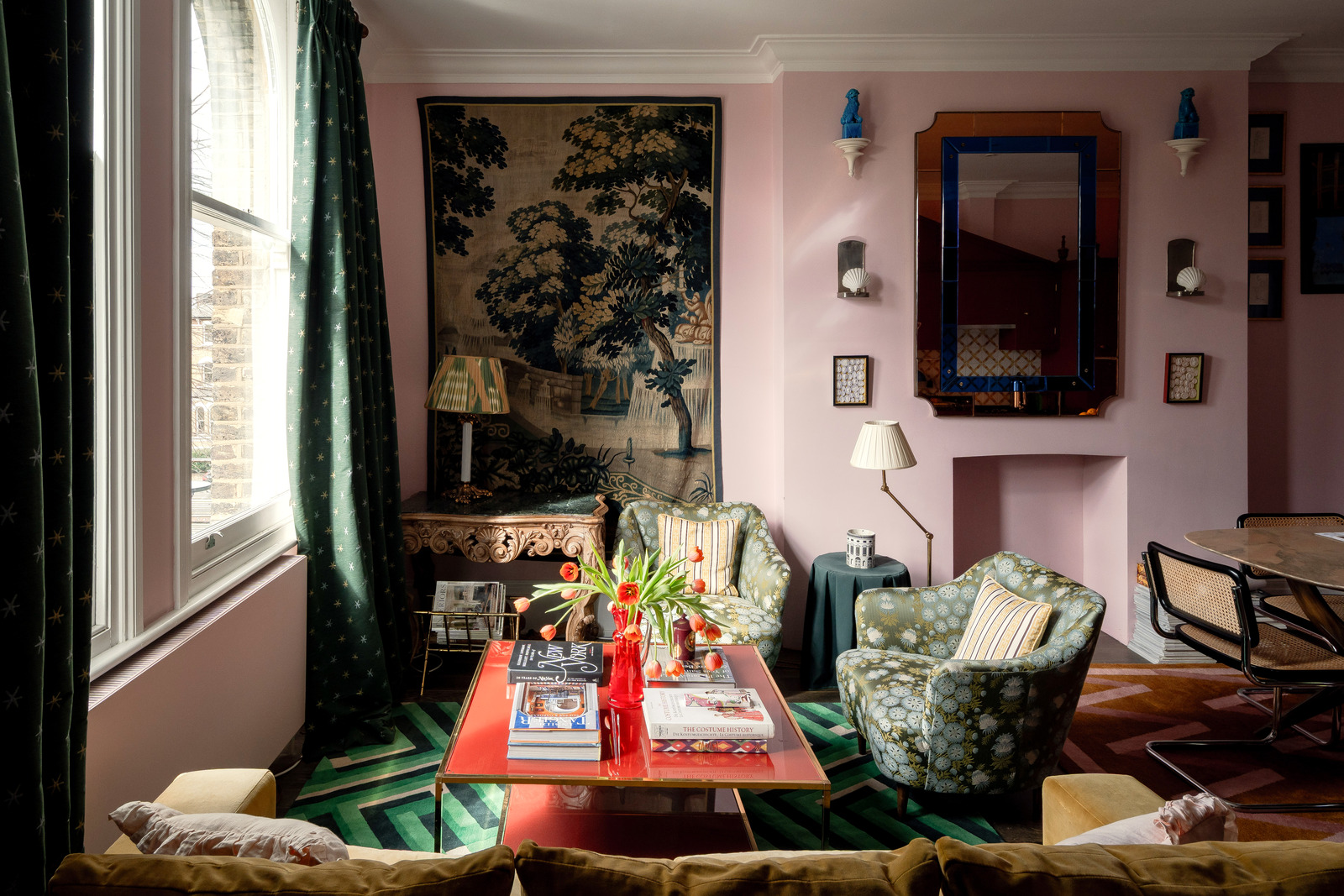
Luke: “It’s really wonderful because we can look back at the things we’ve been into over the years: various styles of furniture and different materials and periods that we’ve been drawn to. We’ve got so many pictures of the house: we can trace an evolution, changes that act as markers of how we’ve grown.”

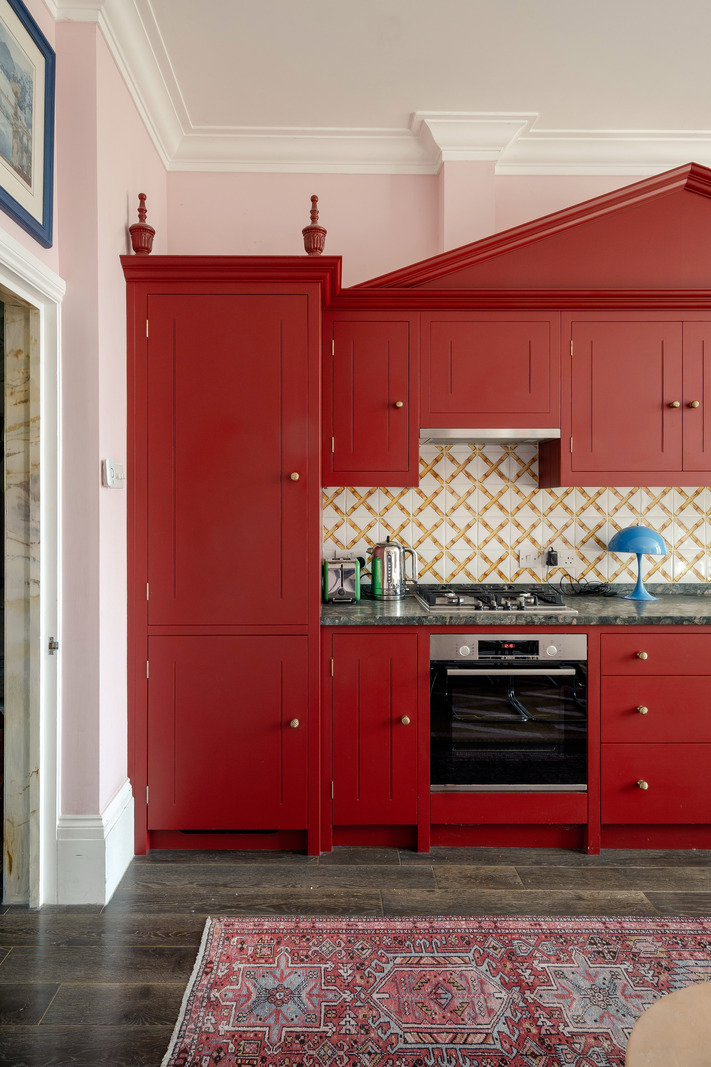
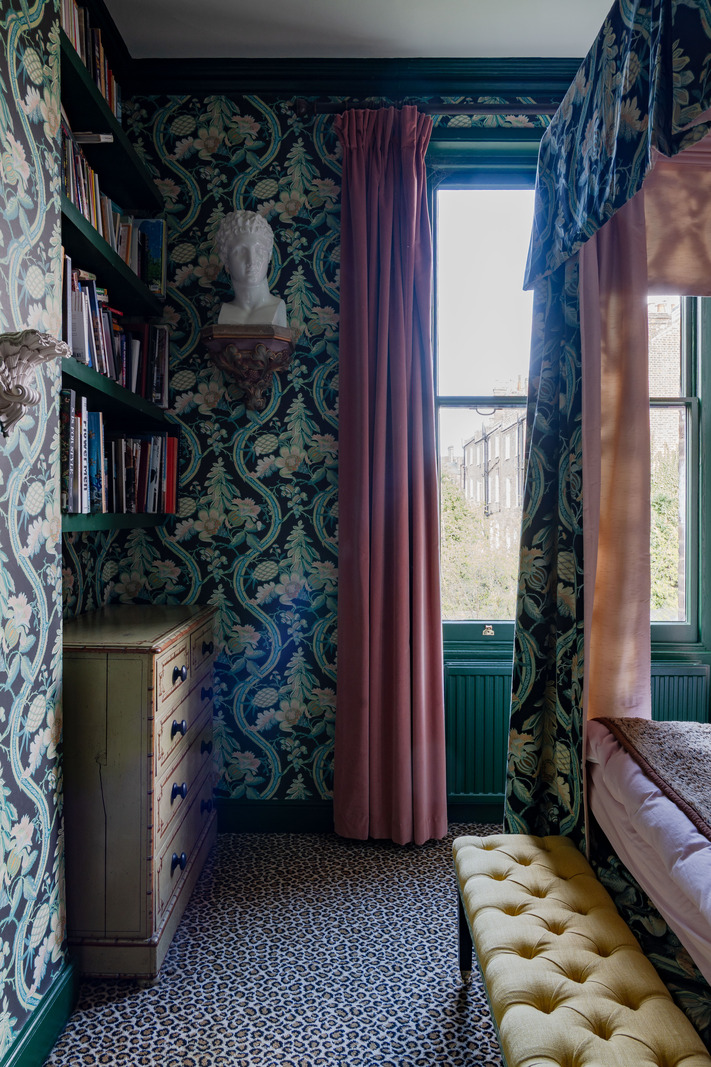
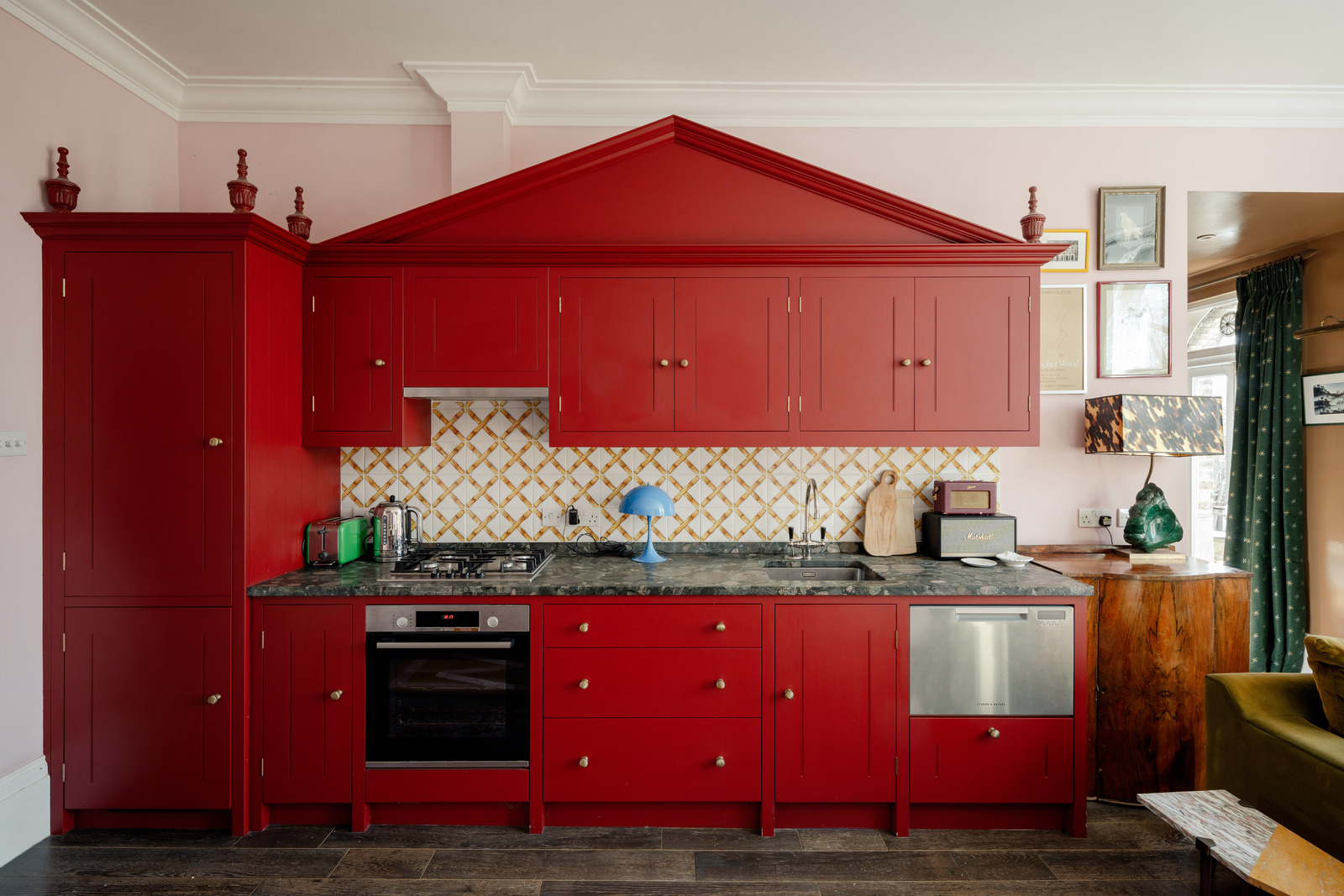
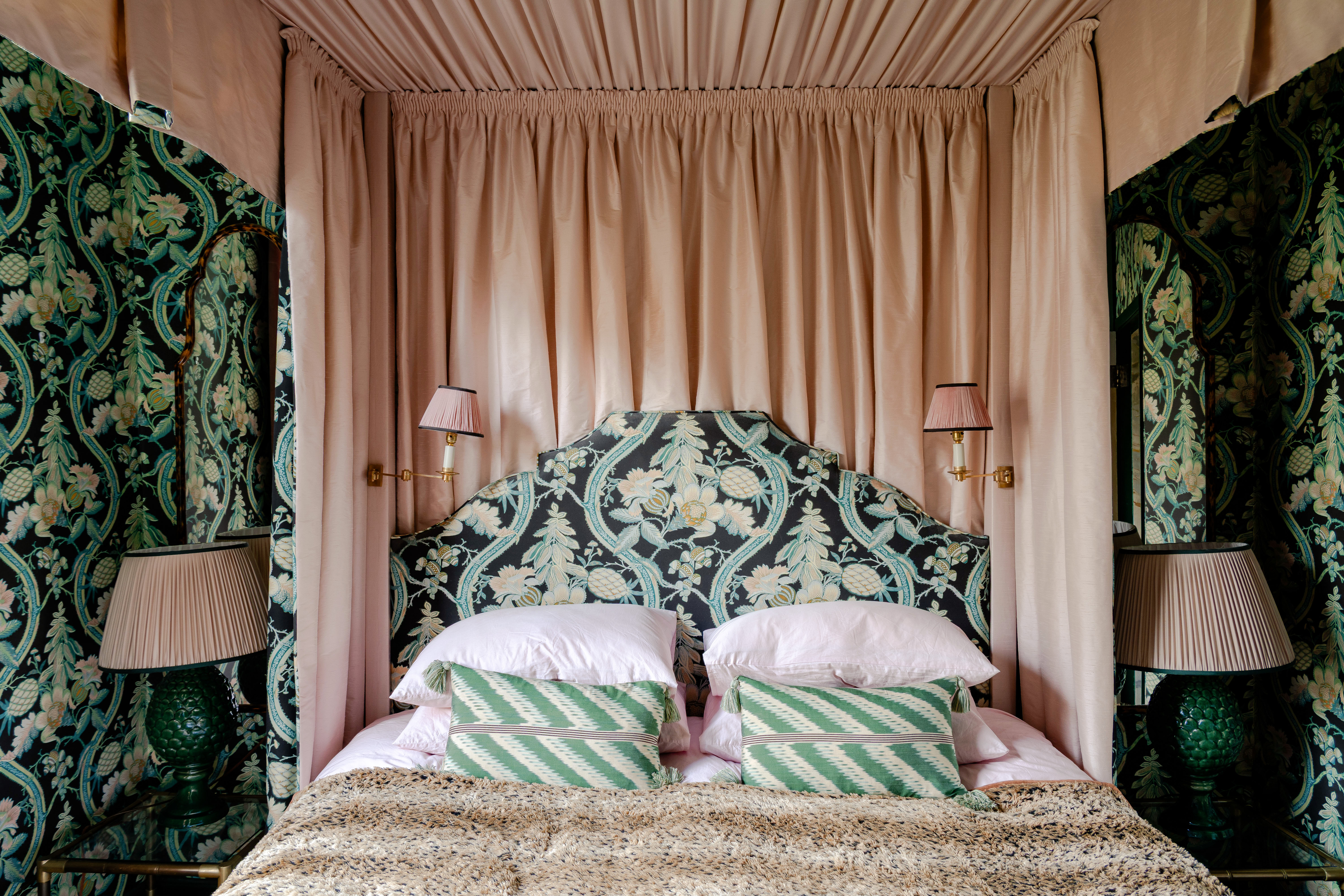
Duncan: “When we moved to our house in the Cotswolds, we’d never done a country thing before: we loved the idea that our flat in London could be like a really nice hotel room. A few years before Covid, we redecorated to more or less how it looks now. We did a crazy bedroom and worked with Plain English to design our kitchen, with its pediments and finials. We gave it a new iteration.

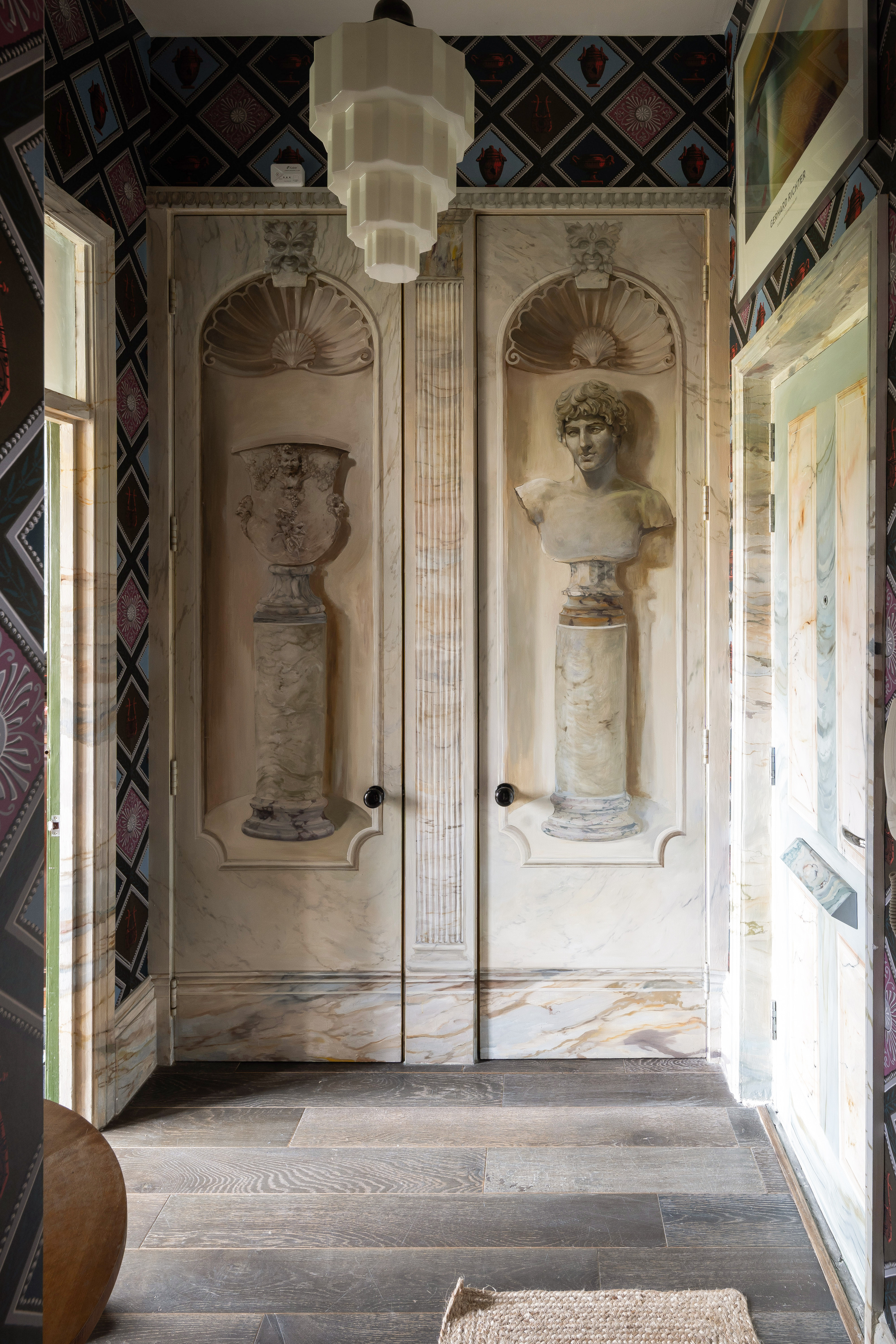
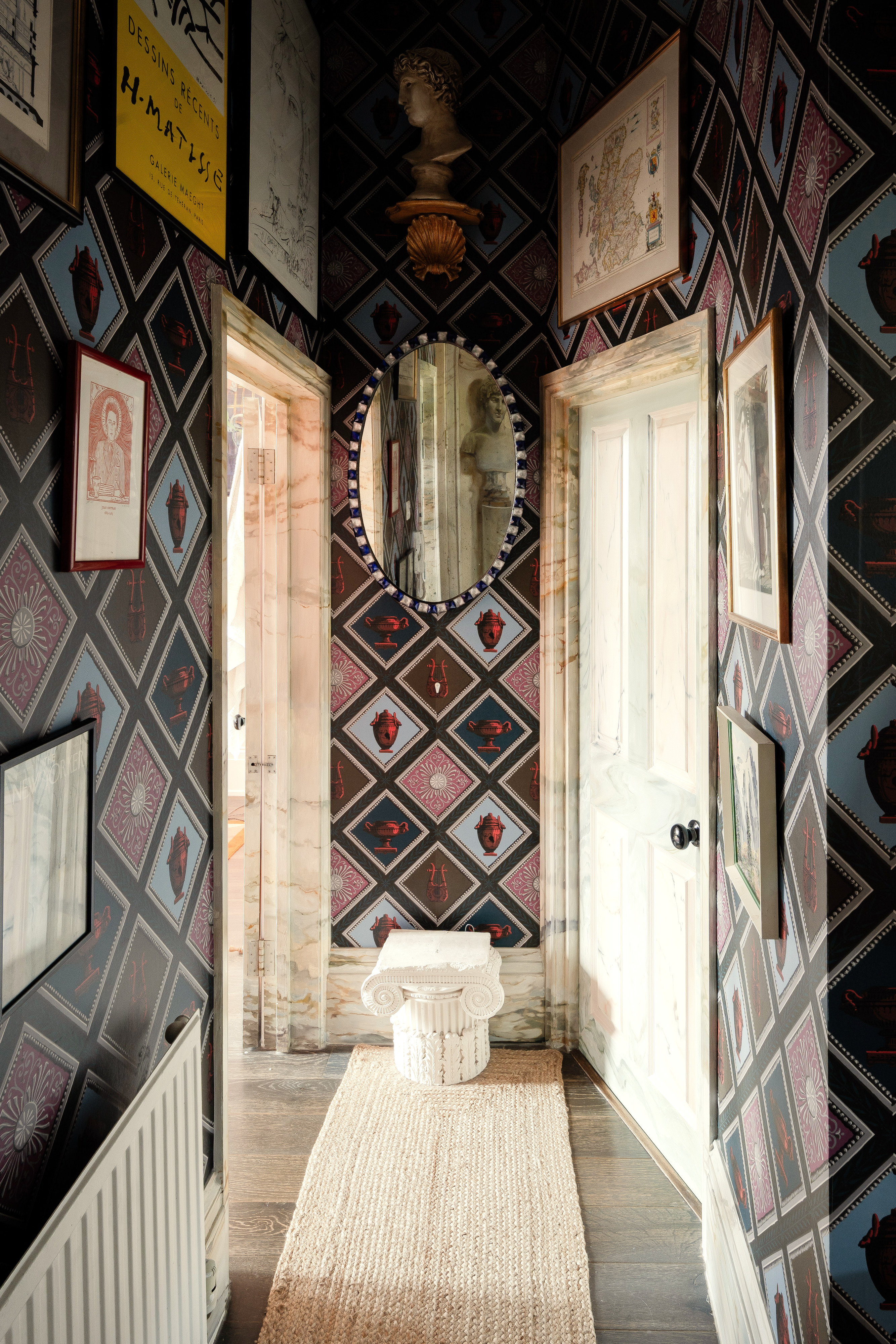
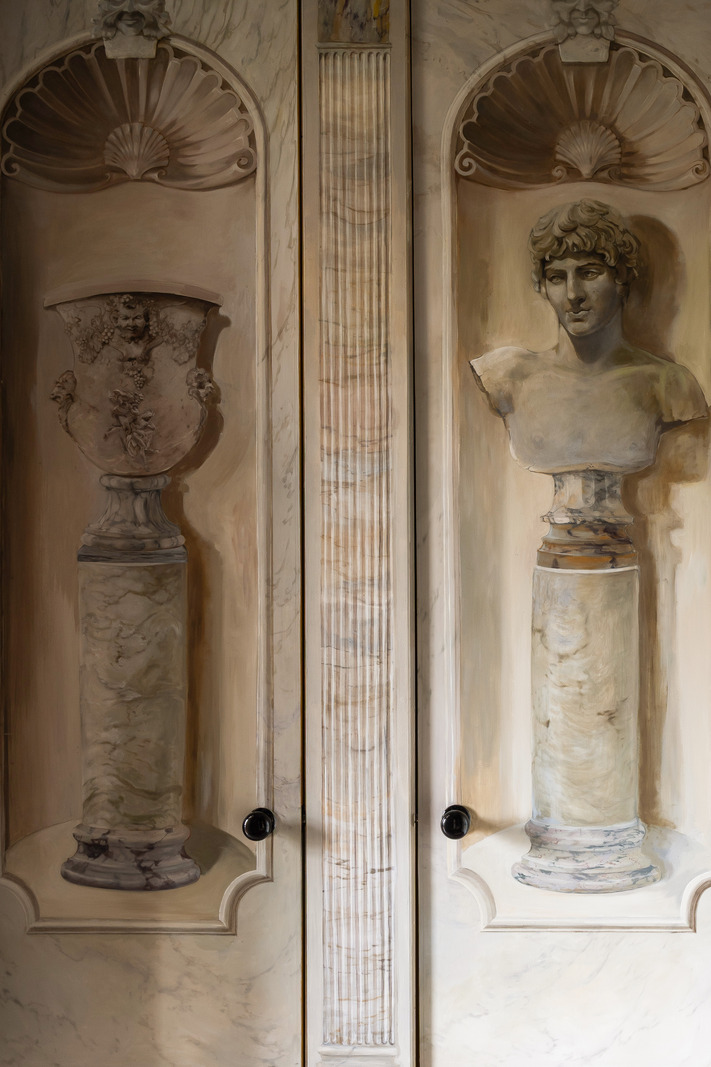
“When it came to the hallway, we thought: ‘How do you make a small space interesting?’ We decided to do something whimsical and fun. So we worked with Papier Français, who produced a classically inspired wallpaper with Roman and Greek urns on it. Then we worked with Magda Gordon, a decorative painter who studied at the Van der Kelen in Brussels, to create this complete fantasy. She covered the woodwork that surrounds the doors and skirtings in different faux marbles, and imagined a grisaille scene on the cupboard doors.

“The fun thing about doing your own home rather than a client, for us both, is that you don’t have to adhere to a brief, or a need for it to all make sense. Luke and I both say in our work that if you love it, it kind of works. Our home is more of a culmination of things that we love, like Roman and Greek motifs, whether it’s from the ancient world or more neoclassical. The urn lamps on the wall in the living room were actually architectural sconces we turned into lamps: something we saw and liked at the time.”

Luke: “We have a lot of posters; when we were buying things in our early twenties, they were a fun and affordable way of getting things on the walls. I’d often be searching for posters from the 1970s and ‘80s on eBay. And obviously it’s a way of getting a bit of art history on your wall without investing in a drawing or painting, say …”

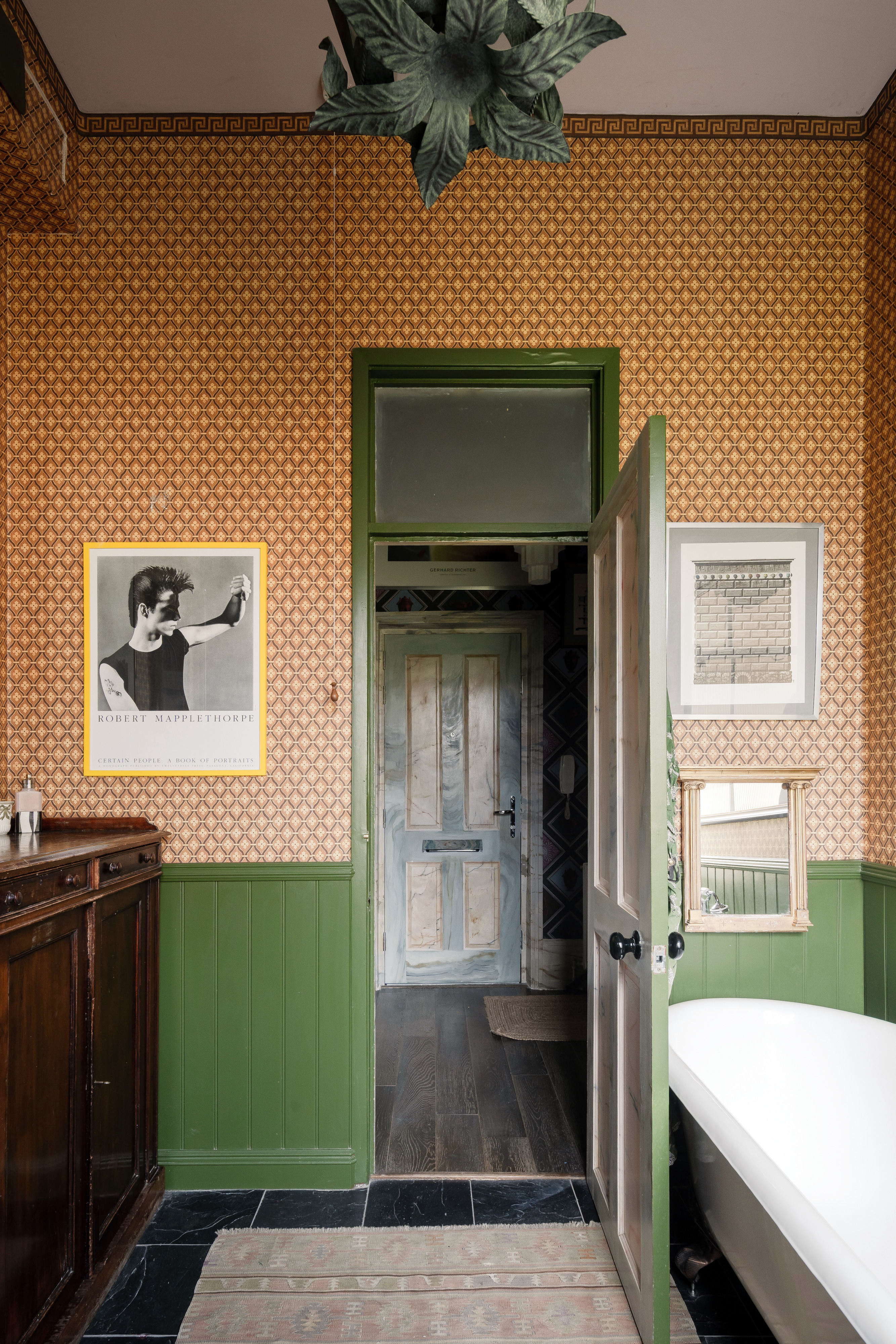
“On the whole, we’ve been quite decisive when it comes to decorating: we have an idea and go for it. In the bathroom, for example, we added this faux-boiserie wallpaper from Italy that I’d always wanted to use. Like the mural, it’s a trompe l’oeil: we love faux finishes, and the idea that things are not quite as they appear. When we do our work projects, we bank all of these ideas and think, ‘Oh, maybe we’ll want to explore that one day at home.’”

Duncan: “You sort of make a mental bank of things you love. I’ve just done this bas-relief plaster artwork for a house in London I'm working on, and for ages I’d wanted to have these amazing plaster sculptors make something, and then finally, when the job comes up that’s right for it, you can put that into action. Like here, we’d really wanted to do a matchy-matchy bedroom, a bit ‘80s, almost like a Mongiardino bedroom.”

Luke: “I think we always knew that we wanted a leopard-print carpet inspired by Madeleine Castaing, the French decorator. Leopard print can be tricky because it has to be the right tone – I hate it when it’s too orange. So it took a lot of tracking down, and eventually we found this manufacturer in the Midlands. I’m pretty sure the installer said something like, ‘We’ve not fitted one of these since the ‘80s,’ which I absolutely loved.”

Duncan: “Every job you do, you get to try new techniques, new materials, new makers. I think for both of us, in our work, it’s about combining things from different styles and periods and eras: mixing in antiques as well as contemporary design. I think we both get a lot of joy from making, whether that’s upholstered furniture, or mirrors and lighting in Venice and Murano. That’s the thing with decorating: it’s a sort of cross-section or a snapshot of your favourite things at the time."


Further reading

Luke Edward Hall

Campbell-Rey

Luke on Instagram

Duncan on Instagram

Camden Terrace, London NW1

sold subject to contract
A Private View: the north London laboratory of two of Britain’s brightest designers