InigoInigo Logo

A Home with a History: inside Simon Costin’s Cornish longhouse, where ghosts, dreams and folklore collide

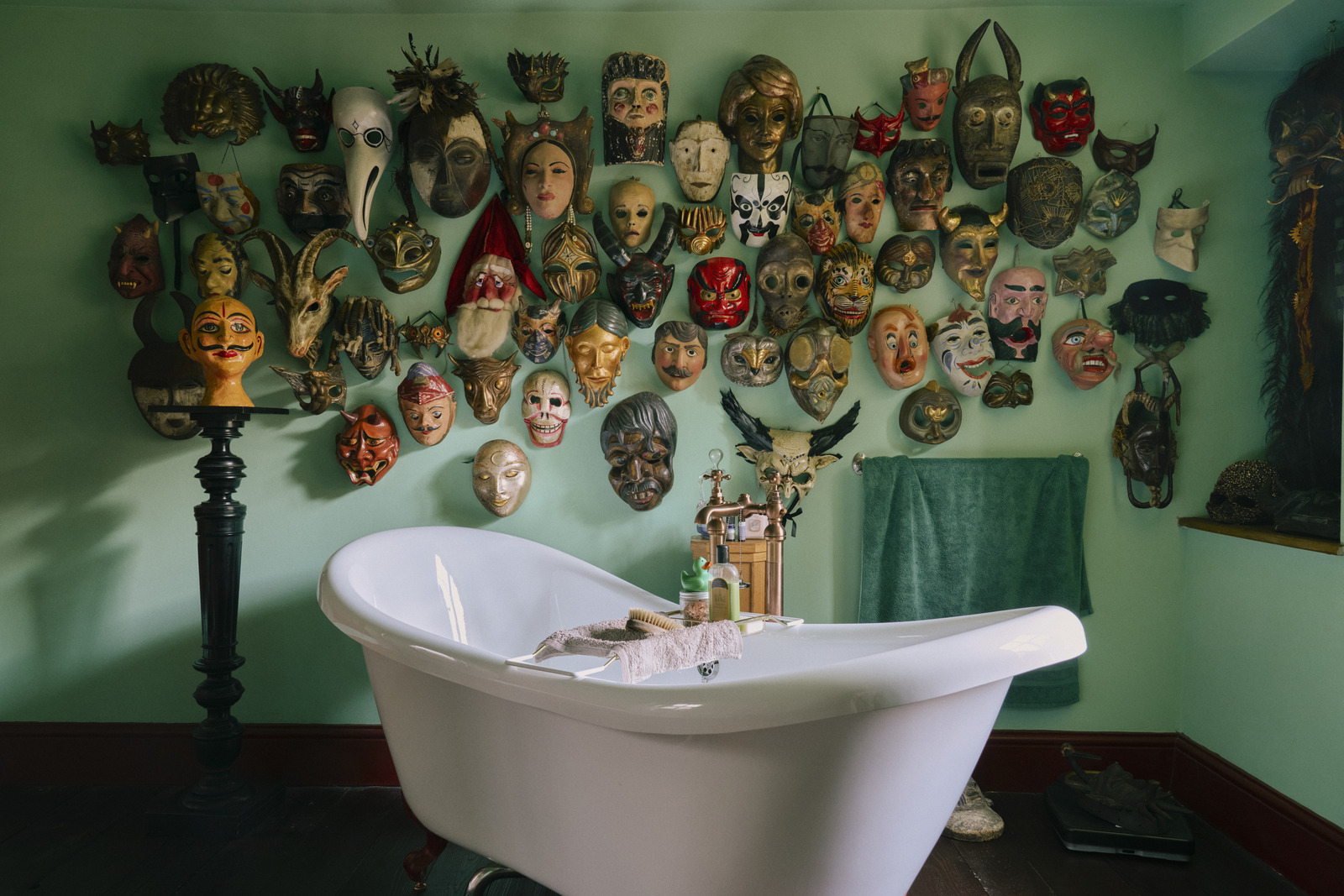
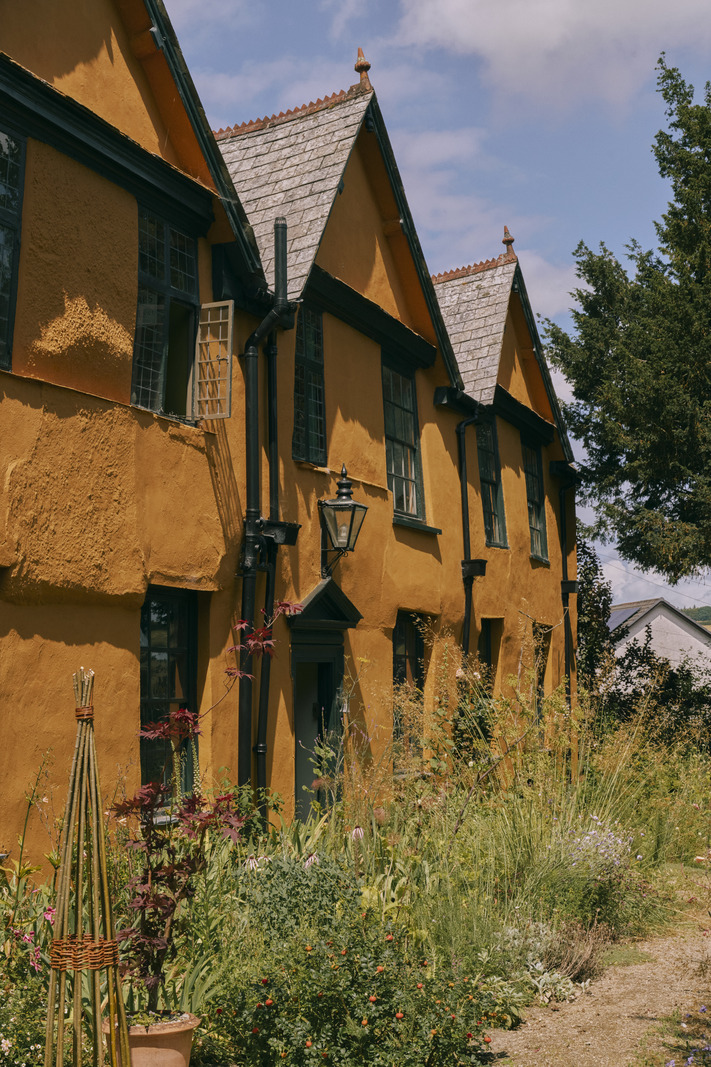
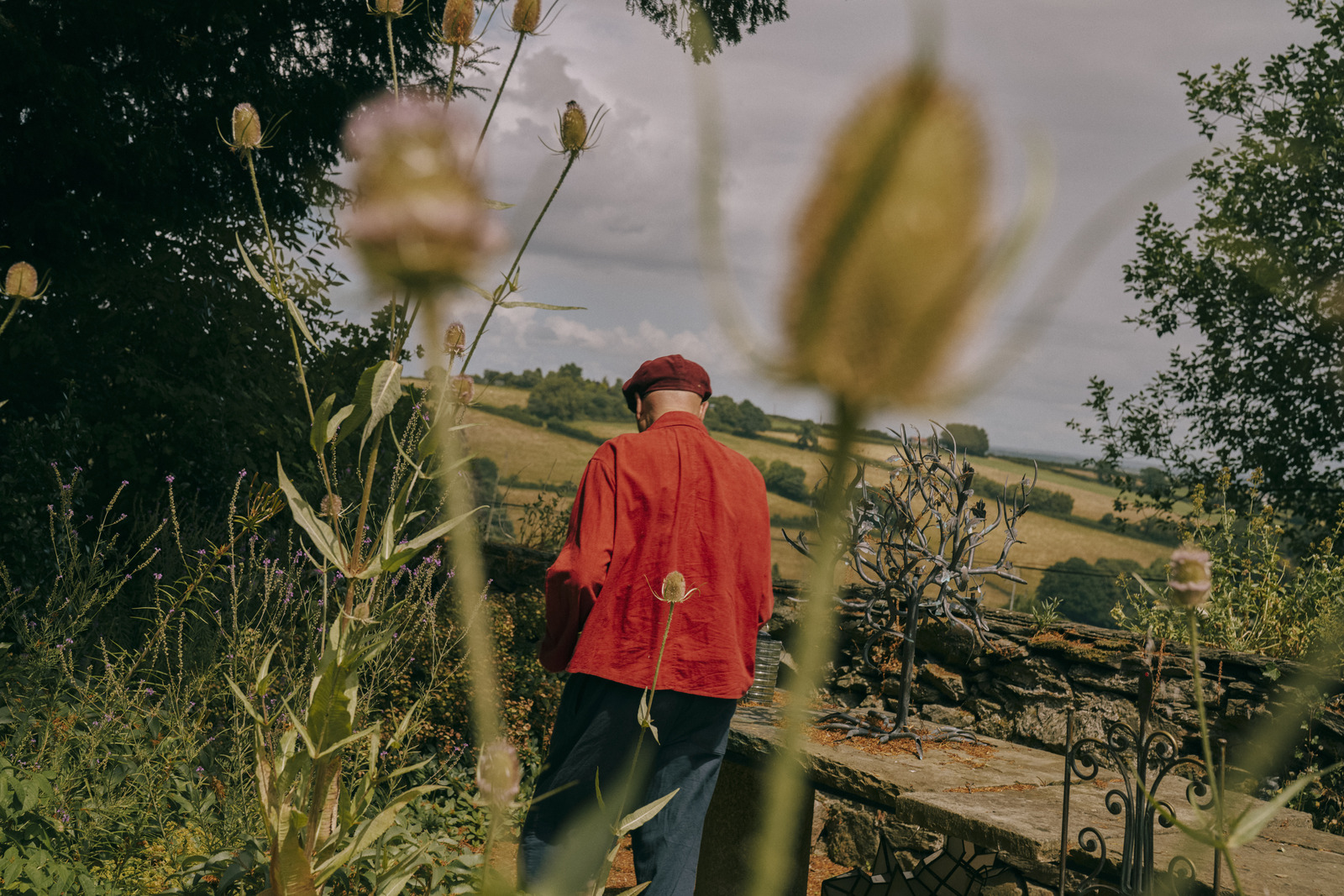
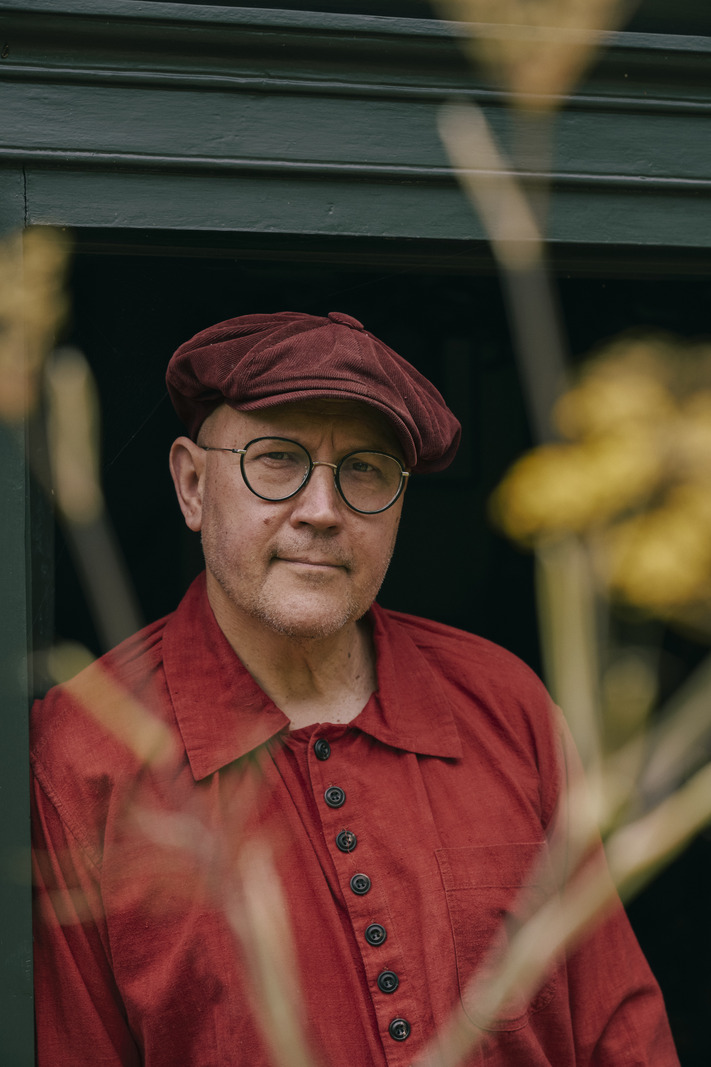
Simon Costin is the founder of the Museum of British Folklore and a set designer known for his daring, theatrical work in fashion. He and his partner moved to Dockacre, an Elizabethan longhouse in Launceston, Cornwall, after Simon had a remarkable dream in which he pictured the house as it had been some 50 years before. He takes us through the journey to his home – via ancient festivals, a partnership with Alexander McQueen, a Bloomsbury squat and a set of friendly ghosts …

Homes / Interiors
Words
Sophie Sims
Photography
Marco Kesseler
A Home with a History: inside Simon Costin’s Cornish longhouse, where ghosts, dreams and folklore collide

When Simon and his family first visited Cornwall (it was Padstow, and he was seven), it happened to be May Day. “We were witnesses to this extraordinary event called the 'Obby 'Oss festival that they host every year,” he recalls. “That started my interest in folklore and, years later, when I was given a copy of The Reader’s Digest book of Folklore, Myths and Legends of Britain by my parents, I became even more fascinated.”

Thus began a career defined by magic, in several senses of the word. Currently the head of the Museum of Witchcraft and Magic in Boscastle, Simon has, since 2009, also been at the helm of the Museum of British Folklore. He founded the museum after being frustrated that no such institution had, up to then, existed: “It’s madness, when you consider how many folkloric events we have in the UK – there’s over 600 – that we don’t have anywhere that celebrates and records them. Although they are difficult things to pin down, as folklore is constantly evolving.”

Studying under artist and filmmaker Derek Jarman at Wimbledon College of Art was a watershed moment for Simon in his love of all things otherworldly. “He was very inspiring and supportive. He was the one who recognised my interest in magical practice – I hadn’t delved into it too much by that point. He took me to the British Museum and showed me the magical objects that had belonged to Dr John Dee, Queen Elizabeth I’s astrologer. I think once you start seeing the world in magical terms, everything shifts.”
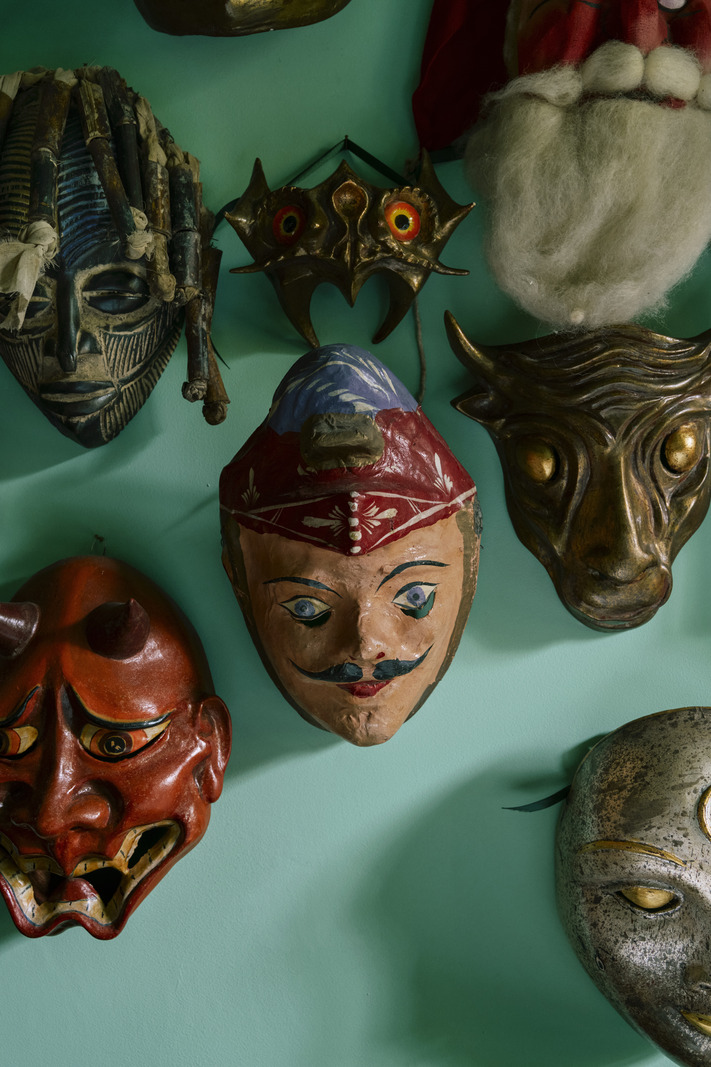
He then pursued a career in theatrical set design, exploring creative projects on the side. “I ended up making body sculpture and jewellery out of all sorts of discarded animal materials. I’d done a taxidermy workshop as a child at the Natural History Museum – I was fascinated by its ability to stop something in time and preserve its beauty.” Some of the pieces that Simon created during this time were acquired by the Metropolitan Museum of Art. “They contacted me to ask if I had any pieces still available. It was mind-blowing for me because they’d been sitting in boxes for all those years. I’d made them living in a Bloomsbury squat in the 1980s, and there they are now, in the halls of the Met!”

His jewellery designs caught the eye of Alexander McQueen, who would become a close friend of Simon. “I met Lee when he was studying at Central Saint Martins. He wrote to me and asked if he could borrow some pieces of jewellery for his degree show. I was doing the sets for pop promos back then. I’d realised that my imagined career as a production designer for film was never going to happen because I’m not a morning person. It was agony having to be on set at seven in the morning. But when Lee came along, it was great, because the fashion lot didn’t use to pitch up until 9.30 or 10.”

Simon worked with Alexander McQueen for seven years, and later with the likes of Tim Walker and Hermès. Throughout this time, he was also immersed in folkloric customs. “In 2013, I was offered the opportunity to take over the Museum of Witchcraft and Magic. To begin with, I was running it remotely, with some managers in place. I love Cornwall, though, and thought that if I really wanted to commit to running the museum, I needed to be a lot closer. It was the right time to step back from the fashion industry and let the new generation take the lead: that’s how things should be.

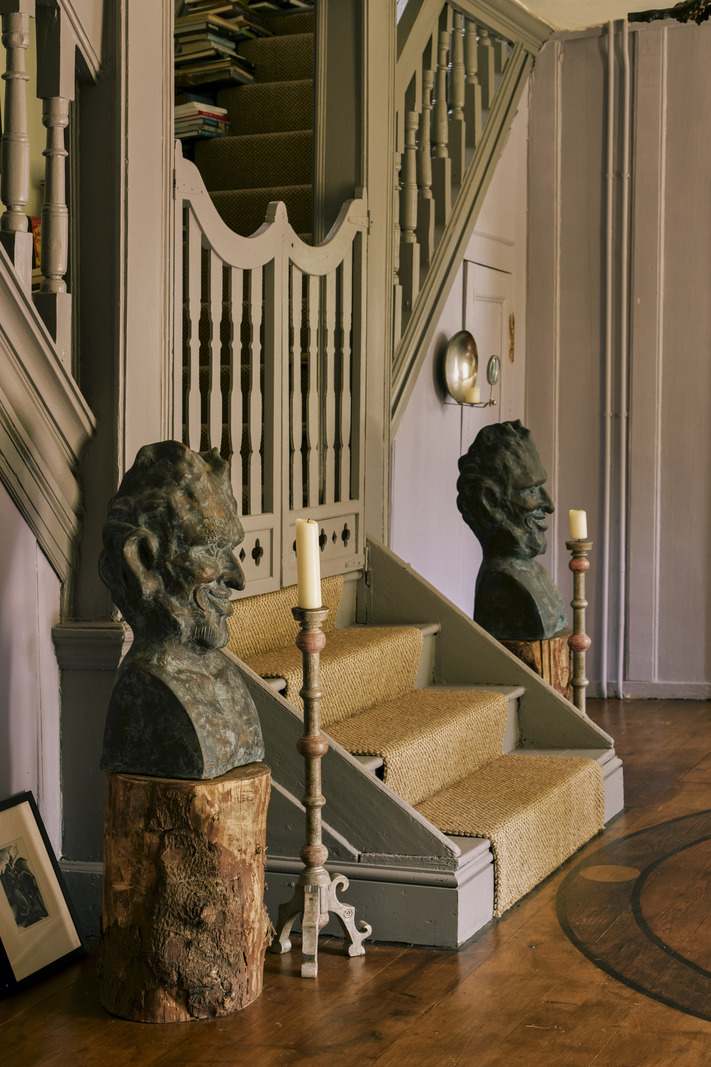
“We decided to make the move from London just before Covid. I first visited Dockacre House in February 2020. I was quite smitten with it, but we were still seeing other places. It wasn’t until that night when I went to bed and had this lucid dream that I was in the hall, decorating it for Christmas. But it didn’t look like how I’d seen it the day before. In the morning, I texted the owner about it; she rang me immediately, and said, ‘Seriously, whether you’re interested in the house or not, you have to come for a drink.’ When we did, she produced photograph albums from the 1970s when her parents lived here: it was identical to my dream.

“At this point, the owner also told us about how haunted the house is. And yes, it’s true – ghosts do move things about. I’ve given up trying to explain it rationally. They take pictures off the walls in the hall and place them face down. They don’t break them; they’re very gentle. I think horror films have conditioned us to think, you know, when a ghost arrives, it gets freezing cold or whatnot. But in reality, it’s so mundane. When they move the chairs in the dining room, I think, well, I’ll just pop them back.

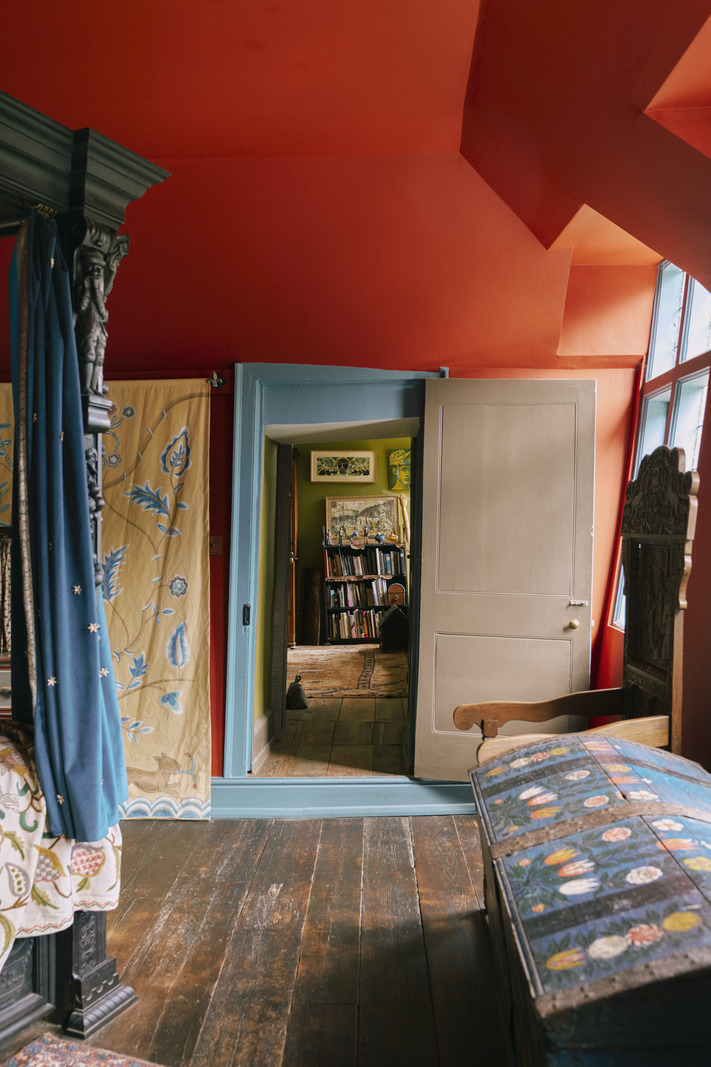
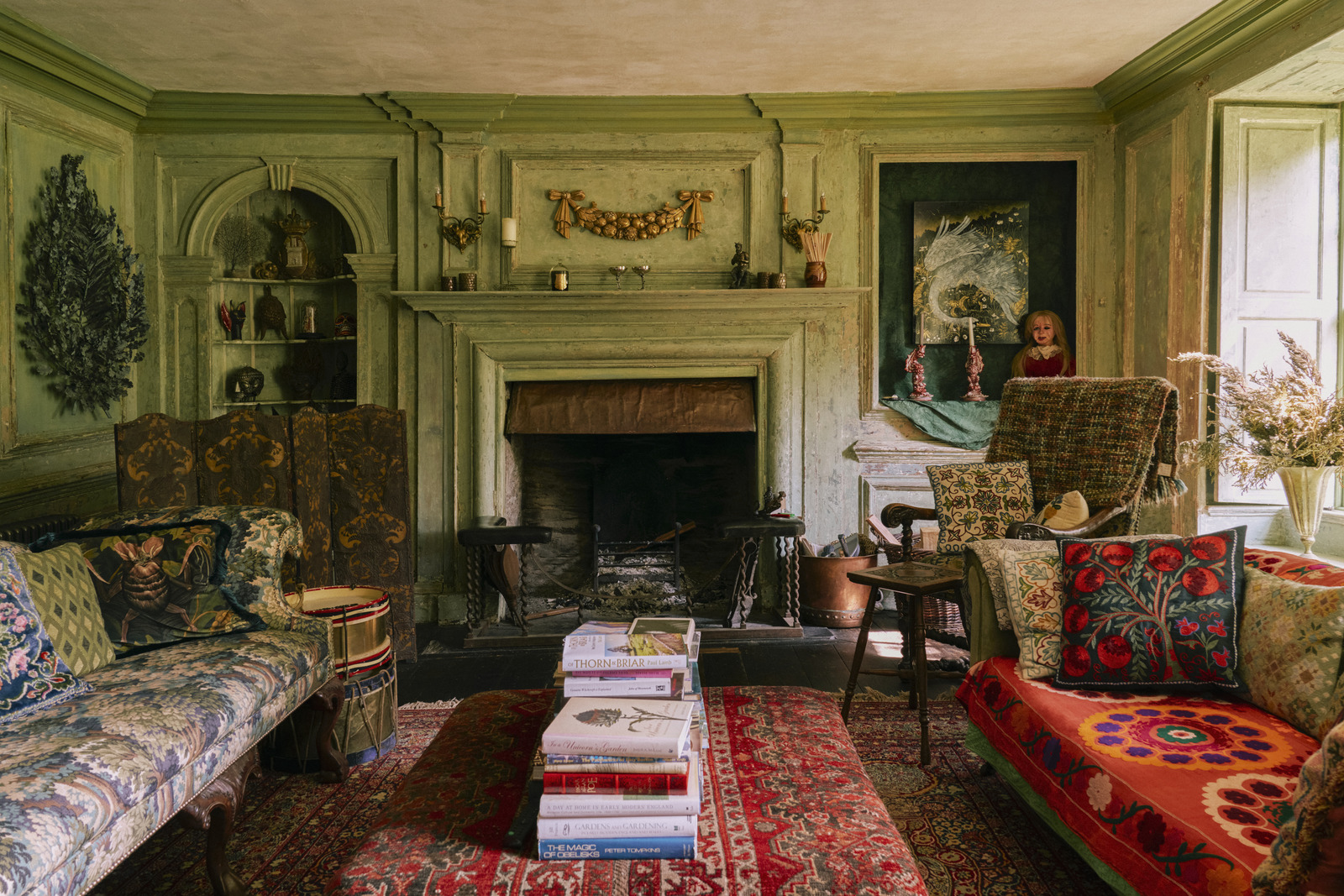
“When we moved into the house, we took it back to its raw state. There was asbestos from the 1950s, and we needed to gut the whole place. Before the work started, I bought an inflatable mattress, and we would just camp out in empty rooms. We wanted to see what felt right, how the light looked. From this, the rooms all fell into place. Our bedroom is perhaps the most surprising: it’s very angular and has a four-poster bed I had custom-made from cabinets. I placed it right in the middle of the room at an angle. I like the visual unease of the space, of waking up to something slightly off-kilter.”

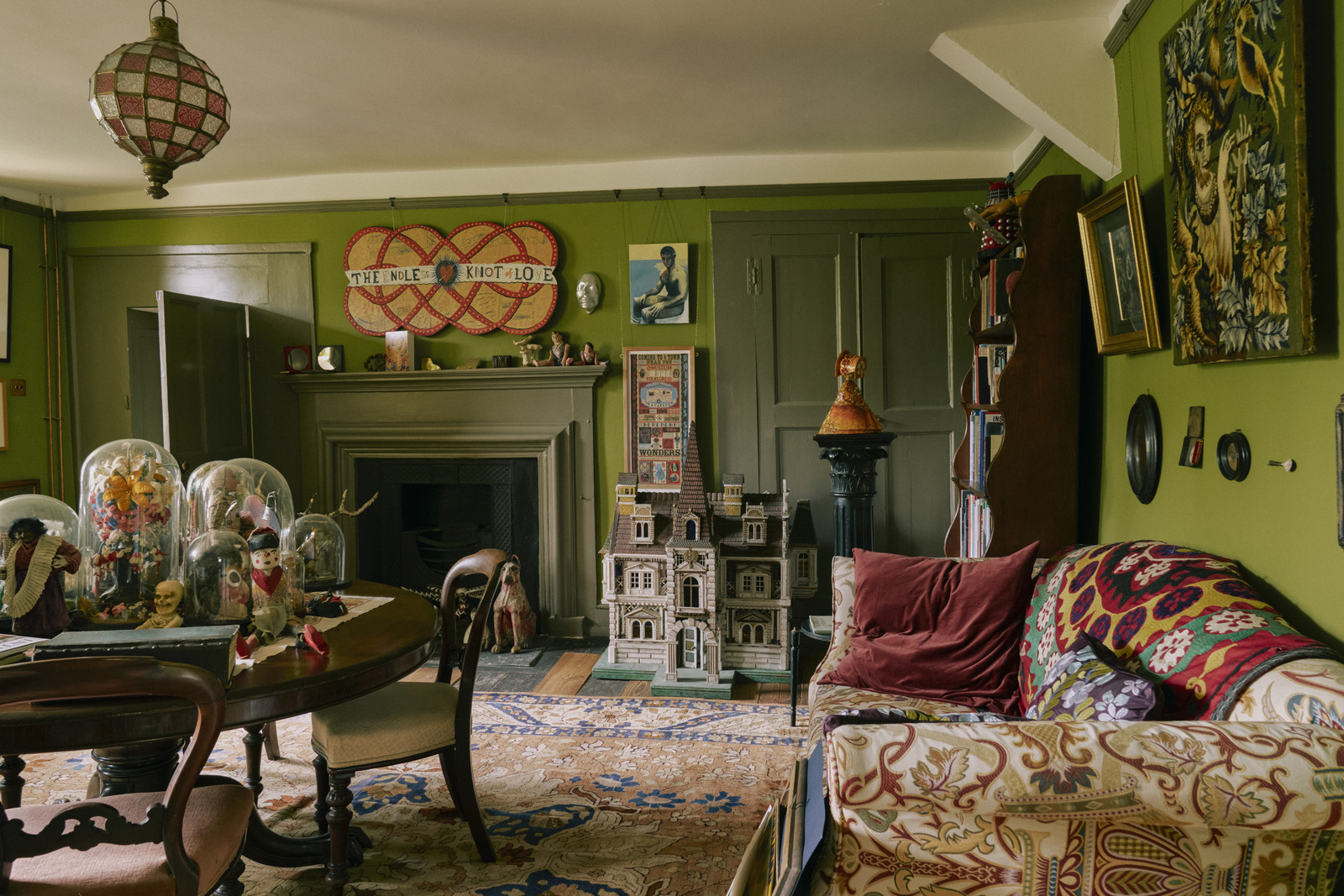
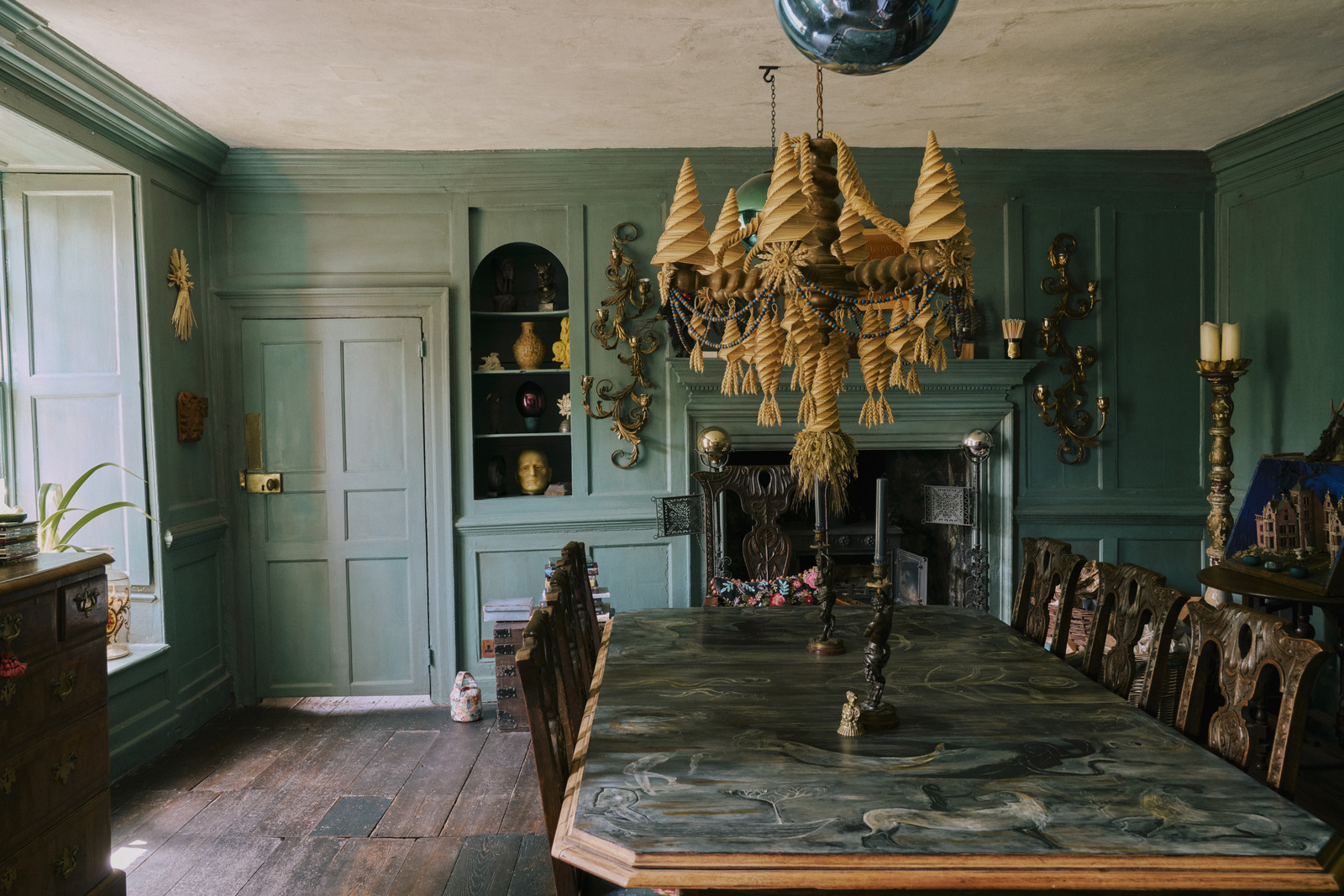
The dining room is an exceptionally handsome space, with a tapestry of beautiful things, from a scale model of a building found in Arundel and a 15th-century wood carving. A chandelier made by Simon out of corn dollies crowns the room as an arresting centrepiece. But things here are always in flux. “Objects come out during the winter and then go back into storage. Particular ceramics that look great in the summer look insignificant during the winter. You want something bolder during the cooler months. I visited a lot of antique shops and websites for the house. We also found pieces in London, on Northcote Road and at Kempton.”

What lies next for the Museum of British Folklore? “We applied to the National Heritage Lottery Fund two years ago and received a grant to launch the UK’s first-ever exhibitions of folk costumes. We worked with the University of the Arts London and put together an exhibition, 'Making Mischief: Folk Costume in Britain.’ Currently, we have a touring show in Wiltshire – ‘Un/Common People,’ which moves to Poole in October.”

Simon has also set his sights closer to home. “We’re helping with a folk festival here, in Launceston, in September – there’s a big parade for the first time. We also used to have a floral dance in the streets, when everyone dressed up in their Sunday best. It died out in the 1980s, but I’d be keen to resurrect it!”

Further Reading

Museum of British Folklore

Follow Simon on Instagram

Feeling inspired?

A Home with a History: inside Simon Costin’s Cornish longhouse, where ghosts, dreams and folklore collide